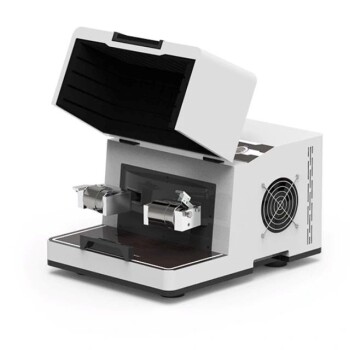
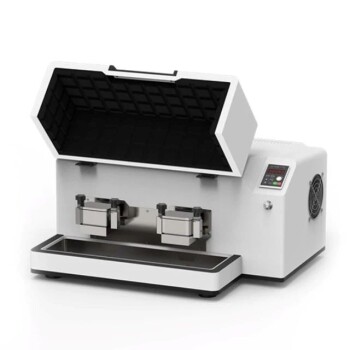
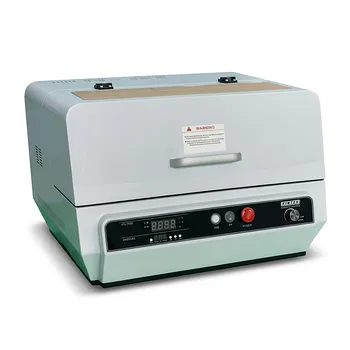
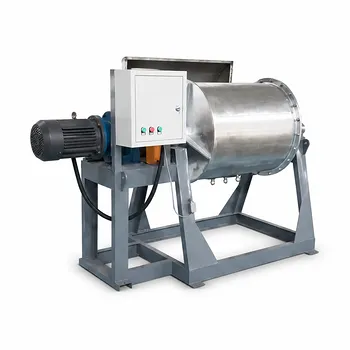
A high-energy planetary ball mill serves as the primary engine for mechanical alloying in the production of Fe-Cr-Al Oxide Dispersion Strengthened (ODS) powders. Through high-speed rotation, the device generates intense kinetic energy, converting impact and shear forces into microstructural changes. This process physically forces high-purity metal powders (Fe, Cr, Al, Ti, Zr) and oxide powders (Y2O3) to blend at an atomic level, creating the necessary precursor for high-performance alloys.
Core Takeaway The planetary ball mill is not merely a mixer; it is a mechanical reactor that refines particle sizes to the nanoscale and drives the uniform dispersion of Y2O3 oxides into the steel matrix. This nanostructuring is the critical factor that gives Fe-Cr-Al ODS alloys their superior high-temperature strength.
The Mechanism of Mechanical Alloying
Generating Intense Kinetic Energy
The ball mill operates by subjecting the milling jar to centrifugal forces derived from high-speed rotation.
This motion creates high-frequency collisions between the grinding media (balls) and the powder mixture.
The Cycle of Deformation
The core mechanism driving the process is a repetitive cycle of cold welding, fracturing, and re-welding.
As the grinding balls impact the powder, the metallic particles are flattened and welded together. Subsequent impacts fracture these welded layers, constantly exposing fresh surfaces.
Nanostructural Refinement
Over extended processing times, this intense mechanical action significantly reduces the grain size of the metal powders.
The forces effectively "chop" the crystalline structure, refining the grains down to the nanometer scale. This structural refinement is essential for the final mechanical properties of the alloy.
Critical Functions for ODS Alloys
Uniform Dispersion of Oxides
The most distinct function of the mill in this context is the handling of oxide powders like Y2O3.
The impact forces break down oxide agglomerates and force these nano-scale particles into the soft metallic matrix.
This ensures a homogeneous distribution of oxides, which acts as a barrier to dislocation movement in the final material, providing high-temperature creep resistance.
Solid-State Alloying
The mill facilitates alloying without the need for melting (solid-state reaction).
By continuously fracturing and re-welding the particles, the diffusion distances between elements (Fe, Cr, Al) are drastically reduced. This forces the elements into a supersaturated solid solution, creating a chemically chemically homogeneous alloy powder.
Powder Activation
Beyond mixing, the milling process induces severe lattice distortion and creates high-density defects within the particles.
This "activates" the powder by increasing its internal energy. These defects facilitate atomic diffusion during subsequent processing steps, such as sintering, making it easier to consolidate the powder into a bulk material.
Understanding the Trade-offs
Parameter Sensitivity
Achieving the correct nanostructure requires precise control over energy input.
If the energy is too low, the oxides will not disperse uniformly, leading to segregation and poor mechanical performance.
Structural Integrity vs. Agglomeration
While the goal is size refinement, improper ball-to-material ratios can lead to excessive agglomeration rather than fracturing.
The process relies on a balance where the shear forces are sufficient to break down clusters, preventing the powder from simply clumping together at the bottom of the jar.
Making the Right Choice for Your Goal
When optimizing your ball milling process for Fe-Cr-Al ODS alloys, consider your specific end-performance requirements:
- If your primary focus is High-Temperature Strength: Prioritize milling parameters that maximize the fracturing of Y2O3 clusters to ensure the finest possible oxide dispersion.
- If your primary focus is Sinterability: Focus on inducing lattice defects and distortions to lower the activation energy required for the subsequent consolidation process.
- If your primary focus is Homogeneity: Ensure sufficient milling time to allow the repeated welding and fracturing cycle to achieve a complete solid solution of the Cr and Al into the Fe matrix.
Success in ODS alloy preparation depends not just on mixing the ingredients, but on applying sufficient mechanical energy to fundamentally alter the microstructure of the powder.
Summary Table:
| Function | Mechanism | Impact on ODS Alloy |
|---|---|---|
| Mechanical Alloying | Repeated cold welding & fracturing | Creates a supersaturated solid solution of Fe, Cr, and Al |
| Nanostructural Refinement | High-energy kinetic impact | Reduces grain size to nanoscale for superior strength |
| Oxide Dispersion | Breaking oxide agglomerates | Uniformly embeds Y2O3 to provide creep resistance |
| Powder Activation | Lattice distortion & defects | Increases internal energy to facilitate easier sintering |
Elevate Your Materials Research with KINTEK
Precision in mechanical alloying is the foundation of high-performance ODS alloys. At KINTEK, we specialize in providing the high-energy crushing and milling systems necessary to achieve uniform nanoscale dispersion and superior material properties.
Whether you are developing advanced Fe-Cr-Al alloys or exploring next-generation battery research, our comprehensive range of planetary ball mills, high-temperature furnaces, and hydraulic presses provides the reliability and control your lab demands. Our team is dedicated to supporting your research with premium laboratory equipment and specialized consumables like ceramics, crucibles, and PTFE products.
Ready to optimize your powder processing? Contact KINTEK today to find the perfect milling solution and see how our expertise can accelerate your breakthroughs.
References
- Zhengyuan Li, Siyu Liu. High-Temperature Oxidation Properties and Microstructural Evolution of Nanostructure Fe-Cr-Al ODS Alloys. DOI: 10.3390/ma14030526
This article is also based on technical information from Kintek Solution Knowledge Base .
Related Products
- High Energy Planetary Ball Mill Milling Machine for Laboratory
- High Energy Planetary Ball Mill for Laboratory Horizontal Tank Type Milling Machine
- High Energy Planetary Ball Mill Milling Machine for Laboratory
- High Energy Planetary Ball Mill Machine for Laboratory Horizontal Tank Type
- High-Energy Omnidirectional Planetary Ball Mill Milling Machine for Laboratory
People Also Ask
- What role do planetary ball mills and zirconia media play in LLZT preparation? Optimize Your Solid Electrolyte Research
- What is the primary function of a planetary ball mill? Mastering SiC/Al Composite Mixing for Homogeneity
- What is the primary purpose of using a planetary ball mill for LAGP? Achieve High-Purity Solid-State Electrolytes
- What role does a planetary ball mill play in the preparation of LGVO powders? Precision Refinement for Aerosol Deposition
- What is the function of a planetary ball mill in the preparation of high-entropy rare earth silicate multi-phase ceramics?