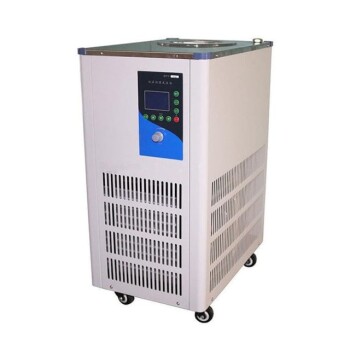
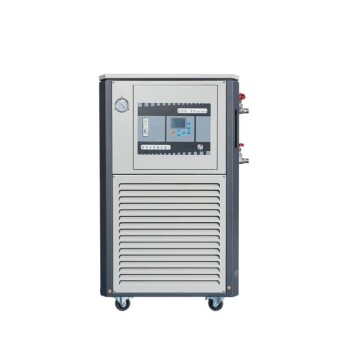
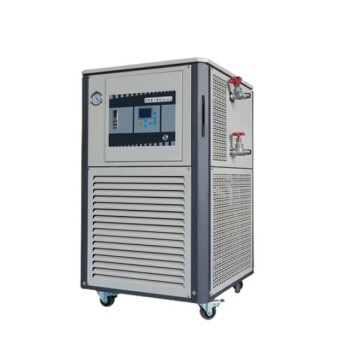
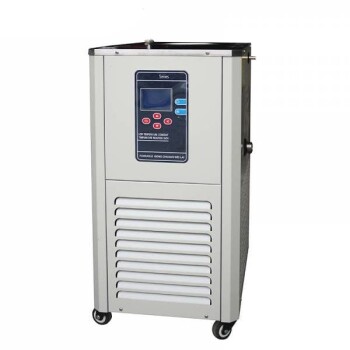
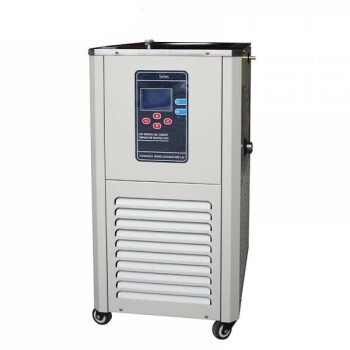
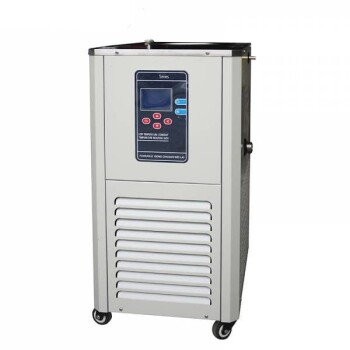
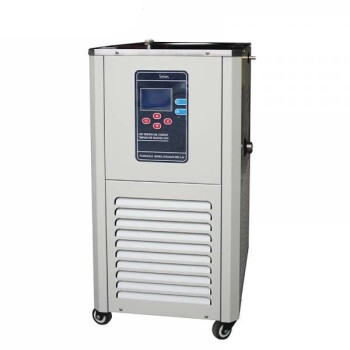
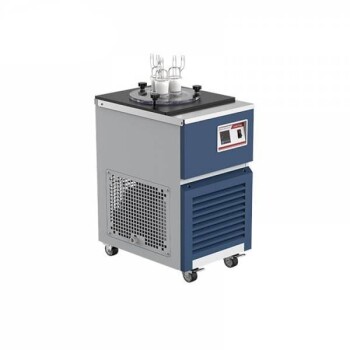
The primary function of a high-performance constant temperature circulating cooling system is to counteract the intense heat generated by high-power light sources during photocatalysis. By utilizing a cold water tank and condenser, it actively regulates the reaction environment to strictly maintain a temperature range of 30-40°C.
Core Takeaway High-intensity light sources inevitably generate excess heat, which can compromise experimental data. A cooling system eliminates this variable, ensuring that any contaminant degradation is the result of light-driven reactions (photocatalysis) rather than heat (thermal degradation), while simultaneously protecting the apparatus.
The Critical Challenge: Heat Management
The Byproduct of High-Power Illumination
Photocatalytic degradation experiments often require powerful light sources, such as 400 W lamps, to drive the reaction.
While these lamps provide the necessary photon energy, they also generate significant amounts of thermal energy as a byproduct.
Without active intervention, this heat accumulates rapidly, causing a sharp temperature rise within the reaction chamber.
Ensuring Scientific Accuracy
Isolating the Reaction Mechanism
The fundamental goal of these experiments is to measure contaminant removal caused specifically by photocatalysis.
However, high temperatures can cause contaminants to break down naturally, a process known as thermal degradation.
If the temperature is not controlled, it becomes impossible to distinguish whether the contaminant (e.g., 1-naphthol) was removed by the photocatalyst or simply by the heat.
Defining the Temperature Window
The cooling system resolves this ambiguity by maintaining the reaction temperature between 30-40°C.
By clamping the temperature in this specific range, the researcher effectively excludes thermal degradation as a variable.
This ensures that the experimental results reflect solely the efficiency of the photocatalytic process.
System Protection and Stability
Preventing Equipment Damage
Beyond preserving data integrity, thermal management is essential for the hardware.
Unchecked heat buildup from high-power lamps can stress or damage the reaction system components.
The circulating cooling system protects the apparatus from high-temperature damage, ensuring consistent performance over long durations.
Common Pitfalls in Experimental Design
The Risk of False Positives
A common error in photocatalytic setups is underestimating the thermal output of the light source.
If a researcher neglects the cooling system, they risk obtaining false positive results.
This occurs when a contaminant appears to degrade quickly, but the effect is actually driven by heat, leading to an inaccurate assessment of the photocatalyst's true capabilities.
Ensuring Experimental Validity
For any high-power photocatalytic experiment, temperature control is not optional—it is a requirement for validity.
- If your primary focus is Data Accuracy: Ensure the cooling system locks the temperature between 30-40°C to prove that contaminant removal is purely photocatalytic.
- If your primary focus is Equipment Longevity: Utilize the circulating system to dissipate the intense thermal load from 400 W lamps, preventing hardware failure.
By stabilizing the temperature, you transform a volatile reaction environment into a controlled, scientifically valid experiment.
Summary Table:
| Feature | Function in Photocatalytic Apparatus |
|---|---|
| Temperature Range | Strictly maintained between 30-40°C |
| Heat Mitigation | Counteracts thermal output from high-power (e.g., 400W) lamps |
| Mechanism Isolation | Prevents thermal degradation from being mistaken for photocatalysis |
| Hardware Protection | Safeguards the reaction system from high-temperature stress |
| Data Integrity | Eliminates thermal variables for scientifically valid results |
Elevate Your Research Precision with KINTEK
Don't let thermal variables compromise your experimental integrity. KINTEK specializes in advanced laboratory solutions designed for the most demanding research environments. From high-performance constant temperature cooling systems to high-temperature high-pressure reactors and autoclaves, we provide the precision tools necessary for valid, reproducible results.
Our extensive portfolio supports your entire workflow, featuring:
- Photocatalytic & Battery Research Tools: Electrolytic cells, electrodes, and consumables.
- Thermal Management: ULT freezers, cold traps, and freeze dryers.
- Material Processing: Muffle and vacuum furnaces, crushing systems, and hydraulic presses.
Ready to optimize your laboratory setup? Contact us today to find the perfect equipment for your application!
References
- Farhad Mahmoodi, Mehraban Sadeghi. Removal of 1-naphthol from Water via Photocatalytic Degradation Over N,S-TiO2/ Silica Sulfuric Acid under visible Light. DOI: 10.32598/jaehr.10.1.1242
This article is also based on technical information from Kintek Solution Knowledge Base .
Related Products
- 100L Chilling Circulator Cooling Water Circulator for Low Temperature Constant Temperature Reaction Bath Water Bath Cooling
- 10L Heating Chilling Circulator Cooling Water Bath Circulator for High and Low Temperature Constant Temperature Reaction
- 5L Heating Chilling Circulator Cooling Water Bath Circulator for High and Low Temperature Constant Temperature Reaction
- 20L Heating Chilling Circulator Cooling Water Bath Circulator for High and Low Temperature Constant Temperature Reaction
- 100L Heating Chilling Circulator Cooling Water Bath Circulator for High and Low Temperature Constant Temperature Reaction
People Also Ask
- What function does a circulating cooling chiller perform during the gas adsorption isotherm testing of nanoporous carbon?
- Why is a circulating water chiller required for Prussian Blue nanoparticles? Ensure Stability & Batch Reproducibility
- What is the purpose of a cooling circulation water bath system in electrochemical experiments? Enhance Lab Precision
- How does a constant temperature circulator support the leaching reaction of gold scrap? Optimize Gold Recovery Results
- How do constant temperature circulators impact weight-loss immersion tests? Ensure Precision in Corrosion Analysis