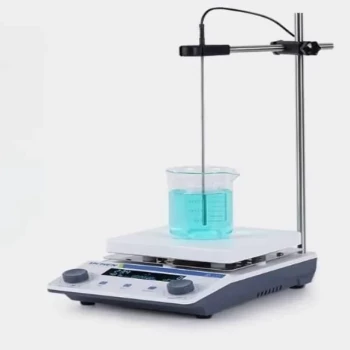
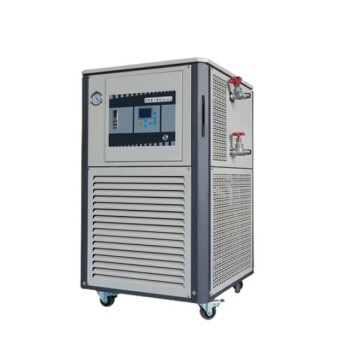
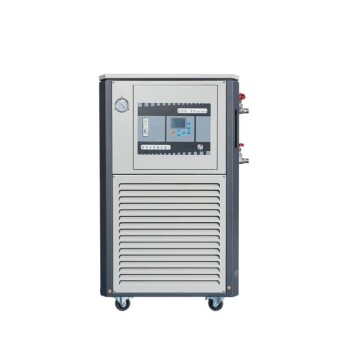
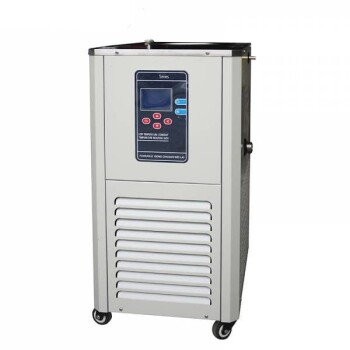
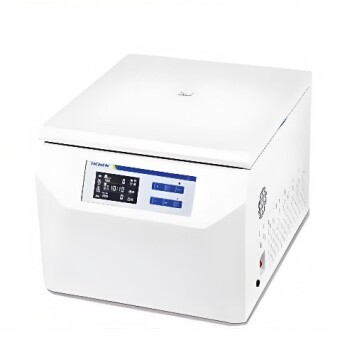
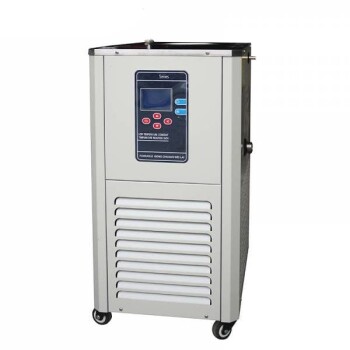
The high-precision constant temperature laboratory reactor serves as the foundational control system for the synthesis of Anion Exchange Polymer Electrolytes (AEMs). Its primary function is to maintain a strictly controlled thermal environment and provide uniform stirring power, ensuring that monomer polymerization occurs consistently within a programmed kinetic range.
Precision in the synthesis phase is not merely about safety; it is the defining factor for material performance. By stabilizing reaction kinetics, this reactor directly dictates the molecular architecture of the membrane, specifically its molecular weight, grafting rate, and Ion Exchange Capacity (IEC).
The Mechanics of Control
Strictly Controlled Thermal Environment
The synthesis of AEMs involves sensitive polymerization reactions where temperature fluctuations can drastically alter reaction rates.
A high-precision reactor maintains the temperature within a tight tolerance. This ensures the reaction stays within the programmed kinetic range, preventing deviations that could lead to substandard material.
Uniform Stirring Power
Temperature control is ineffective if the reaction mixture is not homogeneous.
The reactor provides uniform stirring power, ensuring that monomers and catalysts are evenly distributed. This eliminates "hot spots" or dead zones within the vessel, ensuring the entire batch reacts at the same rate.
Impact on Critical Material Properties
Controlling Molecular Weight Distribution
The consistency provided by the reactor allows for the precise regulation of polymer chain growth.
By maintaining stable kinetics, the reactor ensures a narrow and predictable molecular weight distribution. This is essential for the mechanical stability of the final membrane.
Managing the Grafting Rate
AEM synthesis often involves grafting functional groups onto a polymer backbone.
This process requires exact energy input. The reactor’s precision ensures the grafting rate is high enough to be effective but controlled enough to prevent structural degradation of the polymer.
Defining Ion Exchange Capacity (IEC)
The ultimate measure of an AEM's performance is its Ion Exchange Capacity (IEC).
The IEC is a direct result of how well the polymerization and grafting processes were executed. By controlling the previous variables, the reactor ensures the final material achieves the target Ion Exchange Capacity.
Understanding the Trade-offs
The Cost of Precision vs. Throughput
High-precision reactors prioritize stability and control over raw speed or massive scale.
While they ensure high-quality batch production, the strict control parameters may extend the duration of the synthesis phase compared to less regulated methods.
Sensitivity to Operational Parameters
Because these reactors are designed to operate within specific kinetic ranges, they are less forgiving of operator error.
Incorrect programming of the thermal profile or stirring speed can result in a batch that fails to meet the specific IEC requirements, wasting expensive monomers.
Making the Right Choice for Your Goal
To maximize the utility of a high-precision reactor in AEM preparation, align your process parameters with your specific material goals.
- If your primary focus is Mechanical Durability: Prioritize thermal stability to ensure a uniform molecular weight distribution, which reduces brittleness.
- If your primary focus is Conductivity (High IEC): Focus on optimizing the stirring power and kinetic range to maximize the grafting rate of functional groups.
Precision in the reactor yields predictability in the membrane.
Summary Table:
| Feature | Role in AEM Synthesis | Impact on Final Electrolyte |
|---|---|---|
| Thermal Precision | Maintains programmed kinetic range | Predictable Molecular Weight & Durability |
| Uniform Stirring | Ensures monomer & catalyst homogeneity | Consistent Grafting Rate & Material Uniformity |
| Kinetic Control | Regulates polymer chain growth | High Ion Exchange Capacity (IEC) |
| Batch Stability | Eliminates hot spots & dead zones | Reduced structural degradation & brittleness |
Elevate Your Material Research with KINTEK Precision
Precise control is the difference between a prototype and a breakthrough. KINTEK specializes in advanced laboratory equipment designed for the rigorous demands of polymer synthesis and battery research. Whether you are developing next-generation Anion Exchange Membranes (AEMs) or optimizing chemical kinetics, our high-precision constant temperature reactors, high-pressure autoclaves, and specialized electrolytic cells provide the stability you need for repeatable, high-performance results.
From crushing and milling systems for raw material preparation to sophisticated heating solutions and dental furnaces, KINTEK offers a comprehensive portfolio of tools including:
- High-Temperature Furnaces (Muffle, Vacuum, CVD, PECVD)
- Hydraulic Presses (Pellet, Hot, Isostatic)
- Cooling Solutions (ULT Freezers, Freeze Dryers)
- Essential Consumables (PTFE, Ceramics, and Crucibles)
Ready to achieve superior Ion Exchange Capacity and mechanical durability in your lab? Contact KINTEK today to discuss your specific research requirements and let our experts help you select the perfect system for your application.
References
- John R. Varcoe, Lin Zhuang. Anion-exchange membranes in electrochemical energy systems. DOI: 10.1039/c4ee01303d
This article is also based on technical information from Kintek Solution Knowledge Base .
Related Products
- High Temperature Constant Temperature Heating Circulator Water Bath Chiller Circulator for Reaction Bath
- Customizable Laboratory High Temperature High Pressure Reactors for Diverse Scientific Applications
- Laboratory Small Constant Temperature Heated Magnetic Stirrer Heater and Stirrer
- High Pressure Laboratory Autoclave Reactor for Hydrothermal Synthesis
- 5L Heating Chilling Circulator Cooling Water Bath Circulator for High and Low Temperature Constant Temperature Reaction
People Also Ask
- What is the necessity of a circulating water bath in chlorate production? Optimize Yield & Purity with Precision
- How does a constant temperature circulator support the leaching reaction of gold scrap? Optimize Gold Recovery Results
- How do constant temperature circulators impact weight-loss immersion tests? Ensure Precision in Corrosion Analysis
- Why is a constant temperature water bath used for precursor storage in CVD? Achieve Stable Nanocrystalline SiC Deposition
- Why is a high-precision constant temperature water bath necessary for anaerobic digestion? Ensure Success at 37±0.02°C