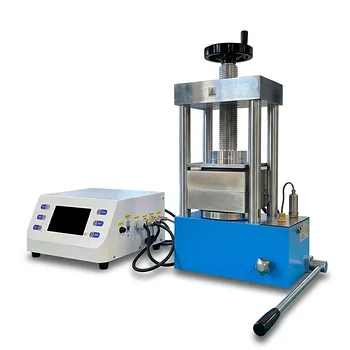
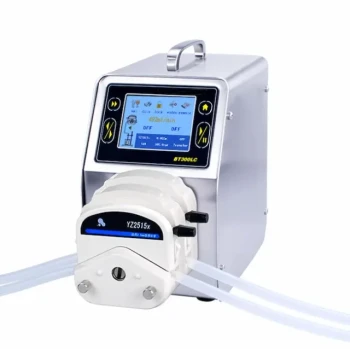
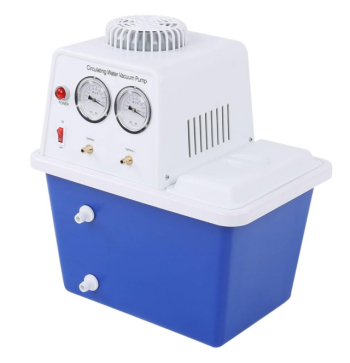
A high-pressure hydraulic pump system serves as a precise loading mechanism specifically designed for the destructive testing of Silicon Carbide (SiC) components. Its primary function is to generate and maintain stable hydraulic pressure up to 100 MPa against the inner walls of SiC tubes. This process accurately simulates the internal pressure loads the material will encounter during actual operation.
Core Takeaway While theoretical models predict material behavior, this hydraulic system provides the physical validation necessary for safety. By applying uniform internal stress, it validates strength evaluation models based on effective volume theory, ensuring the reliability of ceramic reactors.
Simulating Real-World Conditions
Accurate Internal Loading
The primary mechanical function of the system is to apply uniform hydraulic stress to the inner geometry of the component.
This mimics the specific internal pressure loads that SiC tubes face in active reactor environments.
High-Pressure Stability
Reliable testing requires consistent force application rather than sudden spikes.
The system provides stable, controlled pressure up to 100 MPa. This stability is essential for capturing accurate data points during destructive testing.
Validating Strength Models
Bridging Theory and Reality
Engineers use this system to move beyond theoretical calculations.
The data collected during these tests is used to validate strength evaluation models. Specifically, it tests predictions based on effective volume theory.
Ensuring Reactor Safety
The ultimate goal of this function is operational safety.
By experimentally verifying the strength of the tubes, the system confirms that ceramic reactors can withstand their design loads without catastrophic failure.
Understanding the Limitations
Destructive Methodology
It is important to recognize that this is a destructive testing method.
The components are subjected to extreme stress to test their limits. Consequently, the specific parts tested are often rendered unusable for operation.
Geometrical Constraints
This specific hydraulic method relies on pressurizing "inner walls."
Therefore, it is highly effective for tubular or vessel-like shapes but is not suitable for solid blocks or flat plates where internal pressure cannot be applied.
Making the Right Choice for Your Goal
To determine if this testing method aligns with your project requirements, consider the following:
- If your primary focus is validating safety models: This system provides the empirical data needed to confirm effective volume theory calculations.
- If your primary focus is testing tubular components: This method is ideal for simulating the actual internal hoop stresses found in reactor tubes.
This testing process transforms Silicon Carbide from a theoretically strong material into a proven, reliable solution for high-pressure applications.
Summary Table:
| Feature | Function in SiC Strength Evaluation |
|---|---|
| Pressure Capacity | Generates stable hydraulic loads up to 100 MPa |
| Loading Mechanism | Applies uniform internal stress to tube inner walls |
| Model Validation | Physically verifies effective volume theory predictions |
| Testing Goal | Ensures safety and reliability of ceramic reactors |
| Primary Application | Destructive testing of tubular or vessel-shaped components |
Elevate Your Material Testing Precision with KINTEK
Ensure the safety and performance of your Silicon Carbide components with KINTEK’s industry-leading laboratory solutions. Whether you are validating strength models or simulating extreme reactor environments, our comprehensive range of hydraulic presses (pellet, hot, isostatic), high-temperature high-pressure reactors, and crushing systems provides the reliability your research demands.
From high-performance ceramic crucibles to advanced battery research tools, KINTEK specializes in equipping labs with the precision instruments needed to transform theoretical potential into proven results.
Ready to optimize your strength evaluation process? Contact our technical experts today to find the perfect equipment for your high-pressure applications!
References
- Hiroaki Takegami, Shinji Kubo. Development of strength evaluation method of ceramic reactor for iodine-sulfur process and hydrogen production test in Japan Atomic Energy Agency. DOI: 10.1016/j.nucengdes.2019.110498
This article is also based on technical information from Kintek Solution Knowledge Base .
Related Products
- Automatic High Temperature Heated Hydraulic Press Machine with Heated Plates for Lab
- Manual High Temperature Heated Hydraulic Press Machine with Heated Plates for Lab
- Automatic Heated Hydraulic Press Machine with Heated Plates for Laboratory Hot Press
- Heated Hydraulic Press Machine with Heated Plates for Vacuum Box Laboratory Hot Press
- 24T 30T 60T Heated Hydraulic Press Machine with Heated Plates for Laboratory Hot Press
People Also Ask
- Why is a heated hydraulic press used for warm pressing NASICON green tapes? Optimize Your Solid Electrolyte Density
- What is a heated hydraulic press used for? Essential Tool for Curing, Molding, and Laminating
- Why is a heated laboratory hydraulic press necessary for composite laminates? Achieve Void-Free Structural Integrity
- What is a hot hydraulic press? Harness Heat and Pressure for Advanced Manufacturing
- What are heated hydraulic presses used for? Molding Composites, Vulcanizing Rubber, and More