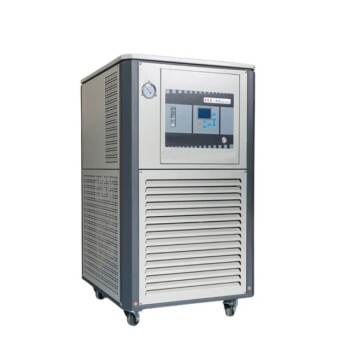
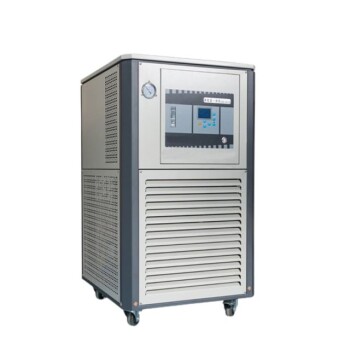
The primary function of a high-pressure hydrothermal reactor is to generate a sealed, high-temperature, and high-pressure liquid-phase environment essential for the synthesis of mesoporous hydroxyapatite. By creating these specific conditions, the reactor enables the precise manipulation of reaction kinetics and solubility, ensuring the resulting powders achieve the uniform phase composition required for reliable performance. This control is critical for engineering materials with the specific structural properties needed to immobilize radioactive waste.
By bringing aqueous solutions to a subcritical state, the reactor allows for the precise tuning of pore structure and specific surface area. This control directly results in materials with superior ion-exchange capacities and the high stability required to capture and securely retain radioactive isotopes.
Creating the Optimal Synthesis Environment
The Role of Subcritical Conditions
The reactor operates by creating a closed system where aqueous solutions are brought to high temperatures and pressures. This pushes the liquid environment into a subcritical state, significantly enhancing the solubility of precursors and accelerating reaction kinetics. These conditions allow the precursor solution to fully react and reorganize effectively within the liquid phase.
Ensuring Phase Reproducibility
For radioactive waste immobilization, material consistency is non-negotiable. The reactor ensures high reproducibility of the phase composition, meaning every batch produces the same crystal structure. This reliability eliminates variations that could compromise the material's ability to act as a stable immobilization substrate.
Precision Control of Parameters
The equipment allows technicians to precisely adjust hydrothermal treatment time and temperature. This granular control is the mechanism by which the synthesis process acts as a tunable dial rather than a blunt instrument. It ensures that the chemical reaction stops exactly when the desired material characteristics are achieved.
Tuning Material Properties for Immobilization
Developing Mesoporous Structures
The reactor's environment facilitates the "fine-tuning" of powder dispersity and pore structure. By regulating the pressure and temperature, the system guides the self-assembly of hydroxyapatite crystals into a mesoporous framework. This structure creates a massive specific surface area, which acts as a physical "sponge" for radionuclides.
Enhancing Ion-Exchange Capacity
The primary reference highlights that this process leads to "superior ion-exchange capacities." In the context of radioactive waste, this is the core functional attribute. The high-pressure synthesis creates a lattice structure capable of efficiently swapping harmless ions for radioactive ones, effectively trapping the waste within the material's matrix.
Promoting High Crystallinity
The autogenous pressure generated within the reactor enhances the crystallinity of the product. High crystallinity implies a more stable, ordered atomic structure. For waste immobilization, this stability is crucial to prevent the leaching of trapped radioactive elements back into the environment over time.
Understanding the Trade-offs
The Necessity of Strict Regulation
While the reactor offers precision, it requires exacting control; minor deviations in temperature or pressure can alter the phase composition. If the parameters are not perfectly maintained, the resulting pore structure may collapse or fail to form uniformly, significantly reducing the material's adsorption capacity.
Equipment Complexity
Unlike open-air precipitation methods, this process relies on sophisticated, sealed pressure vessels. This introduces higher equipment costs and safety considerations regarding high-pressure operation. However, this trade-off is generally accepted as necessary to achieve the superior material quality required for nuclear applications.
Making the Right Choice for Your Goal
To maximize the efficacy of your hydroxyapatite synthesis for waste management, consider the following:
- If your primary focus is maximum waste loading: Prioritize the precise tuning of temperature to maximize specific surface area and pore volume, creating more sites for ion capture.
- If your primary focus is long-term geologic stability: Focus on the treatment time and pressure settings that maximize crystallinity, ensuring the material resists degradation and leaching over centuries.
The high-pressure hydrothermal reactor acts as the architectural tool that transforms raw precursors into a stable, high-capacity matrix capable of securely locking away hazardous ions.
Summary Table:
| Key Parameter | Role in Synthesis | Benefit for Waste Immobilization |
|---|---|---|
| Subcritical Conditions | Enhances precursor solubility & reaction kinetics | Ensures uniform phase composition & material consistency |
| Pressure Regulation | Guides crystal self-assembly & pore formation | Creates high specific surface area for radionuclide capture |
| Temperature Control | Fine-tunes powder dispersity & crystallinity | Promotes long-term stability and prevents leaching |
| Treatment Time | Manages lattice structure development | Achieves superior ion-exchange capacity for waste loading |
Elevate Your Material Research with KINTEK Precision
Ready to achieve superior phase reproducibility and tunable mesoporous structures? KINTEK specializes in high-performance laboratory equipment designed for the most demanding synthesis environments. Our high-temperature high-pressure reactors and autoclaves provide the precise control necessary for advanced applications like radioactive waste immobilization and radionuclide capture.
Whether you are developing hydroxyapatite matrices or exploring battery research, our comprehensive range—including crushing and milling systems, vacuum furnaces, and specialized ceramics—is engineered for reliability and safety.
Transform your laboratory outcomes today. Contact our specialists to find the perfect reactor for your application!
References
- Yu. Zorenko, Anna Mrozik. Development of TL and OSL materials for the analyzation of dose and energy distributions of photon beams for radiotherapeutic applications. DOI: 10.21175/rad.abstr.book.2023.42.8
This article is also based on technical information from Kintek Solution Knowledge Base .
Related Products
- Customizable Laboratory High Temperature High Pressure Reactors for Diverse Scientific Applications
- High Pressure Laboratory Autoclave Reactor for Hydrothermal Synthesis
- Customizable High Pressure Reactors for Advanced Scientific and Industrial Applications
- Stainless High Pressure Autoclave Reactor Laboratory Pressure Reactor
- Mini SS High Pressure Autoclave Reactor for Laboratory Use
People Also Ask
- How do high-pressure and high-temperature reactors ensure the effective treatment of lignocellulosic wastewater in WAO?
- What equipment is required for high-pressure high-temperature reactions? Master Extreme Chemistry Safely
- How do you control high pressure in a reactor? A Guide to Safe & Stable Operation
- How does initial oxygen pressure affect the wet oxidation of pharmaceutical sludge? Master Your Oxidation Depth
- Why is argon better than nitrogen for inert atmosphere? Ensure Absolute Reactivity & Stability