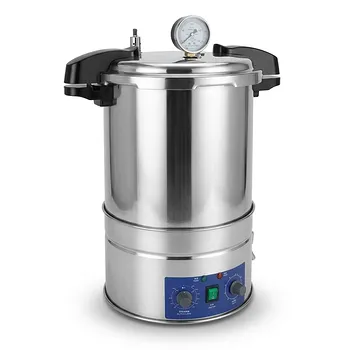
The high-pressure reactor serves as the fundamental vessel for the solvothermal synthesis of Metal-Organic Framework (MOF) precursors. By generating autogenous pressure and maintaining precise thermal control, the reactor facilitates the coordination reaction between metal ions and organic ligands. This process is essential for creating the structural templates that eventually become double carbon-layered core-shell composite sulfides.
The high-pressure reactor enables the synthesis of high-crystallinity MOF precursors by maintaining a sealed environment where solvents can reach temperatures far exceeding their boiling points. This controlled environment is the prerequisite for achieving the regular morphology and uniform composition required for high-performance core-shell sulfides.
Creating the Optimal Solvothermal Environment
Facilitating Coordination Chemistry
The reactor provides the closed system necessary for autogenous pressure to develop as solvents are heated. This pressure, combined with precise temperature control, drives the coordination reaction between metal ions and organic ligands that would not occur under ambient conditions.
Overcoming Solvent Boiling Points
In a high-pressure reactor, liquid solvents can be heated beyond their atmospheric boiling points without evaporating. This allows the precursors to react and crystallize within the liquid phase, ensuring a more complete and uniform chemical transformation.
Promoting High Crystallinity
The stable, high-energy environment within the reactor facilitates the formation of crystal nuclei and their subsequent growth. This results in layered materials and MOFs with high crystallinity and regular structures, such as cubes or polyhedrons.
Defining the Structural Foundation
Morphological Control of Precursors
The high-pressure reactor is critical for ensuring the regular morphology of the MOF templates. These templates serve as the "skeleton" for the derivative sulfides; if the reactor conditions fluctuate, the core-shell structure may collapse or form inconsistently.
Ensuring Uniform Composition
By maintaining a constant environment over extended periods—often 24 hours or more—the reactor ensures that bimetallic distributions remain uniform. This consistency is vital for the performance of the final double carbon-layered composite in catalytic or energy storage applications.
Strengthening Interfacial Bonding
The pressure within the vessel strengthens the chemical interactions between different layers, such as carbon quantum dots and metal oxides. This facilitates stable chemical bonding, ensuring that the carbon layers remain attached to the core during subsequent processing steps.
Understanding the Trade-offs
Process Sensitivity and Safety
Operating at high pressures and temperatures requires rigorous sealing performance and safety protocols. Any loss of pressure during the reaction can lead to incomplete crystallization or "dead" batches where the core-shell structure fails to form.
Scalability vs. Precision
While high-pressure reactors excel at producing high-quality, high-purity materials, scaling the process for industrial volume can be challenging. Larger vessels require more complex thermal management to ensure the temperature remains uniform throughout the entire volume of the reactant mixture.
Equipment Maintenance
The corrosive nature of certain solvents and precursors under high pressure can degrade reactor liners over time. Frequent inspection and replacement of autoclave liners are necessary to prevent contamination of the composite sulfides.
How to Optimize Reactor Use for Your Synthesis
Making the Right Choice for Your Goal
- If your primary focus is high crystallinity: Ensure the reactor maintains a constant temperature for at least 24 hours to allow for slow, ordered crystal growth.
- If your primary focus is specific morphology (e.g., nanorods): Adjust the pressure relief rates and solvent ratios to control the hydrolysis and polycondensation speeds.
- If your primary focus is structural stability: Prioritize the sealing integrity of the reactor to maintain a stable supercritical or sub-critical state throughout the reaction duration.
The high-pressure reactor is the indispensable engine that transforms raw chemical precursors into the sophisticated, ordered architectures required for advanced core-shell composite sulfides.
Summary Table:
| Key Function | Impact on Synthesis | Why It Matters |
|---|---|---|
| Solvothermal Synthesis | Regular morphology & high crystallinity | Ensures structural skeleton integrity |
| Autogenous Pressure | Facilitates coordination reactions | Enables reactions impossible at 1 atm |
| Liquid Phase Control | Uniform bimetallic distribution | Vital for catalytic/storage performance |
| Interfacial Bonding | Strengthened chemical interactions | Prevents core-shell structure collapse |
Precision Engineering for Your Material Synthesis
Elevate your research with KINTEK’s high-performance laboratory equipment. We specialize in providing high-temperature high-pressure reactors and autoclaves specifically designed to maintain the stable solvothermal environments required for advanced MOF and core-shell composite synthesis.
Beyond reactors, our comprehensive portfolio includes:
- Thermal Processing: Muffle, tube, vacuum, and CVD furnaces.
- Sample Preparation: Crushing, milling, and hydraulic pellet presses.
- Lab Essentials: High-purity ceramics, crucibles, and cooling solutions.
Ensure high crystallinity and structural integrity in every batch. Contact our specialists today to find the ideal equipment for your laboratory's unique requirements!
References
- Wenbo Wu, Yongyi Chen. Double‐Carbon‐Layer Core–Shell Complex Sulfides Derived from Bimetallic Metal–Organic Frameworks for Li‐/Na‐Ion Battery Storage. DOI: 10.1002/ente.202300529
This article is also based on technical information from Kintek Solution Knowledge Base .
Related Products
- Customizable Laboratory High Temperature High Pressure Reactors for Diverse Scientific Applications
- Customizable High Pressure Reactors for Advanced Scientific and Industrial Applications
- Stainless High Pressure Autoclave Reactor Laboratory Pressure Reactor
- Visual High-Pressure Reactor for In-Situ Observation
- Mini SS High Pressure Autoclave Reactor for Laboratory Use
People Also Ask
- How do high-pressure and high-temperature reactors ensure the effective treatment of lignocellulosic wastewater in WAO?
- What equipment is required for high-pressure high-temperature reactions? Master Extreme Chemistry Safely
- How do you control high pressure in a reactor? A Guide to Safe & Stable Operation
- How does initial oxygen pressure affect the wet oxidation of pharmaceutical sludge? Master Your Oxidation Depth
- Why is argon better than nitrogen for inert atmosphere? Ensure Absolute Reactivity & Stability