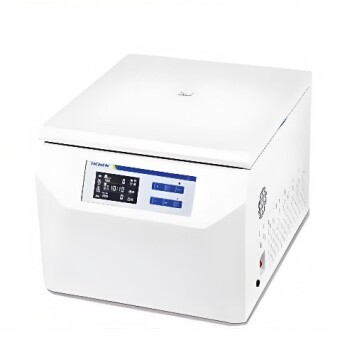
A high-pressure reactor serves as a precision control chamber for testing Triboelectric Nanogenerators (TENGs). Its primary function is to create a regulated gaseous environment where researchers can inject specific gases, such as CO2, and systematically adjust internal pressure levels to observe device performance.
By manipulating the environment to suppress gas discharge, the high-pressure reactor allows researchers to isolate material performance from atmospheric limitations. This setup is critical for defining the true charge generation limits necessary for developing high-power-density energy harvesters.
The Mechanics of Pressure Control
Creating a Controlled Atmosphere
The reactor allows for the precise injection of gases, effectively isolating the TENG from ambient air.
This capability is essential for testing how different gas compositions, such as CO2, interact with the device.
Leveraging Paschen's Law
The core principle behind using a high-pressure reactor is Paschen's Law, which describes the voltage required to break down a gas between two electrodes.
By increasing the pressure within the reactor, researchers can significantly alter the conditions required for gas breakdown.
Suppressing Gas Discharge
In standard atmospheric conditions, air breaks down easily, causing a discharge that limits the maximum charge a TENG can hold.
The high-pressure environment raises the threshold for this breakdown. This suppression of gas discharge prevents premature energy loss, allowing the material to reach higher potential states.
Advancing Energy Harvesting Technology
Exploring Charge Generation Limits
Standard testing environments often mask the true potential of triboelectric materials because the surrounding air limits performance.
The high-pressure reactor removes these environmental constraints. This allows scientists to observe the theoretical maximum charge density of the materials themselves.
Guiding Device Development
Data gathered from high-pressure tests provides a roadmap for engineering more powerful devices.
By understanding how materials behave when gas discharge is suppressed, engineers can design high-power-density devices optimized for specific operating environments.
Understanding the Trade-offs
Operational Complexity
While effective for research, maintaining a high-pressure environment adds significant complexity to the testing setup.
It requires specialized equipment to safely manage pressurized gases, which may not be feasible for all experimental facilities.
Theoretical vs. Practical Limits
The performance gains observed in a high-pressure reactor represent a specific environmental condition.
These results define the upper limits of physics, but they may not directly translate to TENGs operating in standard atmospheric pressure without additional engineering modifications.
How to Apply This to Your Project
- If your primary focus is fundamental material science: Use the high-pressure reactor to inhibit breakdown and measure the absolute maximum surface charge density your material can sustain.
- If your primary focus is device engineering: Use the data from pressure tests to identify which gas environments or encapsulation methods will yield the highest power output for your specific application.
Mastering the pressure environment is the defining step in transitioning TENGs from experimental novelties to viable, high-performance power sources.
Summary Table:
| Feature | Function in TENG Research | Benefit to Researchers |
|---|---|---|
| Controlled Atmosphere | Isolation from ambient air & specific gas injection | Studies interaction with gases like CO2 |
| Pressure Manipulation | Adjusting internal pressure per Paschen’s Law | Raises the threshold for gas breakdown |
| Discharge Suppression | Prevents premature energy loss via air ionization | Enables measurement of maximum charge density |
| Performance Mapping | Defines upper physical limits of materials | Provides a roadmap for high-power-density devices |
Elevate Your Energy Research with KINTEK Precision
Are you looking to push the boundaries of energy harvesting? KINTEK specializes in high-performance laboratory equipment designed for the most demanding research applications. Our robust high-temperature high-pressure reactors and autoclaves provide the precise environment needed to suppress gas discharge and unlock the full potential of your Triboelectric Nanogenerators (TENG).
From advanced battery research tools to custom crushing, milling, and hydraulic press systems, KINTEK provides the comprehensive solutions essential for material science innovation. Don't let atmospheric limitations stall your breakthroughs—partner with us for reliable, high-density energy solutions.
Ready to define the future of high-power-density devices?
Contact KINTEK Today for a Specialized Consultation
References
- Xin Xia, Yunlong Zi. Metallic glass-based triboelectric nanogenerators. DOI: 10.1038/s41467-023-36675-x
This article is also based on technical information from Kintek Solution Knowledge Base .
Related Products
- Customizable Laboratory High Temperature High Pressure Reactors for Diverse Scientific Applications
- Customizable High Pressure Reactors for Advanced Scientific and Industrial Applications
- Stainless High Pressure Autoclave Reactor Laboratory Pressure Reactor
- Mini SS High Pressure Autoclave Reactor for Laboratory Use
- High Pressure Laboratory Autoclave Reactor for Hydrothermal Synthesis
People Also Ask
- How do high-pressure and high-temperature reactors ensure the effective treatment of lignocellulosic wastewater in WAO?
- What equipment is required for high-pressure high-temperature reactions? Master Extreme Chemistry Safely
- How do you control high pressure in a reactor? A Guide to Safe & Stable Operation
- How does initial oxygen pressure affect the wet oxidation of pharmaceutical sludge? Master Your Oxidation Depth
- Why is argon better than nitrogen for inert atmosphere? Ensure Absolute Reactivity & Stability