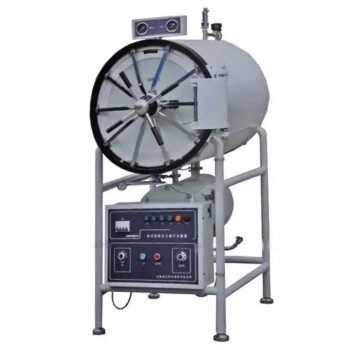
The primary function of a high-pressure stainless steel or special alloy reactor is to provide a safe, sealed containment vessel for evaluating the performance of solvents during Carbon Dioxide (CO2) absorption. These reactors are specifically engineered to maintain a stable gas-liquid interface while withstanding substantial initial pressures, such as 500 psia. By strictly controlling these environmental variables, the reactor enables the precise measurement of chemical reactions between CO2 and amine solvents.
Core Takeaway: By isolating the absorption process in a pressure-resistant, thermally controlled environment, these reactors allow researchers to obtain accurate kinetic and thermodynamic data that reflects real-world industrial conditions.
The Critical Role in CO2 Absorption
Ensuring Safety Under High Pressure
The most immediate function of the reactor is safety. Absorption experiments often require initial pressures as high as 500 psia.
Standard laboratory glassware cannot withstand these forces. Stainless steel or special alloys are required to contain this energy safely, preventing catastrophic failure during the pressurization phase.
Maintaining Thermal Stability
Accurate data collection requires constant temperature control. The primary reference highlights a typical operating temperature of 30 °C for these specific absorption experiments.
The reactor acts as a thermal mass or is integrated with a temperature control system. This ensures that the heat generated or consumed during the reaction does not skew the kinetic data.
Facilitating the Gas-Liquid Interface
The reactor is designed to create a stable boundary where the CO2 gas meets the liquid amine solvent.
This interface is where the chemical reaction physically occurs. A stable interface is essential for calculating the rate at which the solvent absorbs the gas (kinetics).
Evaluating Solvent Performance
Simulating Industrial Conditions
Lab-scale data is only useful if it predicts large-scale performance.
These reactors replicate the high-pressure environments found in industrial gas processing plants. This allows researchers to predict how a solvent will behave in a commercial setting before scaling up.
Measuring Kinetics and Thermodynamics
The sealed environment allows for precise monitoring of pressure changes over time.
By tracking how pressure drops as CO2 is absorbed, researchers can derive the thermodynamic capacity (how much CO2 the solvent holds) and the kinetic rate (how fast it absorbs it).
Critical Operational Requirements
Material Compatibility is Non-Negotiable
While stainless steel is the standard, "special alloys" are often mentioned for a reason.
If the solvent system is highly corrosive, or if the experiment involves extreme conditions beyond standard absorption (such as the high-temperature synthesis mentioned in supplementary contexts), standard steel may degrade. The material must be matched to the specific chemical environment to prevent contamination or vessel failure.
The Necessity of a Perfect Seal
The validity of the data relies entirely on the reactor being a "closed system."
Any leakage in the reactor seals invalidates the pressure measurements used to calculate absorption rates. The reactor’s ability to maintain a hermetic seal under high pressure is just as important as its structural strength.
Making the Right Choice for Your Goal
To maximize the value of your high-pressure reactor in CO2 absorption, align your setup with your specific research objectives.
- If your primary focus is Kinetic Analysis: Ensure the reactor design promotes a strictly defined and stable gas-liquid interface area to minimize variables in mass transfer calculations.
- If your primary focus is Industrial Simulation: Verify that the reactor’s maximum pressure rating exceeds your target industrial pressure (e.g., 500 psia) to ensure a sufficient safety margin.
Select the reactor material and pressure rating that not only contains the reaction safely but specifically preserves the integrity of the kinetic data you seek to capture.
Summary Table:
| Feature | Function in CO2 Absorption Experiments |
|---|---|
| Material Integrity | Stainless steel or special alloys resist corrosion and withstand pressures up to 500 psia. |
| Interface Stability | Maintains a consistent gas-liquid boundary for accurate kinetic rate calculations. |
| Thermal Control | Ensures constant temperature (e.g., 30 °C) to prevent thermal skewing of thermodynamic data. |
| Hermetic Sealing | Provides a closed system to precisely track pressure drops and solvent capacity. |
| Safety Assurance | Contains high-energy gas reactions, preventing vessel failure in laboratory settings. |
Elevate Your Research with KINTEK Precision Reactors
Maximize the accuracy of your kinetic and thermodynamic data with KINTEK’s high-temperature high-pressure reactors and autoclaves. Specifically engineered for rigorous CO2 absorption studies and industrial simulations, our reactors offer the safety, material compatibility, and thermal stability your laboratory demands.
Whether you need specialized stainless steel vessels, crushing and milling systems, or PTFE consumables, KINTEK provides a comprehensive range of laboratory equipment to streamline your workflow. Contact us today to discuss your custom reactor requirements and discover how our advanced solutions can enhance your lab's efficiency and safety.
References
- Verónica Calva, Marvin Ricaurte. CO2 Capture Using Amine-Based Solvents: Identification of Additives to Improve the Kinetics and Thermodynamics of CO2 Sorption at High-Pressure Conditions. DOI: 10.3390/gases5010004
This article is also based on technical information from Kintek Solution Knowledge Base .
Related Products
- Customizable High Pressure Reactors for Advanced Scientific and Industrial Applications
- Stainless High Pressure Autoclave Reactor Laboratory Pressure Reactor
- Customizable Laboratory High Temperature High Pressure Reactors for Diverse Scientific Applications
- Mini SS High Pressure Autoclave Reactor for Laboratory Use
- Visual High-Pressure Reactor for In-Situ Observation
People Also Ask
- What is the function of high-pressure reactors in the synthesis of MFI-type zeolites? Master Dry Gel Conversion.
- Graphene Fiber Synthesis: Key High-Pressure Reactor Processing Conditions Explained
- What is the primary function of a high-pressure reactor in NiMoO4 preparation? Optimize Hydrothermal Catalyst Synthesis
- What reactor is used for high pressure reactions? Select the Right Autoclave for Your Lab
- What are the hazards of high pressure reactors? A Guide to Managing Explosive Risks