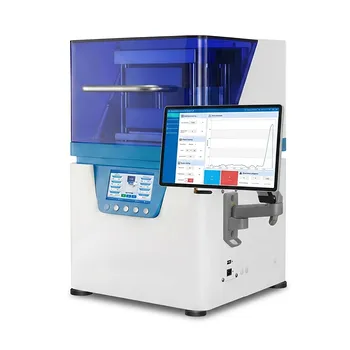
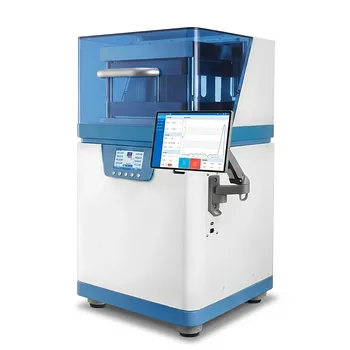
The laboratory hydraulic press and standard sieves are the primary tools used for catalyst granulation and particle size control. A hydraulic press compresses raw catalyst powder into dense solid blocks or specific geometric shapes (pellets, cylinders), while standard sieves are used after crushing to isolate particles within a precise size range. Together, they ensure the catalyst possesses the uniform morphology and mechanical strength required for stable reactor performance.
The primary function of these tools is to transform fine powders into standardized particles that balance mechanical durability with fluid dynamic efficiency. This process prevents reactor-level failures such as excessive pressure drops, localized hotspots, and physical degradation under industrial operating conditions.
The Role of the Laboratory Hydraulic Press in Catalyst Molding
Achieving Geometric Integrity and Density
The hydraulic press applies high, uniform static pressure to compress dry catalyst powders—often mixed with binders—into solid forms like pellets, rings, or cylinders. This process, known as granulation, ensures the resulting catalyst bodies have a uniform density throughout their structure.
Uniform density is vital for kinetic studies, as it allows researchers to accurately calculate and eliminate internal mass transfer limitations. This ensures that measured reaction rates reflect the intrinsic kinetics of the material rather than physical diffusion barriers.
Enhancing Mechanical Strength and Durability
In industrial and continuous-flow reactors, catalysts must withstand the physical stress of bed gravity and high-velocity gas flows. The hydraulic press provides the necessary compaction to give particles the compressive strength required to resist crushing or "powdering."
Without sufficient mechanical strength, catalysts can break down into fines during operation. These fines can lead to clogging in micro-packed bed reactors and significantly increase system back pressure.
Facilitating Analytical Characterization
Beyond shaping for reactors, the hydraulic press is essential for creating dense, flat pellets required for materials characterization. Techniques such as X-ray diffraction (XRD) and X-ray photoelectron spectroscopy (XPS) require a consistent sample surface height.
By ensuring a smooth, flat surface, the press maximizes signal intensity and ensures the accuracy of the collected analytical data. It can also be used to press catalysts onto conductive substrates for photoelectrochemical testing.
The Function of Standard Sieves in Particle Standardization
Controlling Fluid Dynamics and Pressure Drop
Once the hydraulic press creates solid blocks, they are crushed and processed through standard sieves (typically 20–40 mesh). This step ensures that every catalyst particle in the reactor bed possesses consistent geometric dimensions.
Standardization is critical for uniform reactant distribution across the catalytic bed. Consistent particle size prevents "channeling" and ensures a stable, predictable pressure drop throughout the reaction process.
Mitigating Thermal and Diffusion Issues
In a fixed-bed reactor, inconsistent particle morphology can lead to localized overheating or "hotspots." These hotspots can deactivate the catalyst or lead to runaway reactions that compromise safety and selectivity.
By using sieves to isolate a specific size range, researchers can optimize the surface-area-to-volume ratio. This optimization is essential for ensuring efficient diffusion and preventing the system from becoming mass-transfer limited.
Understanding the Trade-offs
The Compression vs. Porosity Dilemma
While high pressure increases mechanical strength, it can inadvertently reduce internal porosity. If a catalyst is pressed too tightly, the internal surface area becomes inaccessible to reactants, effectively killing the catalytic activity.
Experts must find the "sweet spot" where the pressure is high enough for durability but low enough to maintain the pore network necessary for chemical transformation.
Particle Size vs. System Back Pressure
Sieving particles to a very small size increases the available surface area for reaction, which can improve efficiency. However, smaller particles significantly increase the system back pressure, which can lead to equipment strain or flow instability.
Choosing the correct mesh size is a balancing act between maximizing catalytic contact and maintaining fluid dynamic stability.
How to Apply This to Your Project
Making the Right Choice for Your Goal
To ensure your catalyst shaping stage is successful, consider your primary objective:
- If your primary focus is kinetic measurement: Use the hydraulic press to achieve maximum density uniformity and sieve to a small, consistent particle size to eliminate internal diffusion resistance.
- If your primary focus is industrial scale-up: Prioritize mechanical strength and use the press to form shapes like rings or cylinders that offer low pressure drops and high wear resistance.
- If your primary focus is surface characterization: Focus on creating a perfectly flat, highly compressed pellet to ensure the accuracy of XRD or XPS signal collection.
- If your primary focus is continuous flow synthesis: Use precise sieving to prevent the formation of fines that could clog micro-channels and cause dangerous pressure spikes.
Properly calibrated compression and rigorous sieving are the foundations of reproducible and scalable catalytic chemistry.
Summary Table:
| Tool | Primary Function | Key Laboratory Benefits |
|---|---|---|
| Laboratory Hydraulic Press | Compresses powders into pellets, cylinders, or blocks (granulation). | Enhances mechanical strength, ensures uniform density, and creates flat surfaces for XRD/XPS analysis. |
| Standard Sieves | Isolates particles within precise size ranges (e.g., 20–40 mesh). | Controls reactor pressure drop, prevents localized hotspots, and ensures uniform reactant distribution. |
Elevate Your Catalyst Research with KINTEK Precision
Achieving the perfect balance between mechanical strength and catalytic activity requires equipment you can trust. KINTEK specializes in high-performance laboratory solutions designed to streamline your catalyst shaping and material characterization workflows.
Our extensive portfolio includes:
- Hydraulic Presses: Precision pellet, hot, and isostatic presses for superior granulation and sample preparation.
- Processing Systems: High-efficiency crushing, milling, and sieving equipment for exact particle size control.
- Advanced Reactors: High-temperature, high-pressure reactors and autoclaves for rigorous performance testing.
- Thermal Solutions: A full range of muffle, tube, vacuum, and CVD furnaces to meet every thermal processing need.
Whether you are refining kinetic studies or scaling up for industrial applications, KINTEK provides the reliable tools and essential consumables—including ceramics and crucibles—to ensure your project's success.
Ready to optimize your lab’s efficiency? Contact KINTEK today to consult with our experts and find the ideal solution for your specific requirements.
References
- Xin‐Yao Yu, Baoning Zong. Cu-Based Catalysts with Enhanced Thermal Stability for Cyclohexyl Acetate Hydrogenation: Studies on Cu+ and Cu0 Sites at Different Reduction Temperatures. DOI: 10.3390/catal13040737
This article is also based on technical information from Kintek Solution Knowledge Base .
Related Products
- Laboratory Hydraulic Press Lab Pellet Press Machine for Glove Box
- Laboratory Hydraulic Press Split Electric Lab Pellet Press
- Fully Automatic Heated Hydraulic Lab Press for Materials Sintering and Sample Preparation
- Laboratory Hydraulic Press Lab Pellet Press for Button Battery
- Automatic Laboratory Hydraulic Press for XRF & KBR Pellet Press
People Also Ask
- How do laboratory hydraulic presses contribute to zero-gap electrolyzers? Optimize Performance & Safety
- Why is a laboratory hydraulic press necessary for ZrO2/Cr2O3 interface analysis? Optimize Sample Density and Accuracy
- How do a precision laboratory hydraulic press and specialized molds contribute to the fabrication of spherical ceramic samples? Achieving High-Density Material Precision
- What is the role of a laboratory hydraulic press in the preparation of rare earth denitrification catalysts?
- How does pressure control of a laboratory hydraulic press affect W-Ti alloys? Optimize Grain Structure & Density