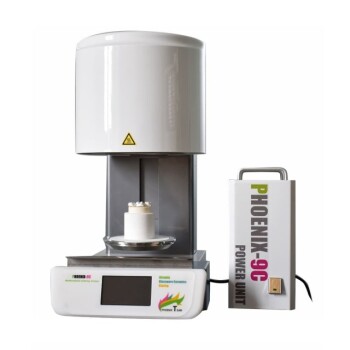
The primary function of a laboratory oven during the intermediate drying of Zirconia thin films is to stabilize the coating between deposition cycles. By providing a controlled thermal environment, the oven rapidly evaporates residual solvents and physically adsorbed water, ensuring each layer solidifies sufficiently before the next is applied.
The intermediate drying stage is the structural safeguard of the deposition process. It promotes preliminary cross-linking to harden the gel layer, effectively preventing previous layers from dissolving or washing away during subsequent coating steps.
The Mechanics of Layer Stabilization
Removal of Volatiles
The deposition process introduces solvents and moisture that must be evacuated to stabilize the film. The laboratory oven creates a stable thermal environment to drive off these volatiles.
This specifically targets residual solvents from the precursor solution and physically adsorbed water from the atmosphere. Rapid removal of these elements is the first step in transitioning the film from a liquid sol to a solid gel.
Preliminary Cross-Linking
Beyond simple evaporation, the thermal energy initiates chemical changes within the material. The heat promotes preliminary cross-linking of the gel network.
This structural evolution increases the mechanical rigidity of the layer. It transforms the wet film into a semi-solid state capable of withstanding physical stress.
Protecting Multi-Layer Integrity
Preventing "Wash-Off" Effects
The most critical role of intermediate drying is protecting the work you have already done. Without this step, applying a subsequent layer would re-wet and dissolve the underlying material.
The oven dries the film enough to make it insoluble to the next coating application. This ensures that the previous layer is not washed away, allowing for the build-up of thickness.
Building Film Density
Creating a high-quality Zirconia structure requires minimizing porosity. Intermediate drying compacts the gel layer before more material is added.
This repetitive densification is essential for the final properties of the film. It allows for the creation of a dense, multi-layered structure that performs reliably.
Understanding the Trade-offs
The Risk of Incomplete Drying
If the oven does not provide sufficient thermal energy or time, solvents will remain trapped.
This leads to structural failure when the next layer is deposited. The trapped solvents can cause the layers to mix, ruining the distinct multi-layer architecture and resulting in a poor-quality film.
Thermal Stability vs. Shock
While the reference highlights the need for rapid removal of solvents, the thermal environment must be stable.
Inconsistent temperatures can lead to uneven cross-linking. This lack of uniformity can compromise the density of the final Zirconia structure.
Optimizing Your Deposition Process
To ensure the success of your Zirconia thin film fabrication, apply these principles based on your specific objectives:
- If your primary focus is Film Thickness: Ensure the intermediate drying time is sufficient to fully insolubilize the layer, preventing the "wash-off" of accumulated material.
- If your primary focus is Structural Density: Prioritize a stable, consistent oven temperature to promote uniform cross-linking and maximize compaction between layers.
Intermediate drying is not a passive wait time; it is an active processing step that defines the structural integrity of your final material.
Summary Table:
| Process Stage | Key Oven Function | Impact on Final Film |
|---|---|---|
| Volatile Removal | Evaporates solvents and moisture | Transitions sol to solid gel |
| Cross-Linking | Initiates chemical gel networking | Increases mechanical rigidity |
| Layer Protection | Renders layer insoluble | Prevents wash-off during next coating |
| Densification | Compacts the gel layer | Minimizes porosity for high-quality film |
Elevate Your Thin Film Research with KINTEK Precision
Achieving the perfect Zirconia thin film requires more than just chemistry; it requires a controlled thermal environment that prevents structural failure. KINTEK specializes in high-performance laboratory equipment, including specialized drying ovens, muffle furnaces, and vacuum solutions designed for precision material science.
Whether you are refining multi-layer deposition or advancing battery research, our comprehensive range of tools—from crushing and milling systems to high-temperature reactors and dental furnaces—ensures your lab delivers consistent, high-density results.
Ready to optimize your deposition process? Contact our technical experts today to find the ideal thermal solution for your laboratory.
References
- Y.J. Acosta-Silva, A. Méndez-López. Photocatalytic Activities of Methylene Blue Using ZrO2 Thin Films at Different Annealing Temperatures. DOI: 10.3390/coatings14050537
This article is also based on technical information from Kintek Solution Knowledge Base .
Related Products
- Laboratory Scientific Electric Heating Blast Drying Oven
- 23L Laboratory Vacuum Drying Oven
- 56L Vertical Laboratory Vacuum Drying Oven
- Dental Porcelain Zirconia Sintering Ceramic Vacuum Press Furnace
- Dental Porcelain Zirconia Sintering Ceramic Furnace Chairside with Transformer
People Also Ask
- How does a laboratory electric drying oven contribute to the formation of the initial coating? Expert Insights
- What role does a precision laboratory drying oven play in the synthesis of GO-PANI nanocomposites? Protect Material Integrity
- What role does a laboratory drying oven play in the preparation of zinc oxide nanoparticle precursors?
- What is the necessity of using a laboratory drying oven when processing MoO3/GO composite nanopowders? Find out here.
- What is the role of a laboratory drying oven in cellulose citrate production? Ensure Material Stability & Purity