In the preparation of cerium-based mixed oxide catalyst supports, the mechanical stirrer functions as the primary regulator of chemical homogeneity and pH stability. Its specific role during the co-precipitation process is to ensure continuous, efficient mixing so that cerium salts achieve full contact with secondary metal salts, such as zirconium, aluminum, titanium, or silicon.
The mechanical stirrer acts as the critical control variable for material quality. By eliminating concentration gradients and stabilizing pH, it transforms a mixture of liquid salts into a solid precursor with a precise, uniform distribution of elements.
Optimizing the Co-Precipitation Environment
Facilitating Reactant Contact
The fundamental requirement of co-precipitation is the interaction between distinct metal precursors.
The mechanical stirrer drives the cerium salts to interact thoroughly with other metal salts in the solution.
By forcing these components together, the stirrer ensures that metals like zirconium, aluminum, titanium, or silicon are integrated into the support structure rather than remaining isolated.
Stabilizing pH Levels
Precipitation chemistry is dictated by the acidity of the solution.
The stirrer maintains a uniform and stable pH level throughout the entire volume of the liquid.
This prevents localized variances in acidity, ensuring that the chemical conditions required for precipitation are met simultaneously across the entire batch.
Ensuring Precursor Quality
Achieving Component Homogeneity
The physical motion of the stirrer directly impacts the microscopic structure of the material.
Continuous agitation produces precipitation precursors with a homogeneous distribution of components.
This uniformity is essential for the catalyst's performance, as it prevents the formation of "hot spots" or inactive zones in the final oxide.
Locking in Stoichiometric Ratios
To create an effective catalyst, the final solid must match the theoretical chemical formula.
The stirrer ensures that the precipitate forms with accurate stoichiometric ratios.
By keeping the solution uniform, it guarantees that the ratio of cerium to dopant metals in the solid accurately reflects the ratio of the starting salts.
Common Pitfalls in Agitation
The Risk of pH Gradients
If the mechanical stirring is insufficiently vigorous or poorly designed, pH gradients will form within the vessel.
This leads to sequential precipitation, where one metal precipitates out before the other, ruining the mixed structure.
Component Segregation
Inadequate mixing allows for the segregation of metal salts.
This results in a heterogeneous mixture where the cerium and the secondary metals (like zirconium or silicon) exist in separate phases, rather than a unified mixed oxide.
Making the Right Choice for Your Goal
To maximize the effectiveness of your mechanical stirring setup, consider your specific chemical targets:
- If your primary focus is Structural Homogeneity: Ensure the stirrer speed provides high shear to force intimate contact between the cerium and the zirconium, aluminum, titanium, or silicon salts.
- If your primary focus is Chemical Composition: Prioritize mixing consistency to maintain a perfectly flat pH profile, which ensures the accurate stoichiometric capture of all metal ions.
Effective stirring is the difference between a simple physical mixture and a truly integrated chemical compound.
Summary Table:
| Function | Role in Catalyst Preparation | Impact on Quality |
|---|---|---|
| Reactant Contact | Forces interaction between cerium and dopant salts (Zr, Al, Ti, Si). | Prevents isolated phases and promotes integration. |
| pH Stabilization | Maintains uniform acidity across the entire liquid volume. | Prevents localized precipitation and sequential separation. |
| Homogeneity | Ensures uniform distribution of components at the micro-level. | Eliminates 'hot spots' and inactive zones in the oxide. |
| Stoichiometric Control | Maintains consistent ratios between starting salts and solids. | Guarantees the final support matches the theoretical formula. |
Elevate Your Catalyst Synthesis with KINTEK Precision
Achieving the perfect stoichiometric ratio and chemical homogeneity requires more than just mixing—it requires precision engineering. KINTEK specializes in advanced laboratory equipment designed to meet the rigorous demands of catalyst research and material science.
From high-performance mechanical stirrers and homogenizers that eliminate pH gradients to our comprehensive range of high-temperature furnaces (muffle, vacuum, and atmosphere) and high-pressure reactors, we provide the tools you need to transition from simple mixtures to integrated chemical compounds. Whether you are working on cerium-based supports or complex battery research, our PTFE consumables, ceramics, and crushing systems ensure contamination-free results.
Ready to optimize your co-precipitation process? Contact KINTEK today to discover how our high-precision laboratory solutions can enhance your research efficiency and material quality.
References
- Bashir Ahmad Dar, Mazahar Farooqui. Ceria-Based Mixed Oxide Supported CuO: An Efficient Heterogeneous Catalyst for Conversion of Cellulose to Sorbitol. DOI: 10.4236/gsc.2015.51003
This article is also based on technical information from Kintek Solution Knowledge Base .
Related Products
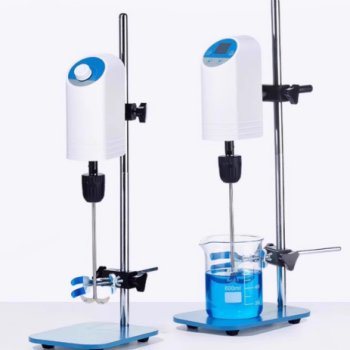
- High Performance Laboratory Stirrers for Diverse Applications
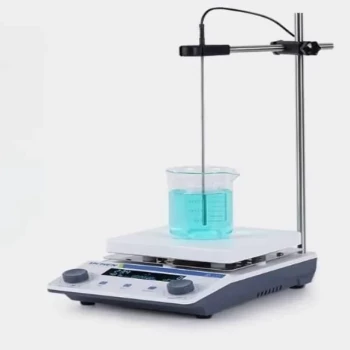
- Laboratory Small Constant Temperature Heated Magnetic Stirrer Heater and Stirrer
- Custom PTFE Teflon Parts Manufacturer for Magnetic Stirring Bar
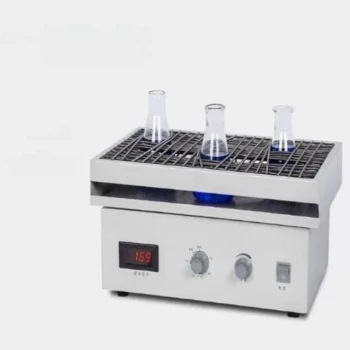
- Laboratory Multifunctional Small Speed-Adjustable Horizontal Mechanical Shaker for Lab
People Also Ask
- How does a laboratory stirrer influence MOF product quality? Master Precision in Non-Solvothermal Synthesis
- What critical role does a Laboratory Stirrer play during leaching? Enhance Titanium-Magnesium Waste Recovery
- What is the primary function of laboratory stirring equipment in the preparation of compost leachate? Optimize Extraction
- What is a laboratory mixer? A Guide to Achieving Perfect Sample Homogeneity
- What is a laboratory mixer used for? Choose the Right Tool for Liquids or Solids