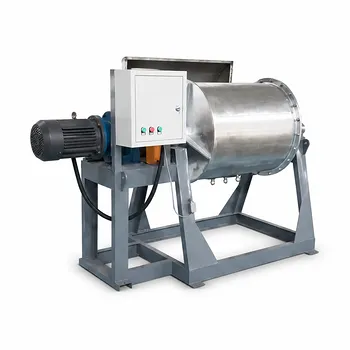
The function of a planetary ball mill in this specific stage is to mechanically enforce homogeneity and particle refinement through high-energy wet milling. By utilizing zirconia grinding media and a solvent like isopropanol, the mill applies intense impact and shear forces to the raw precursors (LiOH, Al2O3, TiO2, and NH4H2PO4). This creates a uniform mixture with reduced particle size, which is strictly necessary to enable the subsequent high-temperature solid-state reaction to yield pure-phase LATP crystals.
Core Takeaway The planetary ball mill does not merely blend ingredients; it preconditions the thermodynamics of the mixture. By maximizing the specific surface area and ensuring atomic-level proximity of the reactants, it lowers the kinetic barriers required for the solid-state reaction that follows, ensuring a high-purity final electrolyte.
The Mechanics of High-Energy Mixing
Application of Shear and Impact Forces
The planetary ball mill operates by rotating a grinding jar and a supporting disc in opposite directions. This generates massive centrifugal forces that drive the grinding media—specifically zirconia balls—to collide with the raw materials against the jar walls. These collisions provide the mechanical energy required to pulverize the starting materials.
The Role of the Liquid Medium
In the synthesis of LATP, this process is performed as "wet milling" using isopropanol as a medium. The solvent prevents the re-agglomeration of fine particles, reduces friction heat, and facilitates the suspension of the powder. This ensures that the shear forces act efficiently on the individual particles of LiOH, Al2O3, TiO2, and NH4H2PO4 rather than on large clumps.
Preconditioning for Solid-State Reaction
Refining Particle Size for Reactivity
The primary output of this stage is significantly refined particles. Reducing the particle size increases the specific surface area of the reactants. A larger surface area ensures better contact between the solid particles, which is critical for facilitating diffusion during the subsequent high-temperature calcination step.
Ensuring Stoichiometric Uniformity
LATP synthesis is highly sensitive to local variations in composition. The planetary ball mill ensures that all four components are dispersed efficiently. If the mixing is insufficient, local "hotspots" of reactants (e.g., too much Titanium in one area) will lead to the formation of secondary impurity phases, degrading the conductivity of the final electrolyte.
Understanding the Trade-offs
Media Contamination Risks
While high-energy milling is effective, it introduces the risk of wear from the grinding media. Zirconia (ZrO2) is preferred over metallic balls because it is highly wear-resistant and chemically inert regarding the LATP structure. Using softer or metallic media could introduce impurities that act as electron traps or structural defects in the final ceramic.
Energy Input vs. Material Integrity
There is a balance to be struck regarding milling duration and speed. Insufficient milling leads to incomplete mixing and phase impurities later. However, excessive milling time can generate excessive heat, potentially evaporating the solvent or causing premature, uncontrolled mechanochemical reactions before the controlled thermal treatment begins.
Making the Right Choice for Your Goal
To optimize the initial mixing stage for LATP synthesis, align your process parameters with your specific quality targets:
- If your primary focus is Phase Purity: Prioritize the use of high-purity zirconia media and longer milling durations to ensure absolute homogeneity, eliminating local stoichiometric deviations.
- If your primary focus is Reactivity: Focus on rotational speed to maximize impact energy, reducing particle size as much as possible to lower the required temperature for the subsequent sintering phase.
Effective use of the planetary ball mill bridges the gap between raw chemical potential and a functional, high-conductivity solid electrolyte.
Summary Table:
| Feature | Function in LATP Synthesis |
|---|---|
| Action Mechanism | High-energy impact and shear forces via counter-rotation |
| Grinding Media | Zirconia (ZrO2) balls for wear resistance and purity |
| Milling Medium | Isopropanol (wet milling) to prevent agglomeration |
| Key Outcome | Increased specific surface area and atomic-level proximity |
| Process Impact | Lowers kinetic barriers for solid-state reactions |
Elevate Your Battery Research with KINTEK Precision
Achieving the perfect stoichiometric uniformity in LATP solid electrolytes requires more than just mixing—it requires the mechanical excellence of KINTEK’s planetary ball mills and crushing systems. Our equipment is engineered to provide the high-energy impact and shear forces necessary to eliminate secondary phase impurities and maximize ion conductivity.
From high-purity zirconia grinding media and PTFE consumables to our advanced high-temperature furnaces and isostatic hydraulic presses, KINTEK provides a comprehensive ecosystem for battery research and advanced ceramics.
Ready to refine your synthesis process? Contact our laboratory specialists today to find the ideal milling and thermal solution for your next breakthrough.
Related Products
- High Energy Planetary Ball Mill for Laboratory Horizontal Tank Type Milling Machine
- Mini Planetary Ball Mill Machine for Laboratory Milling
- Laboratory Horizontal Planetary Ball Mill Milling Machine
- High-Energy Omnidirectional Planetary Ball Mill Milling Machine for Laboratory
- Laboratory Planetary Ball Mill Cabinet Planetary Ball Milling Machine
People Also Ask
- What is the role of a planetary ball mill in sulfide-based solid-state batteries? Engineer High-Performance Cathodes
- What are the parameters of a planetary ball mill? Master Speed, Time, and Media for Perfect Grinding
- What is the function of a planetary ball mill for nanostructured eutectic steel? Essential Prep for High-Strength Alloys
- What role does a planetary ball mill play in the preparation of NASICON-type solid electrolytes like LATP and LAGP?
- What is the function of a planetary ball mill in solid-state electrolyte prep? Milling vs. SDS Methods Explained