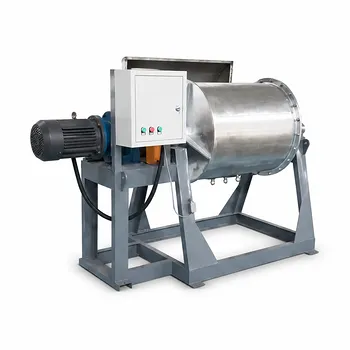
Planetary ball milling is the critical processing step used to establish intimate physical contact between solid components in an all-solid-state battery electrode. Specifically, it is employed to uniformly mix active materials (such as Li2S or Si), conductive agents, and solid electrolyte powders, often operating at low speeds over extended periods to ensure thorough integration without damaging sensitive materials.
Core Takeaway: In all-solid-state batteries, ions cannot flow through a liquid medium; they require physical pathways. The planetary ball mill functions as a "mechanical architect," forcing solid particles together to create the continuous solid-solid interfaces necessary for effective ion and electron transport.
Constructing Superior Interfaces
Achieving Uniform Homogeneity
The primary function of the planetary ball mill in this context is to create a homogenous blend of distinct powders.
It mixes active materials, solid electrolyte powders, and conductive agents (like VGCF) to ensuring no single component agglomerates.
Facilitating Solid-Solid Contact
Unlike liquid electrolytes that naturally wet surfaces, solid electrolytes require mechanical force to touch active materials.
The milling process applies shear and impact forces to press these solids together, maximizing the contact area at the interface.
Enhancing Transport Channels
By ensuring uniform dispersion, the mill constructs effective transport networks within the electrode.
This creates continuous pathways for both electrons (via conductive agents) and ions (via solid electrolytes), which are vital for the battery's electrochemical performance.
Mechanical Modification and Activation
Particle Size Reduction
In specific high-energy applications, the ball mill utilizes impact forces to crush particles from the micron scale down to the nanometer scale (less than 10nm).
This reduction significantly shortens the diffusion path for lithium ions, allowing for faster charge and discharge rates.
Increasing Active Surface Area
The milling process exposes fresh surfaces on the active materials.
This increased electrochemically active surface area improves the material's reversible capacity and overall rate performance.
Understanding the Trade-offs
The Balance of Energy and Speed
While high energy can reduce particle size, the preparation of composite electrodes often requires a "low speed" approach (as noted in the primary reference).
excessive energy input can cause mechanochemical decomposition or structural damage to sensitive solid electrolytes, particularly sulfide or halide types.
Structural Transition Risks
High-energy milling can induce phase changes, such as transitioning a material toward a disordered rock-salt phase.
While this can be beneficial for specific active materials, it must be carefully controlled to avoid degrading the ionic conductivity of the solid electrolyte portion of the mixture.
Making the Right Choice for Your Goal
To maximize the effectiveness of planetary ball milling for your specific electrode composition:
- If your primary focus is establishing ionic pathways: Prioritize low-speed, extended milling to maximize solid-solid contact without degrading the sensitive solid electrolyte structure.
- If your primary focus is material modification: Utilize higher-energy milling to reduce particle size to the nanoscale and shorten ion diffusion paths, but perform this step before adding sensitive electrolytes if possible.
Success in all-solid-state battery preparation relies not just on mixing, but on using mechanical force to engineer a dense, continuous, and chemically stable conductive network.
Summary Table:
| Function | Role in Battery Preparation | Benefit to Performance |
|---|---|---|
| Homogenization | Uniformly mixes active materials, electrolytes, and agents | Prevents agglomeration and improves stability |
| Interface Engineering | Forces physical contact between solid particles | Maximizes ion/electron transport channels |
| Size Reduction | Crushes particles from micron to nanometer scale | Shortens diffusion paths for faster charging |
| Surface Activation | Exposes fresh electrochemically active surfaces | Increases reversible capacity and rate performance |
Elevate Your Battery Research with KINTEK Precision
Mastering the interface is the key to all-solid-state battery breakthroughs. At KINTEK, we provide the advanced tools necessary for high-performance material synthesis. From high-energy planetary ball mills and crushing systems to hydraulic presses for pelletizing and specialized glovebox-ready furnaces, our equipment is engineered for precision and durability.
Whether you are scaling up cathode production or researching next-generation solid electrolytes, our comprehensive portfolio—including high-temperature reactors, battery research consumables, and PTFE/ceramic crucibles—supports every step of your workflow.
Ready to optimize your electrode preparation? Contact our laboratory specialists today to find the perfect milling and thermal solutions for your research goals!
Related Products
- High Energy Planetary Ball Mill for Laboratory Horizontal Tank Type Milling Machine
- Laboratory Planetary Ball Mill Rotating Ball Milling Machine
- High-Energy Omnidirectional Planetary Ball Mill Milling Machine for Laboratory
- High Energy Planetary Ball Mill Milling Machine for Laboratory
- Laboratory Horizontal Planetary Ball Mill Milling Machine
People Also Ask
- What is the role of a planetary ball mill in sulfide-based solid-state batteries? Engineer High-Performance Cathodes
- What are the parameters of a planetary ball mill? Master Speed, Time, and Media for Perfect Grinding
- What is the function of a planetary ball mill for nanostructured eutectic steel? Essential Prep for High-Strength Alloys
- What role does a planetary ball mill play in the preparation of NASICON-type solid electrolytes like LATP and LAGP?
- What is the function of a planetary ball mill in solid-state electrolyte prep? Milling vs. SDS Methods Explained