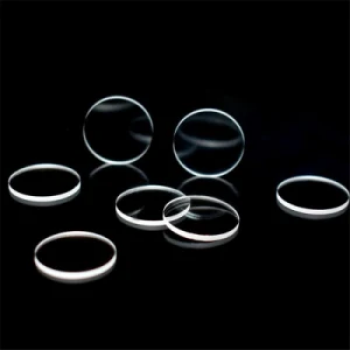
The primary function of a quartz window in a high-pressure reactor is to provide a portal for the direct, real-time visual observation of natural gas hydrate experiments. This component allows researchers to witness the physical formation and dissociation of hydrates, serving as a critical verification method for the data collected by electronic sensors.
While electronic sensors provide the necessary quantitative data, the quartz window offers the qualitative proof required to distinguish between theoretical predictions and actual physical phase changes.
The Critical Role of Visual Access
Observing Real-Time Dynamics
In high-pressure simulations, theoretical calculations do not always perfectly align with physical reality. The quartz window allows you to monitor the experiment as it unfolds.
You can directly observe the specific moments when hydrates begin to nucleate, grow, or dissociate. This visual confirmation is the only way to capture the morphological changes of the crystals in real-time.
Validating Sensor Data
Reliance solely on temperature and pressure sensors can lead to ambiguity. Sensors indicate the conditions within the vessel, but they cannot definitively prove the physical state of the contents at a specific micro-moment.
The quartz window acts as a "truth mechanism." It helps you correlate a spike or drop in sensor data with the actual physical event, allowing for a highly accurate determination of critical phase change points.
Why Quartz is the Material of Choice
Withstanding Extreme Environments
Natural gas hydrate simulations require rigorous conditions involving high pressure and specific temperature ranges.
Quartz is utilized because it maintains structural integrity and optical clarity under these stresses. Unlike standard glass, it resists the deformation that could distort visual data during high-pressure cycles.
Chemical Inertness and Clarity
Based on the properties of high-purity quartz often used in reactor liners, the material is chemically inert.
This resistance is vital for a window; it ensures that corrosive fluids or saline environments inside the reactor do not etch or cloud the viewing surface. This preserves the optical transparency required for accurate observation over repeated experiments.
Understanding the Trade-offs
Mechanical Vulnerability
While quartz is strong, introducing a window into a stainless steel pressure vessel creates a mechanical discontinuity.
The window is often the weakest point of the reactor assembly. It requires careful handling and precise pressure limits, as it does not possess the same tensile strength or ductility as the steel vessel body.
Qualitative vs. Quantitative Data
Visual observation provides excellent qualitative context, but it is not inherently quantitative.
Unless paired with advanced high-speed camera software or image analysis algorithms, the view through the window remains a subjective observation tool rather than a source of hard numerical data.
Making the Right Choice for Your Goal
To maximize the utility of a quartz window in your simulation, align its use with your specific experimental objectives:
- If your primary focus is establishing phase equilibrium: Use the window to visually confirm the exact moment of crystal appearance or disappearance to calibrate your pressure-temperature (P-T) curves.
- If your primary focus is kinetic study: Utilize high-resolution cameras through the window to record crystal growth rates and morphology changes over time.
The quartz window transforms a "black box" experiment into a transparent, verifiable scientific process.
Summary Table:
| Feature | Function in Hydrate Simulation | Benefit to Researcher |
|---|---|---|
| Real-time Observation | Visualizes hydrate nucleation and growth | Captures morphological changes & phase transitions |
| Data Validation | Correlates visual state with P-T sensors | Eliminates ambiguity in sensor-only data sets |
| Material Strength | Withstands extreme pressures and temperatures | Maintains structural integrity under stress |
| Optical Clarity | Provides high-transparency viewing portal | Enables high-speed imaging and kinetic analysis |
| Chemical Inertness | Resists corrosion from saline or acidic fluids | Prevents window etching for long-term reuse |
Unlock Visual Insights in Your Research with KINTEK
Don't let your high-pressure experiments remain a "black box." KINTEK specializes in advanced laboratory solutions, offering state-of-the-art high-temperature high-pressure reactors and autoclaves equipped with precision-engineered quartz windows.
Whether you are conducting natural gas hydrate simulations, battery research, or material synthesis, our comprehensive range—including crushing systems, hydraulic presses, and specialized electrolytic cells—is designed to meet the most rigorous scientific standards.
Ready to elevate your lab’s capabilities? Contact us today to discuss your custom reactor requirements and see how our expertise can provide the clarity and precision your project demands.
References
- Luiz Frederico Rodrigues, Rogério V. Lourega. High-Pressure and Automatized System for Study of Natural Gas Hydrates. DOI: 10.3390/en12163064
This article is also based on technical information from Kintek Solution Knowledge Base .
Related Products
- Visual High-Pressure Reactor for In-Situ Observation
- Stainless High Pressure Autoclave Reactor Laboratory Pressure Reactor
- High Pressure Laboratory Autoclave Reactor for Hydrothermal Synthesis
- Mini SS High Pressure Autoclave Reactor for Laboratory Use
- Customizable High Pressure Reactors for Advanced Scientific and Industrial Applications
People Also Ask
- How do high-pressure reactors enhance biochar redox activity? Optimize Surface Functionalization and Energy Density
- What is the purpose of a high-pressure reactor in oleophilic GO modification? Optimize Grafting and Oil Dispersion.
- How does a high-pressure reactor facilitate reductive amidation? Maximize Yield & Speed in Tandem Reactions
- How does a high-pressure reactor assist in catalytic hydrogenation of 2,6-dimethylnitrobenzene? Optimize Your Process
- What is the significance of using a high-pressure reactor for the treatment of rice husk? Boost Furfural Yield & Speed