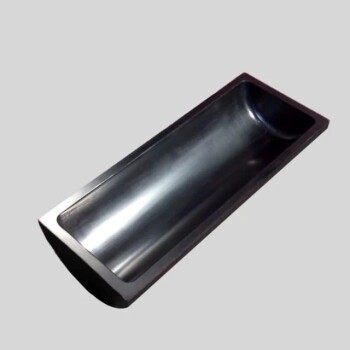
A specialized Self-propagating High-temperature Synthesis (SHS) reactor serves as a precision control environment designed to stabilize the complex chemical reactions required for Cr-Al-Si coating preparation. Its primary function is to utilize an integrated regulation system that forces powder components into a stable "solid flame" combustion mode immediately after initiation, ensuring consistent synthesis rather than erratic burning.
The SHS reactor system bridges the gap between raw chemical synthesis and industrial application. It converts a volatile combustion process into a controlled operation, ensuring safe gas management and the production of highly adherent, uniform diffusion coatings.
Achieving Process Stability
Precision Parameter Regulation
The core challenge in SHS is managing the reaction speed and temperature. The specialized reactor addresses this through an integrated parameter regulation system.
This system allows operators to fine-tune the environment, ensuring the reaction proceeds according to exact specifications rather than running uncontrolled.
Establishing the "Solid Flame"
For high-quality Cr-Al-Si coatings, the combustion mode matters. The reactor's regulation system ensures the powder components enter a stable 'solid flame' combustion mode.
This stability is crucial. Without it, the synthesis would be unpredictable, leading to inconsistencies in the final coating structure.
Safety and Byproduct Management
Handling Gas-Phase Carriers
The chemical reaction utilized in this process produces gas-phase carriers. These byproducts can be hazardous or detrimental to the process if not managed correctly.
The SHS reactor is designed to contain and manage these carriers, preventing them from disrupting the coating formation or creating safety hazards in the lab environment.
Integration with Gas Recovery
The reactor does not operate in isolation regarding safety. It is specifically designed to work in tandem with a gas recovery unit.
This combination allows for the safe extraction and management of gaseous byproducts, ensuring the system remains a closed loop regarding environmental safety.
Impact on Coating Quality
Formation of Diffusion Layers
The ultimate output of this controlled environment is a diffusion-type protective layer on steel substrates.
Because the reactor stabilizes the combustion, the coating materials can properly diffuse into the substrate surface, creating a metallurgical bond rather than a simple mechanical overlay.
Maximizing Adhesion and Uniformity
The stability provided by the reactor directly translates to physical performance. The controlled "solid flame" mode results in a coating with high adhesion.
Furthermore, the regulated environment ensures uniformity across the substrate, eliminating weak spots or variations in thickness that often occur in less controlled synthesis methods.
Operational Considerations
Dependence on Ancillary Systems
While the reactor is powerful, it is not a standalone solution for safety. It relies heavily on the gas recovery unit to function correctly. Without this attached unit, the management of gas-phase carriers would be compromised.
The Necessity of Precision
The system's reliance on a "solid flame" mode implies a need for exact calibration. If the precision parameter regulation is not set correctly, the system may fail to achieve the required stable combustion, negating the benefits of the specialized hardware.
Making the Right Choice for Your Goal
To maximize the efficacy of your Cr-Al-Si coating process, align your equipment usage with your specific objectives:
- If your primary focus is coating durability: Prioritize the calibration of the regulation system to maintain the "solid flame" mode, as this directly drives the high adhesion and uniformity of the diffusion layer.
- If your primary focus is operational safety: Ensure the reactor is fully integrated with a functioning gas recovery unit to effectively capture and manage the hazardous gas-phase carriers produced during synthesis.
Success in this process relies on balancing precise reaction control with effective byproduct management.
Summary Table:
| Key Feature | Functional Benefit | Impact on Coating Quality |
|---|---|---|
| Integrated Regulation | Maintains stable 'solid flame' combustion mode | Ensures coating uniformity & structural consistency |
| Gas Phase Management | Contains and controls volatile chemical carriers | Enhances operational safety & process stability |
| Gas Recovery Coupling | Safely extracts and manages gaseous byproducts | Prevents contamination & environmental hazards |
| Diffusion Control | Facilitates deep metallurgical bonding | Delivers high adhesion & long-term durability |
Elevate Your Material Synthesis with KINTEK Precision
Maximize the performance of your Cr-Al-Si coatings with KINTEK’s advanced thermal processing solutions. From specialized high-temperature high-pressure reactors and autoclaves to precision muffle and tube furnaces, we provide the cutting-edge technology required to maintain stable combustion and achieve superior diffusion-type protective layers.
Whether you are conducting battery research, processing advanced ceramics, or developing high-performance alloys, our comprehensive portfolio—including crushing systems, hydraulic presses, and cooling solutions—is designed to meet the rigorous demands of modern laboratories and industrial applications.
Ready to optimize your synthesis process? Contact KINTEK today to discover how our expertise and equipment can enhance your lab's efficiency and output quality.
References
- B. Sereda, А.Н. Удод. РОЗРОБКА РАЦІОНАЛЬНИХ ШИХТ ДЛЯ ОТРИМАННЯ ХРОМОВАНИХ ПОКРИТТІВ ЛЕГОВАНИХ КРЕМНІЄМ В УМОВАХ SHS. DOI: 10.31319/2519-8106.2(51)2024.317500
This article is also based on technical information from Kintek Solution Knowledge Base .
Related Products
- Customizable Laboratory High Temperature High Pressure Reactors for Diverse Scientific Applications
- Mini SS High Pressure Autoclave Reactor for Laboratory Use
- High Pressure Laboratory Autoclave Reactor for Hydrothermal Synthesis
- Customer Made Versatile CVD Tube Furnace Chemical Vapor Deposition Chamber System Equipment
- High Temperature Constant Temperature Heating Circulator Water Bath Chiller Circulator for Reaction Bath
People Also Ask
- How do high-pressure and high-temperature reactors ensure the effective treatment of lignocellulosic wastewater in WAO?
- What equipment is required for high-pressure high-temperature reactions? Master Extreme Chemistry Safely
- How do you control high pressure in a reactor? A Guide to Safe & Stable Operation
- How does initial oxygen pressure affect the wet oxidation of pharmaceutical sludge? Master Your Oxidation Depth
- Why is argon better than nitrogen for inert atmosphere? Ensure Absolute Reactivity & Stability