In photovoltaic metal recovery experiments, the function of the vacuum filtration system and 0.45 micrometer nitrocellulose membranes is to execute rapid, high-purity solid-liquid separation. This setup transforms the raw output of the leaching process into a particle-free Pregnant Leach Solution (PLS) suitable for sensitive analysis.
The core purpose of this filtration stage is protection and precision. By removing particulates down to the sub-micron level, the system safeguards downstream analytical instruments from damage and ensures that leaching efficiency calculations are based solely on dissolved ions, not suspended solids.
The Role of the Vacuum Filtration System
Accelerating Solid-Liquid Separation
After the chemical leaching process, the mixture consists of a liquid solvent and residual solids. Relying on gravity alone to separate these phases is often inefficient and time-consuming.
Generating the Pregnant Leach Solution (PLS)
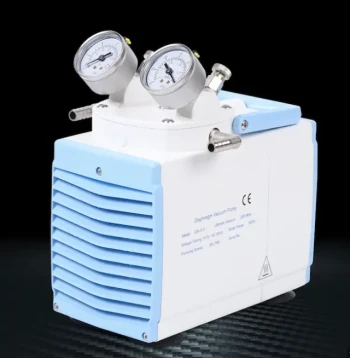
The vacuum system applies negative pressure to force the liquid through the filter medium rapidly. This mechanical advantage ensures the quick retrieval of the Pregnant Leach Solution (PLS), which contains the valuable dissolved metal ions targeted for recovery.
The Critical Function of the 0.45 $\mu$m Nitrocellulose Membrane
Ensuring Absolute Filtrate Clarity
The 0.45 micrometer pore size is a specific standard chosen to intercept fine suspended particles. This membrane acts as a strict physical barrier, ensuring that only the dissolved metal ions and the liquid phase pass into the final sample.
Protecting Analytical Instrumentation (ICP-OES)
The clarity provided by the membrane is vital for the safety of downstream equipment. Inductively Coupled Plasma Optical Emission Spectroscopy (ICP-OES) systems, used to analyze metal concentration, have narrow sample introduction components.
The membrane prevents these components from clogging, avoiding costly downtime and equipment maintenance issues associated with particulate blockages.
Validating Leaching Efficiency
For experimental data to be valid, the measured metal concentration must represent only what was chemically dissolved. If solid particles pass through the filter, they can skew analytical results.
By ensuring the PLS is free of solids, the membrane guarantees that the calculated leaching efficiency is accurate and reliable.
Understanding the Trade-offs
Filtration Speed vs. Sample Quality
While the vacuum system is designed for speed, the 0.45 $\mu$m membrane introduces a necessary flow restriction to catch fine particles. This ensures purity but requires the system to operate under sufficient pressure to maintain efficiency without rupturing the membrane.
The Necessity of Pre-Analysis Processing
Skipping this filtration step or using a larger pore size might speed up sample collection, but it introduces significant risk. The trade-off for the extra time spent on fine filtration is the assurance that your ICP-OES equipment remains operational and your data remains defensible.
Making the Right Choice for Your Goal
To maximize the success of your metal recovery experiments, consider the following:
- If your primary focus is Equipment Longevity: Strictly adhere to the 0.45 $\mu$m standard to prevent particulate buildup that can damage sensitive ICP-OES nebulizers.
- If your primary focus is Data Integrity: Verify that your filtrate is visually clear before analysis to ensure your leaching efficiency calculations reflect true dissolved metal concentrations.
By strictly implementing this filtration protocol, you ensure that your recovery process yields not just a liquid, but a verifiable analytical standard.
Summary Table:
| Component | Primary Function | Impact on Experiment |
|---|---|---|
| Vacuum Filtration System | Accelerates solid-liquid separation via negative pressure | Rapidly generates Pregnant Leach Solution (PLS) |
| 0.45 μm NC Membrane | Filters fine particulates and suspended solids | Ensures absolute filtrate clarity and analytical accuracy |
| Downstream Protection | Prevents clogging in ICP-OES sample components | Extends equipment lifespan and reduces maintenance costs |
| Data Validation | Removes undissolved solids from concentration measurements | Guarantees accurate leaching efficiency calculations |
Elevate Your Laboratory Precision with KINTEK
Maximize the accuracy and efficiency of your photovoltaic metal recovery experiments with KINTEK’s professional-grade equipment. Whether you require robust vacuum filtration systems, specialized crushing and milling systems for sample preparation, or high-temperature reactors for leaching processes, KINTEK provides the high-performance tools your research demands.
Our extensive portfolio for lab experts includes:
- Advanced Filtration & Separation: Precise sieving and filtration solutions.
- Sample Processing: High-durability crushing, milling, and hydraulic presses.
- Thermal & Chemical Treatment: Muffle, tube, and vacuum furnaces, plus autoclaves and electrolytic cells.
- Laboratory Consumables: High-quality ceramics, crucibles, and PTFE products.
Don't compromise on data integrity or equipment longevity. Contact KINTEK today to find the perfect solution for your lab!
References
- Payam Ghorbanpour, Nicolò Maria Ippolito. Sustainable Metal Recovery from Photovoltaic Waste: A Nitric Acid-Free Leaching Approach Using Sulfuric Acid and Ferric Sulfate. DOI: 10.3390/min15080806
This article is also based on technical information from Kintek Solution Knowledge Base .
Related Products
- Vacuum Induction Melting Spinning System Arc Melting Furnace
- Circulating Water Vacuum Pump for Laboratory and Industrial Use
- 304 316 Stainless Steel Vacuum Ball Valve Stop Valve for High Vacuum Systems
- Custom PTFE Teflon Parts Manufacturer for PTFE Buchner Funnel and Triangular Funnel
- Vacuum Cold Mounting Machine for Sample Preparation
People Also Ask
- What are the advantages of a vacuum induction melting furnace? Achieve High-Purity Alloys with Precision VIM
- Why use VIM for rare earth steel? Essential Precision for Melting Reactive Lanthanum and Cerium
- What is the primary function of a vacuum induction melting furnace in Ni-Mo-Cr-Fe master alloy prep? Ensure High Purity
- What is the function of a vacuum induction melting furnace? Essential Guide for High-Purity FeCrAl Alloy Production
- What types of metals are typically processed in a vacuum induction melting furnace? High-Purity Alloys for Critical Applications