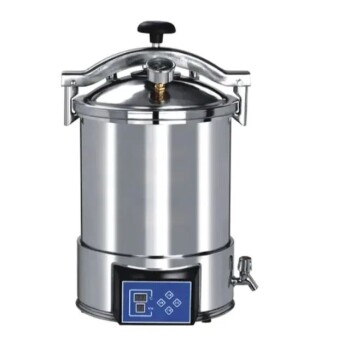
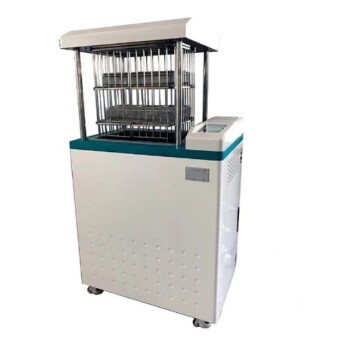
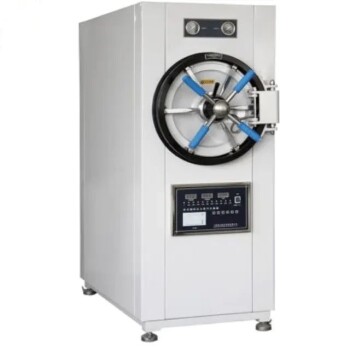
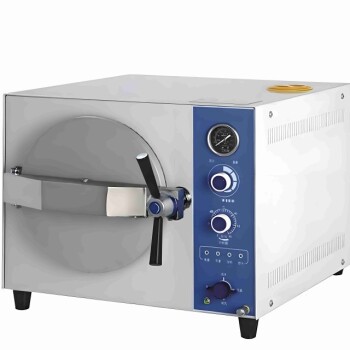
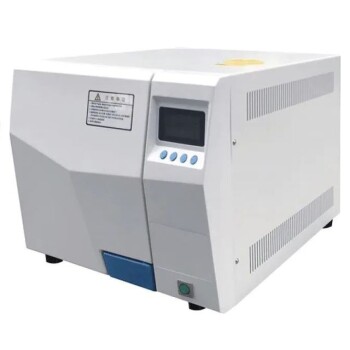
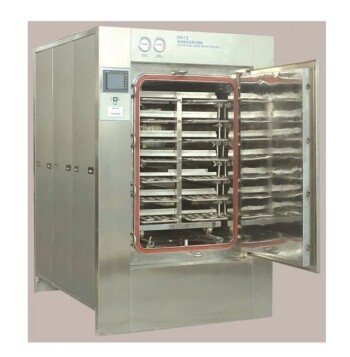
High-pressure autoclaves and environment simulation equipment serve a critical validation function: they replicate the harsh operating conditions of Light Water Reactors (LWR) within a controlled laboratory setting. By integrating with mechanical testing systems like Slow Strain Rate Testing (SSRT) machines, this equipment subjects irradiated materials to specific temperatures, pressures, and water chemistries to determine their susceptibility to cracking.
The core value of this equipment is its ability to reveal the "synergistic effects" of radiation damage and corrosive environments, ensuring that materials like austenitic stainless steels can survive the actual service life of a nuclear power plant.
Simulating the Light Water Reactor (LWR) Environment
To understand Irradiation-Assisted Stress Corrosion Cracking (IASCC), you cannot test materials in a vacuum. You must recreate the reactor's internal atmosphere.
Replicating Coolant Conditions
The primary function of the high-pressure autoclave is to act as a sealed, robust vessel capable of maintaining extreme physical states.
It specifically targets the conditions found in LWR coolants, maintaining temperatures at approximately 300 degrees Celsius.
Precise Water Chemistry Control
Temperature and pressure are only half the equation; the chemical composition of the water is equally vital.
These systems allow researchers to precisely control water chemistry, introducing specific corrosive media that mimic the reactor coolant. This ensures that the chemical attack on the metal is authentic to real-world scenarios.
Integrating Stress and Radiation
IASCC is not caused by corrosion alone; it is a failure mechanism driven by the combination of material changes (radiation), environment (water), and load (stress).
Coupling with Slow Strain Rate Testing (SSRT)
The simulation equipment is rarely used in isolation; it is typically integrated with SSRT machines.
While the autoclave maintains the environment, the SSRT machine applies a slow, constant tension to the specimen. This tests the material's mechanical limits while it is simultaneously being attacked by the high-temperature water.
Testing Irradiated Austenitic Stainless Steels
The equipment is specifically designed to handle irradiated austenitic stainless steels.
These materials have already suffered radiation damage, altering their microstructure. The equipment verifies if this pre-existing damage makes them more liable to crack when exposed to the corrosive coolant simulation.
Understanding the Trade-offs
While this equipment is the gold standard for IASCC evaluation, it is important to recognize the inherent challenges in these experiments.
Complexity of Variable Control
Simulating a "synergistic" environment requires maintaining perfect equilibrium between pressure, temperature, and strain rate.
If any single variable drifts—such as a drop in system pressure or a fluctuation in water chemistry—the data may become invalid, as it no longer accurately represents the LWR condition.
The Challenge of Simulation vs. Reality
While these systems are highly advanced, they are still approximations of a reactor core.
They provide a reliable physical and chemical platform, but they cannot perfectly replicate the dynamic, chaotic flow and radiation flux present inside an operating nuclear reactor in real-time.
Making the Right Choice for Your Goal
When designing or evaluating an IASCC testing program, consider your specific objectives.
- If your primary focus is Material Qualification: Ensure the equipment can sustain the specific ~300°C threshold and water chemistry required to meet regulatory standards for LWR components.
- If your primary focus is Mechanism Research: Prioritize systems with high-precision SSRT integration to capture the exact moment of crack initiation under stress.
By rigorously simulating the hostile environment of a nuclear core, this equipment transforms theoretical risk assessments into verified material durability.
Summary Table:
| Feature | Function in IASCC Evaluation |
|---|---|
| Temperature Control | Maintains ~300°C to replicate Light Water Reactor (LWR) conditions. |
| Pressure Regulation | Provides a sealed environment for high-pressure coolant simulation. |
| Water Chemistry | Precisely controls corrosive media to mimic reactor coolant effects. |
| Mechanical Integration | Couples with SSRT machines to apply stress to irradiated specimens. |
| Material Validation | Specifically tests durability of irradiated austenitic stainless steels. |
Precision Testing Solutions for Critical Environments
Ensure the safety and longevity of your nuclear and high-pressure applications with KINTEK. We specialize in providing the advanced laboratory equipment needed to simulate the world's most demanding environments.
Our extensive portfolio includes:
- High-Temperature High-Pressure Reactors and Autoclaves specifically designed for IASCC and corrosion studies.
- Crushing and Milling Systems and Hydraulic Presses for material preparation.
- High-Temperature Furnaces (Muffle, Tube, Vacuum, CVD) for precise heat treatment.
- Cooling Solutions and Essential Consumables to support every stage of your research.
Whether you are performing material qualification or fundamental mechanism research, KINTEK delivers the accuracy and reliability your lab requires.
Contact us today to discuss your project needs!
References
- Anna Hojná. Overview of Intergranular Fracture of Neutron Irradiated Austenitic Stainless Steels. DOI: 10.3390/met7100392
This article is also based on technical information from Kintek Solution Knowledge Base .
Related Products
- Mini SS High Pressure Autoclave Reactor for Laboratory Use
- High Pressure Laboratory Autoclave Reactor for Hydrothermal Synthesis
- Stainless High Pressure Autoclave Reactor Laboratory Pressure Reactor
- Desktop Fast High Pressure Laboratory Autoclave Sterilizer 16L 24L for Lab Use
- Laboratory High Pressure Horizontal Autoclave Steam Sterilizer for Lab Use
People Also Ask
- Why use high-pressure reactors for molecular sieve synthesis? Unlock Superior Crystallinity and Framework Control
- What is the function of a high-pressure reactor autoclave? Enhancing Cu/N Co-Doped Carbon Catalyst Synthesis
- What are the advantages of using a high-pressure reactor like an autoclave? Maximize Liquefaction Speed & Yield
- Why are high-pressure reactors or autoclaves necessary for the synthesis of new functional materials? Unlock Precision.
- How are high-pressure reactors used to prepare metaphosphate electrocatalysts? Master In-Situ Precursor Growth