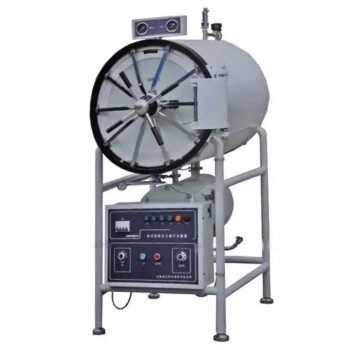
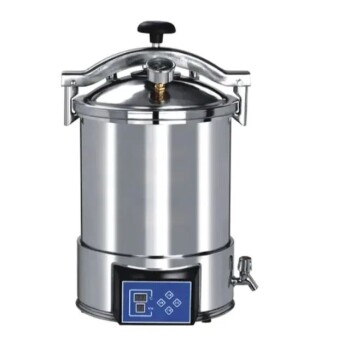
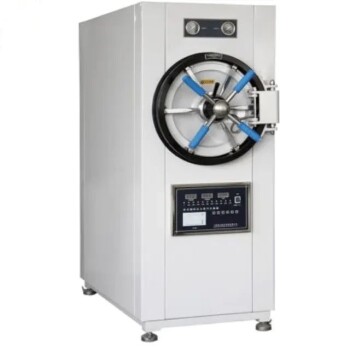
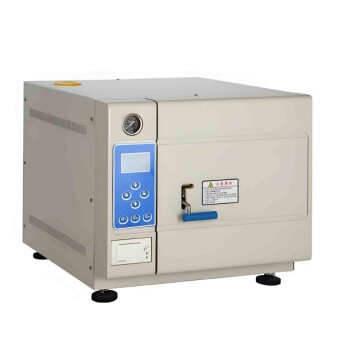
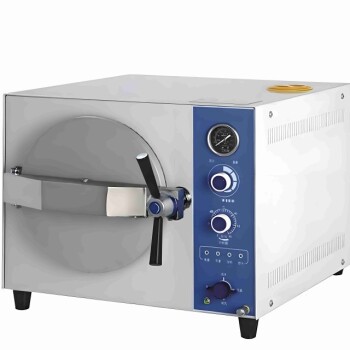
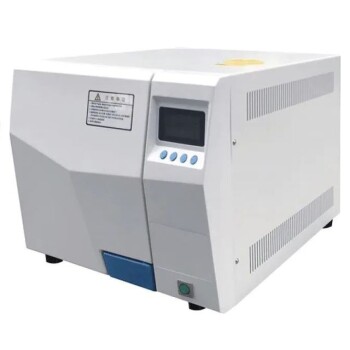
High-pressure autoclaves function as the critical reaction vessels that enable Liquid-phase Hydrothermal (LH) synthesis by maintaining a sealed, controlled environment. They allow the reaction mixture to reach high temperatures and generate autogenous pressure, which are physical prerequisites for transforming amorphous aluminosilicate gels into crystalline zeolite membranes.
The autoclave creates a sealed ecosystem where heat and autogenous pressure overcome kinetic barriers. This environment is essential for inducing nucleation and promoting the growth of a continuous, dense zeolite film on a porous support.
The Role of the Sealed Environment
Generating Autogenous Pressure
The defining feature of the autoclave in this process is its ability to seal the reaction mixture completely.
As the temperature inside the vessel rises, the liquid solvents attempt to expand and vaporize.
Because the volume is fixed, this generates autogenous pressure, forcing the reactants to interact under conditions far exceeding atmospheric norms.
Overcoming Kinetic Barriers
The transformation of silica sources into ordered crystals is not spontaneous at room temperature.
The high-pressure environment provided by the autoclave supplies the energy necessary to overcome these kinetic barriers.
This allows the silica and alumina sources to undergo ordered crystallization and cross-linking, often guided by structure-directing agents like TPA+.
From Precursor Gel to Membrane
Driving the Zeolitization Reaction
Inside the autoclave, the aluminosilicate precursor gel is subjected to sustained heat and pressure.
These conditions trigger the zeolitization reaction, chemically altering the gel into a structured material.
Without this pressurized containment, the gel would likely dry out or fail to crystallize into the desired MFI topology.
Ensuring Continuous Film Formation
The ultimate goal of LH synthesis is not just creating crystals, but forming a usable membrane.
The autoclave promotes nucleation directly on the surface of the porous support introduced into the vessel.
This controlled growth results in a dense, continuous thin film that covers the support, rather than generating loose, unconnected powder.
Understanding the Operational Trade-offs
Batch Process Limitations
Autoclaves are inherently designed for batch processing rather than continuous flow.
This limits production scalability, as the vessel must be cooled, opened, and cleaned between every synthesis cycle.
Sensitivity to Gradients
While the autoclave creates a high-pressure environment, maintaining thermal uniformity is critical.
If the autoclave is not heated evenly, temperature gradients can form within the liquid.
This can lead to heterogeneous crystal growth, resulting in membranes with uneven thickness or defects in the crystal lattice.
Optimizing Synthesis Strategy
Determining Your Approach
The effective use of an autoclave depends on balancing physical conditions with chemical composition.
- If your primary focus is Membrane Density: Prioritize the precise control of temperature stability to ensure uniform nucleation across the entire support surface.
- If your primary focus is Crystal Topology: Focus on the interaction between the structure-directing agents and the pressure levels required to activate them.
The autoclave is not just a heating container; it is the physical catalyst that forces the precursor gel to organize into a high-performance membrane.
Summary Table:
| Function | Mechanism | Impact on Synthesis |
|---|---|---|
| Pressure Generation | Creates autogenous pressure via sealed heating | Forces reactants to interact beyond atmospheric norms |
| Kinetic Activation | Supplies energy to overcome reaction barriers | Facilitates transformation from amorphous gel to crystals |
| Nucleation Control | Promotes growth on porous support surfaces | Ensures a dense, continuous film rather than loose powder |
| MFI Topology | Sustains heat for structure-directing agents | Guarantees correct ordered crystallization and cross-linking |
Elevate Your Materials Synthesis with KINTEK Precision
At KINTEK, we specialize in the high-performance laboratory equipment essential for advanced material research. Our high-temperature high-pressure reactors and autoclaves are engineered to provide the precise thermal stability and pressure control required for successful zeolite membrane synthesis and MFI topology crystallization.
Whether you are focusing on membrane density or complex crystal growth, our comprehensive portfolio—including high-temperature furnaces, hydraulic presses, and specialized consumables like PTFE-lined vessels and ceramics—ensures your lab has the tools to overcome every kinetic barrier.
Ready to optimize your research outcomes? Contact KINTEK today to discuss how our customized solutions can enhance your laboratory's efficiency and precision.
References
- Michael O. Daramola, Tunde V. Ojumu. Potential Applications of Zeolite Membranes in Reaction Coupling Separation Processes. DOI: 10.3390/ma5112101
This article is also based on technical information from Kintek Solution Knowledge Base .
Related Products
- Mini SS High Pressure Autoclave Reactor for Laboratory Use
- High Pressure Laboratory Autoclave Reactor for Hydrothermal Synthesis
- Stainless High Pressure Autoclave Reactor Laboratory Pressure Reactor
- Desktop Fast High Pressure Laboratory Autoclave Sterilizer 16L 24L for Lab Use
- Laboratory High Pressure Horizontal Autoclave Steam Sterilizer for Lab Use
People Also Ask
- Why use high-pressure reactors for molecular sieve synthesis? Unlock Superior Crystallinity and Framework Control
- What are the advantages of using a high-pressure reactor like an autoclave? Maximize Liquefaction Speed & Yield
- What is the function of a high-pressure reactor autoclave? Enhancing Cu/N Co-Doped Carbon Catalyst Synthesis
- Why are high-pressure reactors or autoclaves necessary for the synthesis of new functional materials? Unlock Precision.
- How are high-pressure reactors used to prepare metaphosphate electrocatalysts? Master In-Situ Precursor Growth