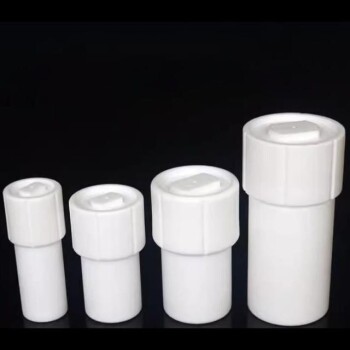
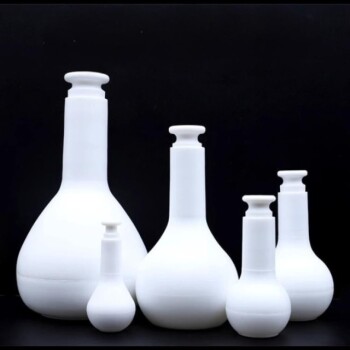
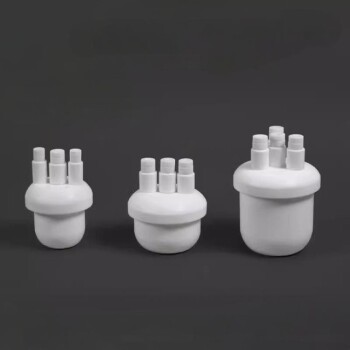
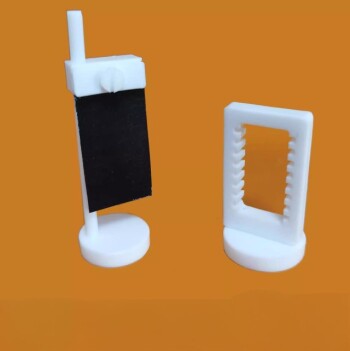
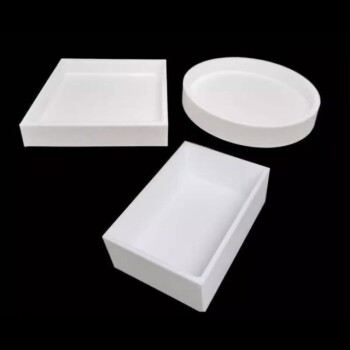
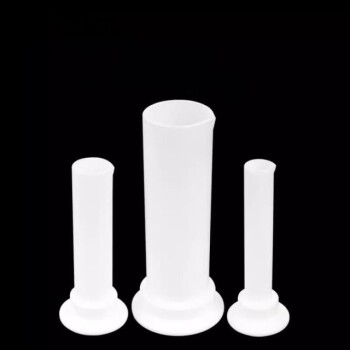
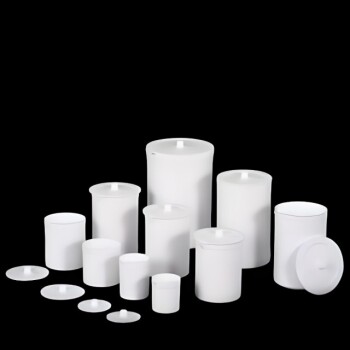
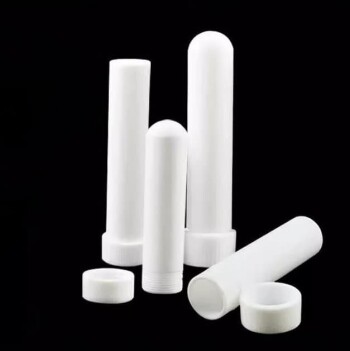
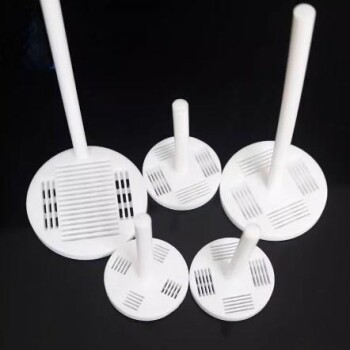
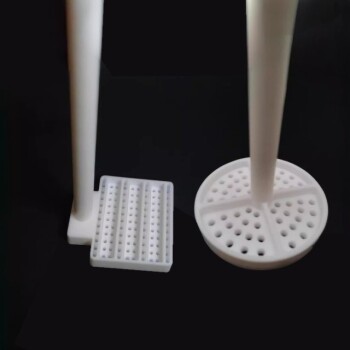
The primary function of Polytetrafluoroethylene (PTFE) reaction kettle bodies in micro-CSTR systems is to provide a chemically inert and non-stick environment for volatile or complex reactions. Specifically, these bodies serve as a barrier against aggressive organic solvents and corrosive reagents that would damage standard materials. Their hydrophobic surface is also critical for handling reactions involving solids, preventing adhesion and ensuring continuous flow.
Core Takeaway: By leveraging the low surface energy and chemical inertness of PTFE, these kettle bodies solve the dual challenges of material degradation and physical clogging, ensuring consistent flow and reaction integrity in systems handling aggressive chemistry or solids.
Ensuring Chemical Compatibility
Resistance to Aggressive Solvents
The fundamental role of the PTFE kettle body is to act as a robust shield against chemical attack. In micro-CSTR series systems, reactions often utilize organic solvents and corrosive reagents that degrade standard reactor materials.
PTFE provides essential chemical compatibility, allowing the reactor to maintain structural integrity even when exposed to these harsh substances over extended periods.
Maintaining Reaction Purity
By resisting corrosion and degradation, the PTFE body prevents contaminants from leaching into the reaction mixture. This ensures that the chemical profile of the product remains pure and unaffected by the reactor material itself.
Managing Solids and Flow
The Role of Low Surface Energy
A defining characteristic of PTFE is its extremely low surface energy, which creates a hydrophobic (water-repelling) and non-stick surface. This physical property significantly reduces the interaction between the reactor walls and the materials inside.
Preventing Physical Obstructions
In reactions that generate or utilize solid particles, accumulation on reactor walls is a major failure point. The non-stick nature of the PTFE body effectively prevents these solids from adhering to the kettle walls.
Minimizing Clogging Risks
By inhibiting particle adhesion, the PTFE body minimizes the risk of clogging. This is vital for maintaining the continuous flow required in a CSTR system, ensuring that solid products pass through the series without causing blockages or pressure buildups.
System Integration and Sealing Considerations
The Importance of Sealing Integrity
While the PTFE body offers superior resistance, the assembly requires specialized sealing to match this performance. Standard seals may degrade in the same solvents the PTFE body is designed to resist.
Utilizing Composite Seals
To maintain the integrity of the PTFE kettle, systems often employ FEP-encapsulated silicone core O-rings. These components provide the necessary chemical resistance (via the FEP jacket) while utilizing a silicone core to maintain elasticity.
Addressing Thermal and Pressure Fluctuations
The PTFE body relies on these advanced seals to compensate for changes in the sealing surface. This ensures the system remains airtight and liquid-tight during thermal cycling and pressure fluctuations, which are common in continuous flow operations.
Making the Right Choice for Your Goal
The decision to utilize PTFE bodies depends on the specific chemical and physical demands of your reaction process.
- If your primary focus is Chemical Resistance: Select PTFE bodies to ensure the reactor withstands exposure to harsh organic solvents and corrosive reagents without degradation.
- If your primary focus is Solids Handling: Rely on PTFE for its low surface energy to prevent product accumulation and eliminate clogging in particle-rich reactions.
Ultimately, PTFE reaction kettle bodies provide the necessary reliability for micro-CSTR systems to process aggressive chemistries and solids without interruption.
Summary Table:
| Feature | Function in Micro-CSTR | Benefit to Process |
|---|---|---|
| Chemical Inertness | Resists aggressive organic solvents and corrosive reagents | Prevents material degradation and ensures product purity |
| Low Surface Energy | Creates a non-stick, hydrophobic internal surface | Prevents solid particle adhesion and wall accumulation |
| Solid Handling | Minimizes physical obstructions and friction | Eliminates clogging risks to maintain continuous flow |
| Sealing Compatibility | Pairs with FEP-encapsulated O-rings | Maintains airtight integrity during thermal and pressure cycles |
Optimize Your Continuous Flow Reactions with KINTEK
Are you dealing with aggressive chemistries or challenging solid-phase reactions? KINTEK specializes in high-performance laboratory solutions designed to withstand the most demanding environments. From our chemically inert PTFE products and ceramics to advanced micro-CSTR components and high-pressure reactors, we provide the precision tools necessary to ensure reaction integrity and prevent system downtime.
Why choose KINTEK?
- Unmatched Durability: Our PTFE kettle bodies and specialized seals are engineered for maximum resistance to corrosive reagents.
- Expert Solutions: Whether you need crushing and milling systems, vacuum furnaces, or PTFE consumables, our portfolio supports every stage of your research.
- Tailored Performance: We help you select the right materials to eliminate clogging and leaching in your specific applications.
Don't let material failure compromise your results. Contact KINTEK today to discuss your laboratory equipment needs!
References
- Yiming Mo, Klavs F. Jensen. A miniature CSTR cascade for continuous flow of reactions containing solids. DOI: 10.1039/c6re00132g
This article is also based on technical information from Kintek Solution Knowledge Base .
Related Products
- Custom PTFE Teflon Parts Manufacturer for Microwave Digestion Tank
- Custom PTFE Teflon Parts Manufacturer for Reagent Wide Mouth Fine Mouth Sample High Temperature Bottles
- Custom PTFE Teflon Parts Manufacturer F4 Conical Flask Triangular Flask 50 100 250ml
- Custom PTFE Teflon Parts Manufacturer for F4 PTFE Volumetric Bottle
- Custom PTFE Teflon Parts Manufacturer for Three-Necked Round Bottom Flask
People Also Ask
- Why are PTFE containers required for PCT leaching tests? Ensure Chemical Inertness and Analytical Precision
- Why use high-quality PTFE containers for CO2 reduction electrolytes? Eliminate silicon contamination and ensure data.
- Why is PTFE Mandatory for Hydrofluoric Acid (HF) Handling? Ensure Safety and Data Integrity in Corrosion Testing
- Why is a PTFE container required for acid leaching of silicon nanosheets? Ensure High Purity and Safety
- Why are polytetrafluoroethylene (PTFE) containers essential for assessing the corrosion resistance of glassified waste?