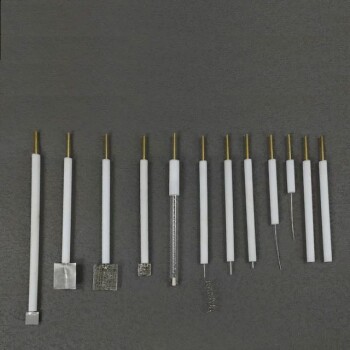
The Saturated Calomel Electrode (SCE) serves as the critical reference point in the electrochemical testing of FeCrNiCoNb0.5 alloys. Within the three-electrode system, its primary function is to provide a fixed, known potential baseline that remains stable regardless of the current flowing through the test circuit. This stability allows for the accurate isolation and measurement of the alloy’s specific electrochemical behaviors.
Core Takeaway: Think of the SCE as an electrochemical "anchor." Because its potential acts as an unchanging standard, any voltage changes observed during testing can be attributed exclusively to the FeCrNiCoNb0.5 alloy, ensuring precise data regarding corrosion and passivation.
The Mechanics of Measurement Stability
Establishing a Known Baseline
In electrochemical corrosion testing, measuring absolute potential is impossible; voltage is always a difference between two points.
The SCE provides a constant, known potential against which the FeCrNiCoNb0.5 alloy (the working electrode) is compared. Without this stable baseline, it would be impossible to determine the true electrochemical state of the alloy.
Immunity to Current Fluctuations
A defining feature of the SCE in a three-electrode setup is its isolation from the main current path.
While current flows between the working electrode (the alloy) and the counter electrode to drive reactions, no significant current flows through the SCE. This ensures the reference potential does not shift or polarize during the experiment, maintaining the accuracy of the reading.
Specific Application to FeCrNiCoNb0.5 Testing
Measuring Corrosion Potential
The primary metric captured using the SCE is the corrosion potential ($E_{corr}$) of the alloy.
By maintaining a fixed reference, researchers can precisely determine the voltage at which the alloy begins to corrode or oxidize. This metric is essential for assessing the thermodynamic stability of the FeCrNiCoNb0.5 alloy in its service environment.
Determining Passivation Zone Width
For high-performance alloys like FeCrNiCoNb0.5, the ability to form a protective oxide layer (passivation) is critical.
The SCE enables the exact measurement of the passivation zone width. This data point tells engineers the range of potentials over which the alloy remains protected by its oxide film before pitting or transpassive breakdown occurs.
Ensuring Data Comparability
Scientific rigor requires that results be reproducible across different times and laboratories.
Because the SCE provides a standardized potential, it ensures that data collected from different experimental batches of FeCrNiCoNb0.5 are directly comparable. This consistency is vital for quality control and alloy development.
Understanding the Operational Constraints
The Requirement of High Impedance
For the SCE to function correctly as a reference, the measuring instrument (potentiostat) must have high input impedance.
If current were allowed to leak into the SCE circuit, the chemical equilibrium inside the electrode would shift. This would alter its potential, effectively "moving the goalposts" and invalidating the corrosion data for the alloy.
The Limits of the "Reference" Concept
The SCE is only useful as long as its internal chemistry remains saturated and uncontaminated.
While it provides a stable baseline, it is an indirect measure. Users must remember that the SCE potential is relative to the Standard Hydrogen Electrode (SHE), and conversions may be necessary when comparing against literature using different reference scales.
Making the Right Choice for Your Goal
To maximize the value of your electrochemical testing on FeCrNiCoNb0.5, focus on how you utilize the reference data:
- If your primary focus is Material Characterization: Rely on the SCE to define the precise passivation zone width, as this indicates the robustness of the alloy's protective film.
- If your primary focus is Quality Control: Use the SCE to ensure data comparability between batches, verifying that new alloy melts perform identically to established baselines.
By utilizing the SCE as a stable anchor, you transform raw voltage data into a precise map of your alloy’s corrosion resistance.
Summary Table:
| Feature | Function in FeCrNiCoNb0.5 Testing |
|---|---|
| Reference Potential | Provides a fixed baseline to isolate the alloy's specific electrochemical behavior. |
| Current Isolation | Ensures no current flows through the SCE, preventing potential polarization or shifts. |
| Corrosion Insight | Enables accurate measurement of corrosion potential ($E_{corr}$) and passivation zones. |
| Standardization | Facilitates data comparability across different lab environments and alloy batches. |
Elevate Your Electrochemical Research with KINTEK
Precision in material characterization starts with reliable equipment. KINTEK specializes in high-performance laboratory solutions tailored for advanced metallurgy and electrochemical analysis. From specialized electrolytic cells and electrodes to high-temperature furnaces and vacuum systems, we provide the tools you need to map the corrosion resistance of complex alloys like FeCrNiCoNb0.5 with absolute confidence.
Ready to optimize your lab's performance? Contact KINTEK Today to Discuss Your Equipment Needs
References
- Shuo Shuang, Yong Yang. Corrosion resistant nanostructured eutectic high entropy alloy. DOI: 10.1016/j.corsci.2019.108315
This article is also based on technical information from Kintek Solution Knowledge Base .
Related Products
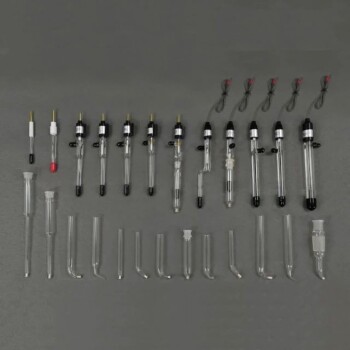
- Reference Electrode Calomel Silver Chloride Mercury Sulfate for Laboratory Use
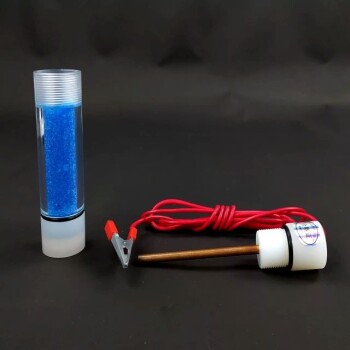
- Copper Sulfate Reference Electrode for Laboratory Use
- Super Sealed Electrolytic Electrochemical Cell
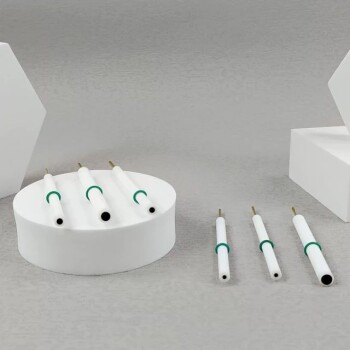
- Glassy Carbon Electrochemical Electrode
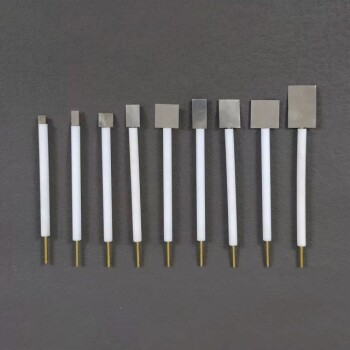
- Platinum Sheet Electrode for Laboratory and Industrial Applications
People Also Ask
- What is the function of a reference electrode? Master Precision in Three-Electrode Reactor Reconstruction
- What is the recommended maintenance for the filling solution of a reference electrode? A Guide to Stable & Accurate Readings
- Which electrode is used as a ground reference? Master the Key to Accurate Electrochemical Measurements
- What is the reference electrode in potentiometry? The Key to Stable & Accurate Measurements
- Which electrode is used as a reference? A Guide to Accurate Electrochemical Measurements