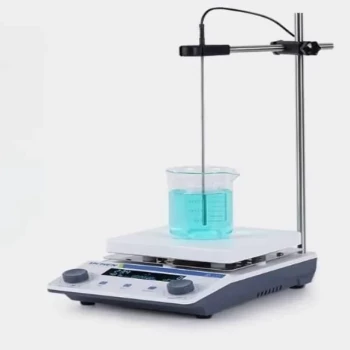
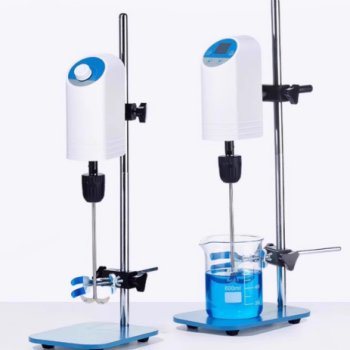
A magnetic stirring heater equipped with a reflux device provides the essential environmental control needed for the successful surface amino-modification of Fe3O4@SiO2. This apparatus simultaneously delivers the thermal energy and kinetic force required to accelerate the chemical reaction while preventing the evaporation of volatile solvents during the process.
The combination of controlled heating and refluxing ensures a stable reactant concentration over time. This stability is the deciding factor in producing nanoparticles with high-density surface amino functional groups.
The Role of Heating and Agitation
Accelerating Reaction Kinetics
The silanization reaction between Fe3O4@SiO2 and the coupling agent (APTES) requires energy to proceed efficiently. The heating element provides the necessary thermal energy to initiate and sustain this grafting process.
Enhancing Particle Interaction
Simultaneously, the magnetic stirring function introduces kinetic force into the mixture. This constant agitation increases the frequency of collisions between the silane coupling agent and the nanoparticle surfaces, significantly speeding up the reaction rate.
The Critical Function of the Reflux Device
Preventing Solvent Evaporation
During the amino-modification process, the reaction mixture is often subjected to prolonged heating. Without a reflux system, solvents such as methanol would rapidly evaporate, leading to a dry or inconsistent reaction mixture.
Maintaining Concentration Stability
The reflux device captures rising solvent vapors, cools them, and returns them to the reaction vessel in liquid form. This ensures that the solvent volume remains constant, maintaining a stable concentration of reactants throughout the entire duration of the synthesis.
Understanding the Trade-offs
The Risk of Open-System Heating
Attempting this reaction without a reflux device creates a variable environment. As solvent creates vapor and leaves the system, the concentration of reactants changes unpredictably, which can lead to aggregation or uneven coating.
Balancing Time and Density
Achieving high-density surface amino functional groups generally requires sufficient reaction time. The trade-off is that longer heating times increase the risk of solvent loss; the reflux device neutralizes this risk, allowing for the extended duration necessary for maximum density.
Making the Right Choice for Your Goal
To ensure the highest quality surface modification, align your equipment usage with your specific objectives:
- If your primary focus is reaction speed: Utilize the magnetic stirring and heating functions to maximize thermal energy and kinetic contact between reagents.
- If your primary focus is graft density: Rely on the reflux device to maintain strict solvent levels, ensuring the consistent chemical environment needed for high-density functionalization.
The proper integration of thermal control, agitation, and solvent retention is the key to synthesizing uniform, high-quality amino-modified magnetic nanoparticles.
Summary Table:
| Component | Primary Function | Impact on Surface Modification |
|---|---|---|
| Heating Element | Provides thermal energy | Initiates and sustains the grafting process |
| Magnetic Stirrer | Introduces kinetic force | Increases collision frequency between reagents |
| Reflux Device | Prevents solvent evaporation | Maintains stable concentration for high-density grafting |
| Closed System | Controlled environment | Eliminates risks of nanoparticle aggregation |
Elevate Your Nanomaterial Synthesis with KINTEK
Precision is paramount when engineering high-density functional groups. KINTEK specializes in advanced laboratory equipment designed to meet the rigorous demands of surface modification and chemical synthesis.
From magnetic stirring heaters and reflux systems to high-temperature reactors and autoclaves, we provide the tools researchers need for consistent, reproducible results. Whether you are working on battery research, magnetic nanoparticles, or complex material processing, our comprehensive range—including crushing and milling systems, PTFE consumables, and cooling solutions—ensures your lab operates at peak efficiency.
Ready to optimize your reaction environment? Contact us today to discover how KINTEK’s specialized solutions can empower your next breakthrough!
References
- Saeid Fallahizadeh, Majid Kermani. Enhanced photocatalytic degradation of amoxicillin using a spinning disc photocatalytic reactor (SDPR) with a novel Fe3O4@void@CuO/ZnO yolk-shell thin film nanostructure. DOI: 10.1038/s41598-023-43437-8
This article is also based on technical information from Kintek Solution Knowledge Base .
Related Products
- Laboratory Small Constant Temperature Heated Magnetic Stirrer Heater and Stirrer
- Custom PTFE Teflon Parts Manufacturer for Magnetic Stirring Bar
- High Performance Laboratory Stirrers for Diverse Applications
People Also Ask
- What role does a magnetic stirrer with heating play in ZnO nanoparticle synthesis? Precision Control for Quality Results
- What role does a constant temperature heating magnetic stirrer play in MFC-HAp synthesis? Achieve Material Homogeneity
- What is the function of a laboratory magnetic stirrer in Ni–Cr–P electrodeposition? Optimize Ion Transport & Coating
- Why is a laboratory magnetic stirrer required for benzoic acid esters? Boost Reaction Speed & Yield with High RPM
- What role does a laboratory magnetic stirrer play in TiO2 and TiO2-Ag sol preparation? Master Chemical Kinetics