Graphite molds serve two fundamental roles in the hot-pressing sintering of silicon nitride: they act as the forming vessel that establishes the component's geometry and function as the pressure transmission medium essential for densification.
By combining exceptional high-temperature strength with superior thermal conductivity, graphite molds allow for the simultaneous application of extreme heat and mechanical force, transforming loose silicon nitride powder into a dense, structural ceramic.
The Dual Mechanical Functions
The primary utility of a graphite mold lies in its ability to manage the physical state of the material under processing conditions.
Defining Geometric Shape
At its most basic level, the graphite mold serves as a precision container.
It confines the loose silicon nitride powder, effectively defining the macroscopic shape and dimensions of the final ceramic product.
Because graphite acts as a rigid boundary, it ensures the powder maintains the intended design profile throughout the volatile sintering phase.
Transmitting Mechanical Pressure
Beyond mere containment, the mold is an active participant in the application of force.
It acts as the interface between the hydraulic ram and the ceramic powder, transmitting significant uniaxial pressure (often ranging from 10 to 30 MPa).
This transmission is critical for forcing particle contact and expelling trapped gases, which drives the material densification necessary for high-performance ceramics.
The Role of Thermal Management
While the primary reference highlights mechanical functions, the thermal properties of graphite are equally vital to the process's success.
Uniform Heat Distribution
Graphite possesses excellent thermal conductivity, which is essential for sintering consistency.
The mold absorbs heat from the furnace elements and distributes it evenly to the powder specimen inside.
This uniformity prevents thermal gradients that could lead to warping, cracking, or uneven density in the final silicon nitride part.
Induction Heating Reception
In vacuum hot-pressing scenarios utilizing induction heating, the mold takes on an active thermal role.
The graphite serves as a receptor, converting electromagnetic energy directly into heat.
This allows the mold to heat the silicon nitride powder from the outside in, ensuring efficient energy transfer.
Understanding the Trade-offs
While graphite is the material of choice for these molds, users must be aware of specific operational limitations to ensure process integrity.
Oxidation Susceptibility
Graphite is highly susceptible to oxidation at sintering temperatures (often exceeding 1500°C).
Consequently, the process must occur within a protective atmosphere or vacuum to prevent the mold from degrading or burning away.
Mechanical Limits at Temperature
Although graphite exhibits rare high-temperature strength, it is not infinitely durable.
If the applied axial pressure exceeds the mold's structural limits (e.g., beyond 30-100 MPa depending on the grade), the mold may fracture or deform.
This deformation results in a loss of dimensional accuracy for the final silicon nitride component.
Making the Right Choice for Your Goal
To maximize the effectiveness of graphite molds in your specific application, consider these factors:
- If your primary focus is Geometric Precision: Prioritize high-strength graphite grades that maintain exceptional dimensional stability to resist deformation under axial load.
- If your primary focus is Material Density: Ensure the mold design allows for efficient, uniform pressure transmission to expel gases and force particle bonding without structural failure.
- If your primary focus is Component Longevity: Operate strictly within vacuum or inert environments to minimize oxidative loss and extend the service life of the mold.
Successful hot-pressing relies on viewing the graphite mold not just as a container, but as a critical tool for thermal and mechanical transfer.
Summary Table:
| Function Category | Role of Graphite Mold | Key Impact on Silicon Nitride |
|---|---|---|
| Mechanical | Geometric Container | Defines final macroscopic shape and dimensions |
| Mechanical | Pressure Transmission | Transfers 10-30 MPa force for material densification |
| Thermal | Heat Distribution | Ensures uniform heating to prevent warping/cracking |
| Thermal | Induction Receptor | Converts electromagnetic energy into heat directly |
| Atmospheric | Vacuum/Inert Requirement | Protects mold from oxidation at temperatures >1500°C |
Elevate Your Material Research with KINTEK
Precision in hot-pressing sintering requires high-quality tools that can withstand extreme environments. KINTEK specializes in advanced laboratory equipment and high-performance consumables designed for precision engineering.
Whether you are working with high-temperature furnaces (vacuum, tube, or induction) or require reliable crushing and milling systems and hydraulic presses, our solutions ensure your silicon nitride and structural ceramics meet the highest standards of density and durability.
From high-strength graphite molds to essential ceramics and crucibles, we provide the expertise and tools your laboratory needs to succeed.
Ready to optimize your sintering process? Contact us today to explore our full range of solutions!
Related Products
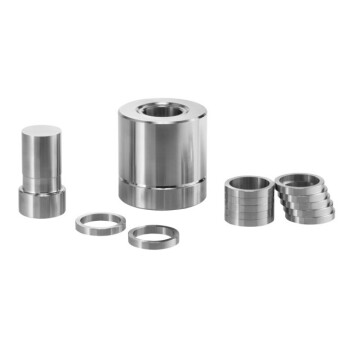
- Special Heat Press Mold for Lab Use
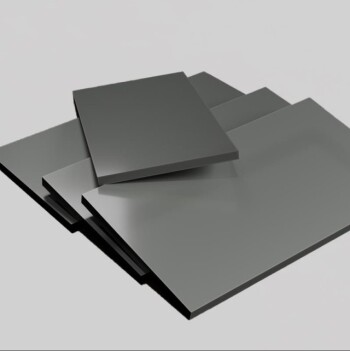
- Precision Machined Silicon Nitride (SiN) Ceramic Sheet for Engineering Advanced Fine Ceramics
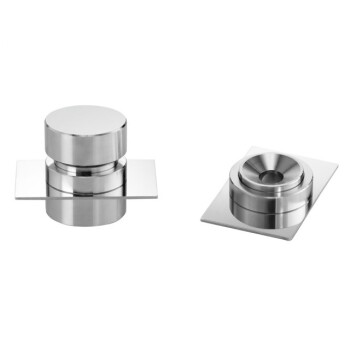
- Double Plate Heating Press Mold for Lab
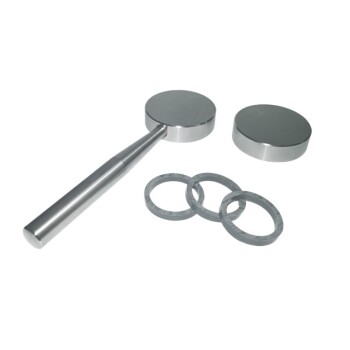
- Ball Press Mold for Lab
- Anti-Cracking Press Mold for Lab Use
People Also Ask
- How to use a press mold? Master the Art of Creating Consistent Ceramic Forms
- What is the press mould method? A Guide to Consistent, Detailed Ceramic Forms
- What is a press mold used for? Achieve Repeatable Precision and Efficiency
- What is the function of press molds during the preparation of SiCf/Ti-43Al-9V composites? Achieve Structural Precision
- What is the purpose of specialized pressure devices in sulfide solid-state batteries? Ensure Chemo-Mechanical Stability