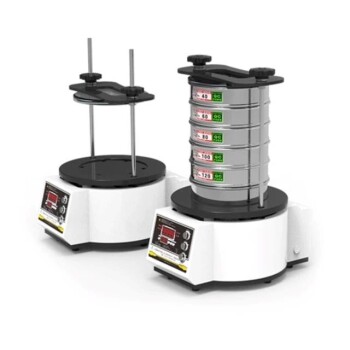
Industrial-grade sieving systems serve as the critical line of defense in the pretreatment of food waste for anaerobic fermentation. Their primary function is the rigorous physical separation of non-biodegradable impurities—specifically plastics, wooden chopsticks, and bones—to ensure that only the organic substrate enters the digestion phase.
By effectively removing inorganic contaminants, these systems achieve two vital outcomes: they significantly increase the proportion of volatile solids (VS) available for conversion and actively prevent mechanical failure in downstream precision equipment.
Maximizing System Integrity and Purity
The introduction of food waste into an anaerobic digester presents a unique challenge due to the heterogeneity of the feedstock. Sieving addresses this by standardizing the input material.
Elevating Substrate Purity
Food waste is rarely pure; it is often contaminated with non-digestible materials. The sieving process isolates these impurities, directly increasing the purity of the organic substrate.
By removing inert matter, the system increases the relative proportion of volatile solids (VS). This ensures that the reactor volume is utilized for actual energy production rather than storing inert trash.
Safeguarding Critical Infrastructure
The most immediate operational risk in anaerobic digestion is mechanical damage. Hard impurities like bones or fibrous materials like chopsticks can be catastrophic to the system.
Sieving prevents these materials from reaching subsequent stages, where they could jam or break precision mixing equipment.
Furthermore, removing these contaminants protects sensitive detection sensors, ensuring the long-term, stable operation of the entire experimental or industrial system.
Optimizing Biological Availability
While the primary goal is contaminant removal, sieving systems—often used in conjunction with crushing and cutting mechanisms—play a vital role in optimizing the physical characteristics of the biomass.
Increasing Specific Surface Area
Sieving systems are used to verify and control particle size, often reducing feedstock to 2 mm or finer.
This reduction exponentially increases the specific surface area of the material. A larger surface area provides significantly more contact points for biological enzymes and chemical agents.
Enhancing Reaction Kinetics
With a finer, more uniform particle size, the overall biodegradability of the food waste improves.
In applications involving anaerobic granular sludge, high-precision sieving (e.g., 850 µm) allows pretreatment agents to penetrate the sludge matrix deeply and evenly. This promotes higher hydrogen production yields and ensures the effective enrichment of hydrogen-producing microbial communities.
Understanding the Trade-offs
While sieving is essential, it introduces specific operational variables that must be managed to maintain efficiency.
The Risk of Organic Loss
Aggressive sieving can sometimes result in the loss of viable organic matter. If the waste is highly viscous or the mesh size is too small, biodegradable food particles may adhere to the rejected impurities and be removed from the system unintentionally.
Maintenance and Clogging
Sieving systems handling sticky food waste are prone to "blinding" or clogging. This requires regular maintenance and cleaning protocols to ensure the throughput remains consistent and the separation efficiency does not degrade over time.
Making the Right Choice for Your Goals
The configuration of your sieving system should be dictated by your specific operational priorities.
- If your primary focus is Equipment Longevity: Prioritize robust coarse sieving to ensure the absolute removal of hard contaminants like bones and plastics to protect mixers and pumps.
- If your primary focus is Reaction Efficiency: Prioritize finer mesh sizes (2 mm or less) to maximize specific surface area and enhance the biological conversion rate.
Ultimately, an effective sieving strategy is not just about waste removal; it is the fundamental step that transforms raw, chaotic waste into a consistent, high-value feedstock for energy production.
Summary Table:
| Feature | Impact on Fermentation | Key Benefit |
|---|---|---|
| Impurity Removal | Eliminates plastics, bones, and wood | Protects mixers and sensors from mechanical failure |
| VS Enrichment | Increases Volatile Solids (VS) proportion | Maximizes biogas and energy production per reactor volume |
| Particle Size Control | Reduces feedstock to ≤2 mm | Increases specific surface area for faster enzymatic reaction |
| High-Precision Mesh | Ensures uniform substrate texture | Promotes deeper penetration for hydrogen-producing microbial communities |
Maximize Your Fermentation Efficiency with KINTEK
Don't let impurities compromise your anaerobic digestion research or production. KINTEK specializes in high-performance crushing and milling systems and precision sieving equipment designed to transform raw food waste into high-value organic substrate.
Our solutions go beyond simple separation; we provide the laboratory tools necessary to increase volatile solids purity and protect your critical infrastructure—from precision mixing equipment to detection sensors. Whether you need fine-mesh sieving for microbial enrichment or robust hydraulic presses for material preparation, KINTEK offers the technical expertise to optimize your pretreatment stage.
Ready to elevate your lab's output? Contact us today to discover our range of laboratory equipment and consumables!
References
- Dongliang Hua, Yan Li. Effects of different acidification-resisting strategies on anaerobic digestion of kitchen waste: Methanogenic properties and microbial community shift. DOI: 10.15376/biores.19.2.2480-2502
This article is also based on technical information from Kintek Solution Knowledge Base .
Related Products
- Three-dimensional electromagnetic sieving instrument
- Laboratory Vibratory Sieve Shaker Machine for Dry and Wet Three-Dimensional Sieving
- Laboratory Test Sieves and Sieving Machines
- Laboratory Wet Three-Dimensional Vibratory Sieve Shaker Machine
- Custom PTFE Teflon Parts Manufacturer for PTFE Mesh F4 Sieve
People Also Ask
- Why is sieving equipment essential for the classification of processed bio-activated carbon? Optimize Performance
- What are the limitations of sieving? Understanding the Constraints of Particle Size Analysis
- What are advantages and disadvantages of sieving method? A Guide to Reliable & Cost-Effective Particle Sizing
- How is sieving important? The Critical Role of Particle Size Analysis in Quality Control
- What is sieving and how does it work? A Guide to Accurate Particle Size Analysis