Using a laboratory drying oven is the definitive step for transitioning a nickel complex from a raw synthesis product to an analyzable material. It is essential for removing residual moisture and solvents, particularly ethanol, from the filtered complexes under strictly controlled temperature conditions. This process ensures the material is isolated in a pure, stable solid state ready for characterization.
The drying process is the gatekeeper of analytical accuracy. By eliminating volatile impurities, it prevents molecular interference during Fourier Transform Infrared (FTIR) analysis and ensures the material stability required for reproducible corrosion resistance testing.
Ensuring Analytical Integrity
Eliminating Spectral Interference
The presence of residual solvents can disastrously affect chemical analysis. Solvents like ethanol and water possess their own distinct chemical bonds.
If these remain within the nickel complex, they will appear in Fourier Transform Infrared (FTIR) spectra. This creates "noise" or overlapping peaks that obscure the true fingerprint of the nickel complex, leading to incorrect structural characterization.
Stabilizing the Solid State
Synthesis often leaves the material in a wet or paste-like consistency. A laboratory oven drives off these volatiles to yield a dry, distinct solid.
Achieving this state is a prerequisite for accurate weighing and handling. Without a completely dry sample, any calculation regarding yield or molar mass will be skewed by the weight of the trapped liquid.
Optimizing Performance Testing
Improving Reproducibility
For applications like corrosion resistance testing, consistency is paramount. If samples contain varying amounts of trapped solvent, their performance data will fluctuate wildly.
Oven drying standardizes the sample. It ensures that every test is conducted on the nickel complex itself, not a mixture of complex and solvent, thereby guaranteeing that performance evaluations are reproducible and valid.
Preventing Structural Damage
While the primary goal is solvent removal, the method of removal matters. Controlled oven drying removes physically adsorbed water and solvents gradually.
This prevents the damage associated with rapid vaporization. If a wet sample were subjected immediately to high-temperature applications, the rapid expansion of trapped moisture could physically degrade or crack the material structure.
Critical Considerations and Trade-offs
The Importance of Temperature Control
While drying is necessary, "baking" the sample indiscriminately is dangerous. You must utilize controlled temperature conditions.
Excessive heat can degrade the nickel complex itself, breaking down the very coordination bonds you just synthesized. Conversely, insufficient heat may leave chemically bound solvents behind, defeating the purpose of the drying stage.
Oxidation Risks
Standard laboratory ovens typically operate in air. While effective for removing moisture, this environment can pose a risk for highly air-sensitive materials.
In cases where the catalyst or complex is prone to oxidation (similar to platinum nanoparticles), a standard oven might compromise surface activity. In such specific scenarios, alternative methods like vacuum drying may be required to lower the boiling point of solvents without introducing excess heat or oxygen.
Ensuring Validity in Your Research
To maximize the quality of your nickel complex data, consider the intended downstream application:
- If your primary focus is Structural Characterization (FTIR): Ensure the drying time is sufficient to fully evaporate ethanol, as its hydroxyl peaks will directly interfere with your data.
- If your primary focus is Performance Testing (Corrosion): Prioritize reaching a constant mass to ensure the physical stability of the solid before exposing it to corrosive environments.
Ultimately, the drying oven is not just a storage unit; it is an active purification tool that ensures your data reflects the chemistry of the complex, not the chemistry of the solvent.
Summary Table:
| Key Feature | Importance in Nickel Complex Preparation | Impact on Research |
|---|---|---|
| Solvent Removal | Eliminates ethanol and moisture from filtered solids. | Prevents peak interference in FTIR spectra. |
| Solid State Stability | Transitions paste-like raw product into a dry, stable solid. | Enables accurate weighing and yield calculations. |
| Temperature Control | Gradual heating under strictly monitored conditions. | Protects coordination bonds from thermal degradation. |
| Sample Standardization | Ensures a uniform physical state for all test batches. | Guarantees reproducibility in corrosion resistance tests. |
Elevate Your Synthesis Precision with KINTEK
Don't let residual solvents compromise your analytical integrity. KINTEK specializes in advanced laboratory solutions designed for the rigorous demands of chemical research. From high-precision laboratory drying ovens and vacuum systems to specialized high-temperature reactors, autoclaves, and crushing equipment, we provide the tools necessary to transform your raw synthesis into high-purity, analyzable materials.
Whether you are conducting FTIR characterization or corrosion resistance testing, our comprehensive portfolio—including PTFE consumables, ceramic crucibles, and cooling solutions—ensures your lab maintains the highest standards of stability and reproducibility.
Ready to optimize your drying process? Contact KINTEK today to discover how our high-performance equipment can enhance your laboratory's efficiency and data accuracy.
References
- Zainab Abed Janabi, Safa A. Hussien. Increasing of the corrosion resistance by preparing the trivalent nickel complex. DOI: 10.21608/ejchem.2021.100733.4683
This article is also based on technical information from Kintek Solution Knowledge Base .
Related Products
- Laboratory Scientific Electric Heating Blast Drying Oven
- 56L Vertical Laboratory Vacuum Drying Oven
- 23L Laboratory Vacuum Drying Oven
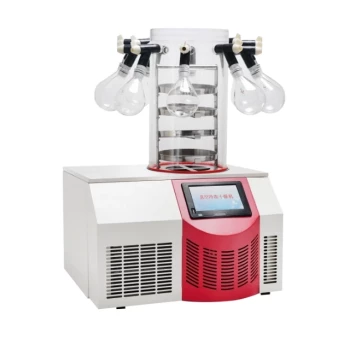
- High Performance Laboratory Freeze Dryer
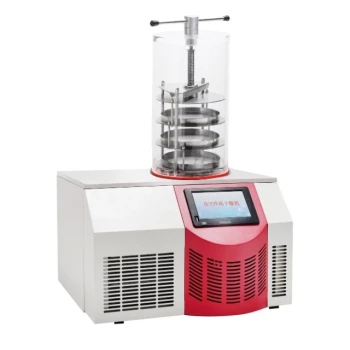
- High Performance Laboratory Freeze Dryer for Research and Development
People Also Ask
- How does a laboratory electric drying oven contribute to the formation of the initial coating? Expert Insights
- What role does a precision laboratory drying oven play in the synthesis of GO-PANI nanocomposites? Protect Material Integrity
- What role does a laboratory drying oven play in the preparation of zinc oxide nanoparticle precursors?
- What is the necessity of using a laboratory drying oven when processing MoO3/GO composite nanopowders? Find out here.
- What is the role of a laboratory drying oven in cellulose citrate production? Ensure Material Stability & Purity