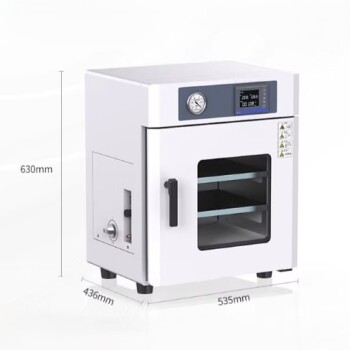
The low-temperature drying step is not merely a formality; it is a critical structural safeguard. It ensures the controlled removal of volatile solvents like isopropanol and residual moisture, preventing the physical destruction of the delicate Cu-TiO2 thin film before high-temperature processing begins. Without this distinct phase, the rapid escape of solvents would compromise the film's structural integrity.
By utilizing a laboratory oven at a constant 80°C, you transition the film from a wet, unstable state to a solid precursor. This prevents rapid evaporation defects—such as cracking or bubbling—and establishes the morphological integrity required for successful high-temperature calcination.
The Mechanics of Controlled Evaporation
Regulating Solvent Escape
The primary function of this step is to facilitate the slow, consistent removal of solvents.
In the preparation of Cu-TiO2 films, solvents like isopropanol and residual moisture are trapped within the deposited layer.
By holding the temperature at a moderate 80°C, you allow these volatiles to migrate to the surface and evaporate without boiling.
Prevention of Volume Stress
When solvents evaporate, the film undergoes a reduction in volume.
If this happens too quickly, the film contracts unevenly, creating significant internal stress.
A controlled oven environment ensures that this shrinkage occurs gradually, preserving the film's adhesion to the substrate.
Preventing Catastrophic Defects
Eliminating Bubbling and Pinholes
Rapid heating causes solvents to turn into gas violently deep within the film structure.
This rapid expansion creates bubbles that burst through the surface, leaving behind permanent pinholes and craters.
Low-temperature drying allows gas to escape gently, maintaining a continuous, non-porous surface.
Avoiding "Mud-Cracking"
One of the most common failure modes in thin film preparation is surface cracking.
This occurs when the surface dries significantly faster than the underlying layers, causing the "skin" to fracture.
The 80°C drying step promotes uniform drying throughout the film thickness, effectively neutralizing this risk.
Preparing for High-Temperature Calcination
Establishing Macroscopic Flatness
The ultimate goal of the preparation is a high-performance functional material, which requires a uniform geometry.
The drying step ensures the film settles into a macroscopically flat state.
This flatness is a prerequisite for the subsequent calcination step, ensuring the film reacts and crystallizes uniformly.
Solidifying the Morphological Foundation
Think of drying as "setting" the concrete before it cures.
If the film enters the high-temperature calcination phase with physical defects, the heat will lock those defects in permanently.
This drying step provides the defect-free morphological foundation necessary for the final thermal treatment.
Understanding the Trade-offs
The Cost of Processing Time
The primary trade-off in this step is time efficiency versus quality assurance.
While it may be tempting to ramp up the temperature to dry the film faster, the risk of destroying the sample outweighs the time saved.
You are trading rapid throughput for the guarantee of a usable sample.
Dependency on Equipment Stability
Success relies heavily on the stability of your laboratory oven.
If the oven cannot maintain a constant-temperature environment, fluctuations could induce the very thermal shocks you are trying to avoid.
This process assumes your equipment is calibrated and capable of holding a steady 80°C.
Making the Right Choice for Your Goal
To maximize the yield of your Cu-TiO2 thin film preparation, consider your specific priorities:
- If your primary focus is Surface Smoothness: strictly adhere to the 80°C limit to prevent bubbling, ensuring the flattest possible macroscopic surface.
- If your primary focus is Structural Durability: extend the duration of the drying step to guarantee every trace of solvent is removed gently, minimizing internal stress fractures.
The low-temperature drying step is the gatekeeper of quality, determining whether your film survives the transition from a liquid precursor to a functional solid material.
Summary Table:
| Feature | Function at 80°C | Impact on Film Quality |
|---|---|---|
| Solvent Removal | Slow, consistent evaporation of isopropanol | Prevents bubbling and pinholes |
| Volume Control | Gradual shrinkage of the film layer | Eliminates internal stress and mud-cracking |
| Surface Texture | Maintains macroscopic flatness | Ensures uniform crystallization during calcination |
| Structural State | Solidifies the precursor foundation | Prevents physical destruction of the delicate film |
Elevate Your Thin Film Research with KINTEK Precision
Precise thermal control is the difference between a high-performance Cu-TiO2 film and a failed sample. KINTEK specializes in advanced laboratory equipment designed for meticulous material preparation. Our high-stability laboratory ovens and furnaces provide the constant-temperature environments necessary to eliminate thermal shock and guarantee macroscopic flatness.
From high-temperature muffle and tube furnaces for calcination to hydraulic presses for substrate preparation and PTFE consumables for chemical resistance, KINTEK offers a comprehensive ecosystem for your lab.
Ready to eliminate defects in your material processing? Contact our technical experts today to find the perfect drying and heating solution for your research goals.
References
- Marcin Janczarek, Jan Hupka. Transparent thin films of Cu-TiO2 with visible light photocatalytic activity. DOI: 10.1039/c4pp00271g
This article is also based on technical information from Kintek Solution Knowledge Base .
Related Products
- Laboratory Scientific Electric Heating Blast Drying Oven
- 56L Vertical Laboratory Vacuum Drying Oven
- 23L Laboratory Vacuum Drying Oven
- 1200℃ Muffle Furnace Oven for Laboratory
- 1700℃ Muffle Oven Furnace for Laboratory
People Also Ask
- How does a laboratory electric drying oven contribute to the formation of the initial coating? Expert Insights
- What role does a precision laboratory drying oven play in the synthesis of GO-PANI nanocomposites? Protect Material Integrity
- What role does a laboratory drying oven play in the preparation of zinc oxide nanoparticle precursors?
- What is the necessity of using a laboratory drying oven when processing MoO3/GO composite nanopowders? Find out here.
- What is the role of a laboratory drying oven in cellulose citrate production? Ensure Material Stability & Purity