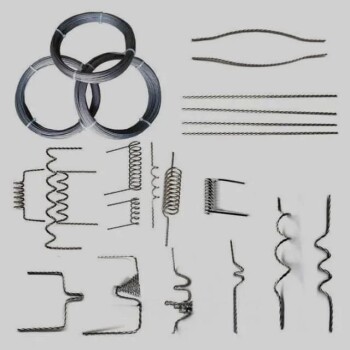
The operating principle of a resistance wire heater centers on the conversion of electrical energy into thermal energy through a process known as Joule heating. When an electric current flows through a wire with specific inherent resistance, the material resists the movement of electrons, dissipating that energy as heat.
Resistance wire heaters generate heat by passing current through a conductive element that maintains a constant resistance level. Unlike self-regulating systems, these heaters rely entirely on an external device to sense temperature and modulate the current flow to maintain the desired output.
The Physics of Heat Generation
The Role of Inherent Resistance
The core mechanism at work is electrical resistance. The heating element is typically made from a high-resistance material. As current passes through it, the heat produced is proportional to the square of the current multiplied by the resistance ($I^2R$ loss).
Constant Material Properties
A defining characteristic of standard resistance wire is that its actual resistance remains constant during operation. The wire does not significantly alter its electrical properties in response to temperature changes.
Indirect Heat Transfer
In most wire heater applications, the process is classified as indirect resistance heating. The wire serves as the heating element, and the thermal energy it generates is transferred to the target object (the "charge") via conduction, convection, or radiation.
System Control and Regulation
Requirement for External Control
Because the wire’s resistance is static, it cannot self-regulate its temperature. To prevent overheating, the system requires a separate control device.
The Feedback Loop
This external controller monitors the temperature via sensors. It actively restricts or increases the current flowing through the circuit to keep the heater within safe and efficient operating limits.
Comparison to PTC Heaters
This distinguishes resistance wires from Positive Temperature Coefficient (PTC) heaters. While PTC heaters increase resistance to self-limit current as they get hot, a resistance wire continues to accept current and generate heat as long as the circuit is closed.
Understanding the Trade-offs
Dependence on Components
The primary limitation of this system is its reliance on external regulation. If the control device or temperature sensor fails, the wire will continue to heat indefinitely, posing a risk of burnout or safety hazards.
Heat Transfer Efficiency
For indirect heating to be effective, the system often requires a specialized heating chamber or enclosure. This ensures that heat is effectively transferred from the element to the material or air being heated, rather than being lost to the surroundings.
Making the Right Choice for Your Goal
To determine if a resistance wire heater is the correct solution for your application, consider your specific control requirements:
- If your primary focus is precise temperature maintenance: Utilize a resistance wire system paired with a high-quality external controller to modulate current flow based on real-time sensor data.
- If your primary focus is heating non-conductive materials: Rely on indirect resistance heating, where the wire acts as an isolated element transferring heat via radiation or convection.
Success with resistance wire heating depends not on the wire alone, but on the precision of the external control loop managing it.
Summary Table:
| Feature | Resistance Wire Heater Detail |
|---|---|
| Core Principle | Joule Heating ($I^2R$ loss) |
| Resistance Type | Constant / Static Resistance |
| Regulation | Requires External Controller (Non-Self-Regulating) |
| Heat Transfer | Indirect (Conduction, Convection, or Radiation) |
| Key Benefit | Stable, Predictable Heat Output for Precise Applications |
Upgrade Your Lab with High-Precision Thermal Solutions
Are you looking to optimize your material processing or research? KINTEK specializes in advanced laboratory equipment, providing everything from high-temperature muffle and vacuum furnaces to specialized crushing and milling systems. Our resistance-based heating solutions are engineered for durability and precision, ensuring your projects achieve consistent results.
Whether you need high-temperature high-pressure reactors, PTFE consumables, or sophisticated battery research tools, our experts are here to help you select the perfect configuration for your specific needs.
Maximize your laboratory efficiency today—Contact KINTEK for a customized consultation!
Related Products
- Laboratory Small Constant Temperature Heated Magnetic Stirrer Heater and Stirrer
- Thermally Evaporated Tungsten Wire for High Temperature Applications
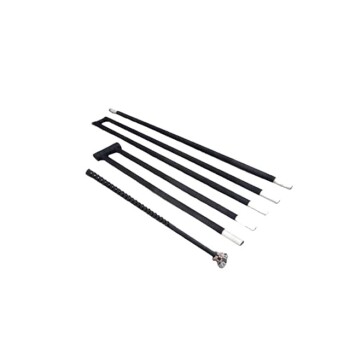
- Silicon Carbide SiC Thermal Heating Elements for Electric Furnace
- Vacuum Heat Treat and Molybdenum Wire Sintering Furnace for Vacuum Sintering
People Also Ask
- What role does a magnetic stirrer with heating play in ZnO nanoparticle synthesis? Precision Control for Quality Results
- What role does a constant temperature heating magnetic stirrer play in MFC-HAp synthesis? Achieve Material Homogeneity
- What is the function of a laboratory magnetic stirrer in Ni–Cr–P electrodeposition? Optimize Ion Transport & Coating
- Why is a laboratory magnetic stirrer required for benzoic acid esters? Boost Reaction Speed & Yield with High RPM
- What role does a laboratory magnetic stirrer play in TiO2 and TiO2-Ag sol preparation? Master Chemical Kinetics