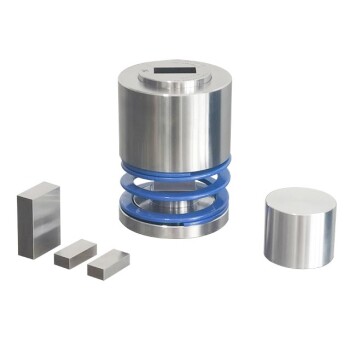
The primary function of a high-pressure reactor in lignocellulosic biobutanol production is to overcome the natural recalcitrance of plant biomass. It creates a controlled environment of elevated temperature and pressure that drives the hydrolysis of complex cellulose and hemicellulose polymers. This process efficiently converts tough plant fibers into fermentable monosaccharide monomers, specifically glucose and xylose.
Core Takeaway Lignocellulosic material has a dense, crystalline structure that is naturally resistant to biological breakdown. The high-pressure reactor acts as the essential "unlocking" mechanism, utilizing thermal energy, pressure, and chemical catalysts (such as acid or enzymes) to disassemble this structure into simple sugars that solvent-producing bacteria can consume.
The Mechanics of Deconstruction
Creating the Hydrolysis Environment
The reactor’s fundamental role is to sustain a high-temperature and high-pressure atmosphere.
This environment is necessary to drive hydrolysis reactions, which chemical bonds are broken by water. This process is often facilitated by the addition of dilute sulfuric acid or specific enzymes within the reactor vessel.
Structural Disruption and Expansion
Beyond simple heating, the reactor physically alters the biomass.
Some high-pressure systems utilize integrated pressure relief mechanisms to allow for an instantaneous release of pressure. This sudden drop creates an expansion force—similar to a steam explosion—that violently disrupts the dense physical structure of the cellulose.
Increasing Permeability
The physical disruption caused by the reactor significantly increases the permeability and surface area of the material.
By fracturing the dense crystalline structure, the reactor ensures that the biomass is no longer a solid, impenetrable block. This allows hydrolysis agents (enzymes or acids) to penetrate deep into the material interior, rather than just acting on the surface.
Delivering Fermentable Feedstock
The ultimate output of the reactor is a stream of simple sugars.
By breaking down long-chain polymers, the reactor produces glucose and xylose. These specific monosaccharides are the required fuel source for the solvent-producing Clostridia bacteria used in the subsequent fermentation stage.
Operational Considerations
Complexity of Pressure Systems
Unlike mechanical grinding methods (such as ball mills) which rely on impact and friction, high-pressure reactors rely on precise thermodynamic control.
Operators must manage integrated pressure relief systems carefully. The efficacy of the pretreatment often relies on the speed of the pressure drop; a slow release may fail to generate the necessary expansion force to disrupt the cell walls effectively.
Differentiating from Fermentation Vessels
It is critical not to confuse the high-pressure pretreatment reactor with the fermentation vessel, such as a Packed Bed Reactor (PBR).
While the high-pressure reactor focuses on breaking down the substrate using heat and pressure, the PBR is designed for growing the biomass (biofilm) and producing the actual solvent. The high-pressure reactor prepares the food; the fermentation reactor consumes it.
Making the Right Choice for Your Goal
Selecting the correct pretreatment technology depends on the specific barriers your biomass presents.
- If your primary focus is chemical conversion: Prioritize high-pressure reactors to drive hydrolysis and convert polymers into fermentable sugars (glucose/xylose) for Clostridia.
- If your primary focus is mechanical size reduction: Consider ball mills to reduce particle size and increase surface area through physical impact, rather than thermal pressure.
The high-pressure reactor is the bridge that transforms raw, unusable plant matter into a viable biological feedstock.
Summary Table:
| Feature | High-Pressure Reactor Function | Impact on Biobutanol Production |
|---|---|---|
| Hydrolysis | Drives chemical breakdown of polymers | Converts cellulose/hemicellulose into glucose/xylose |
| Structural Disruption | High-temp/pressure & steam explosion | Overcomes plant recalcitrance and dense crystallinity |
| Permeability | Rapidly increases material surface area | Allows enzymes and acids to penetrate deep into fibers |
| Output Feedstock | Produces simple monosaccharides | Provides the necessary fuel for Clostridia fermentation |
Maximize Your Biofuel Research with KINTEK Precision
Accelerate your biomass conversion and overcome material recalcitrance with KINTEK’s high-performance laboratory equipment. Whether you are conducting hydrothermal pretreatment or enzymatic hydrolysis, our high-temperature high-pressure reactors and autoclaves are engineered for precise thermodynamic control and structural disruption.
From crushing and milling systems for mechanical size reduction to high-pressure reactors for chemical conversion, KINTEK provides the comprehensive tools needed for the entire lignocellulosic biobutanol workflow. Our portfolio also includes essential PTFE products, ceramics, and crucibles to ensure your experiments are contamination-free and durable.
Ready to scale your laboratory results? Contact us today to find the perfect reactor system for your research!
References
- Sandip B. Bankar, Tom Granström. Biobutanol: the outlook of an academic and industrialist. DOI: 10.1039/c3ra43011a
This article is also based on technical information from Kintek Solution Knowledge Base .
Related Products
- Customizable Laboratory High Temperature High Pressure Reactors for Diverse Scientific Applications
- Customizable High Pressure Reactors for Advanced Scientific and Industrial Applications
- Stainless High Pressure Autoclave Reactor Laboratory Pressure Reactor
- Mini SS High Pressure Autoclave Reactor for Laboratory Use
- High Pressure Laboratory Autoclave Reactor for Hydrothermal Synthesis
People Also Ask
- How do high-pressure and high-temperature reactors ensure the effective treatment of lignocellulosic wastewater in WAO?
- What equipment is required for high-pressure high-temperature reactions? Master Extreme Chemistry Safely
- How do you control high pressure in a reactor? A Guide to Safe & Stable Operation
- How does initial oxygen pressure affect the wet oxidation of pharmaceutical sludge? Master Your Oxidation Depth
- Why is argon better than nitrogen for inert atmosphere? Ensure Absolute Reactivity & Stability