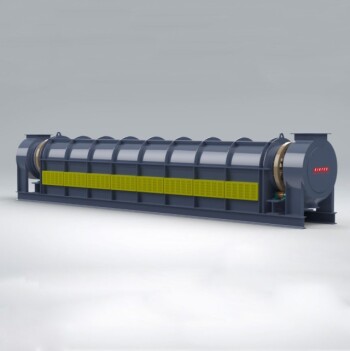
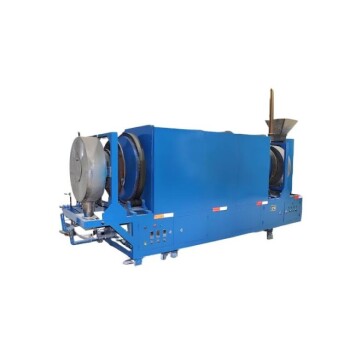
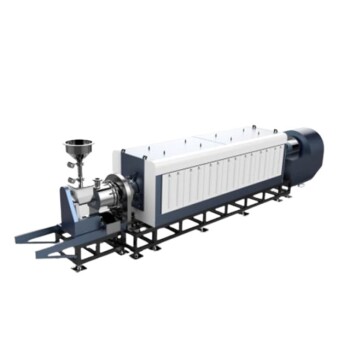
The primary function of an electric muffle furnace in carbon nanotube synthesis is the thermal activation of catalyst precursors. Through a high-temperature treatment often referred to as calcination, the furnace utilizes pyrolysis to chemically convert metal salts into active oxides. This step is essential for preparing the catalyst to effectively interact with carbon source gases in later stages.
The muffle furnace acts as the bridge between raw chemical precursors and a functional catalyst. By converting metal salts into active oxides and strengthening their bond with the carrier, it ensures the catalyst is potent enough to decompose gases during Chemical Vapor Deposition (CVD).
The Mechanics of Catalyst Activation
Converting Precursors via Pyrolysis
The central chemical process occurring inside the muffle furnace is pyrolysis. The raw materials used in synthesis often start as metal salts, which are chemically inactive in their initial state.
The furnace applies controlled high heat to decompose these salts. This thermal decomposition transforms the inert metal salts into active metal oxides, which serve as the actual catalytic sites for nanotube growth.
Strengthening Carrier Interactions
Catalysts for carbon nanotubes are rarely used in isolation; they are typically supported by a "carrier" or substrate material. The firing process in the muffle furnace does more than just chemically convert the metal.
The high heat strengthens the physical and chemical interaction between the active metal components and this carrier. A strong bond here prevents the active particles from aggregating, ensuring they remain distributed and effective.
Preparing for Chemical Vapor Deposition (CVD)
The Pre-requisite for Growth
The muffle furnace treatment is strictly a preparatory phase. It sets the stage for the actual growth mechanism, which is Chemical Vapor Deposition (CVD).
Enabling Gas Decomposition
During CVD, a carbon-rich gas is introduced to the system. For carbon nanotubes to form, this gas must be broken down (decomposed) into elemental carbon.
The furnace ensures the catalyst is sufficiently "activated" to perform this decomposition. Without the initial calcination step in the muffle furnace, the catalyst would lack the necessary chemical reactivity to break down the carbon source gases effectively.
Understanding the Process Variables
Temperature Precision
While the furnace provides high heat, the specific utility lies in its ability to maintain a consistent environment for calcination.
If the temperature is too low, the conversion from salt to oxide may be incomplete, leading to poor catalytic activity. Conversely, excessive heat can cause sintering, where catalyst particles merge and lose surface area.
Purity and Isolation
A defining feature of a muffle furnace is its ability to isolate the material from fuel and combustion byproducts.
In carbon nanotube synthesis, purity is paramount. The electric muffle furnace ensures that the conversion of precursors happens in a clean environment, preventing external contaminants from interfering with the delicate catalyst chemistry.
Making the Right Choice for Your Goal
To maximize the efficiency of your carbon nanotube synthesis, consider how you manage the calcination phase.
- If your primary focus is Catalyst Activity: Ensure your furnace profile achieves complete pyrolysis to fully convert all metal salts into active oxides without overheating.
- If your primary focus is Structural Stability: Prioritize the heat treatment duration to sufficiently strengthen the interaction between the active component and the carrier, preventing catalyst detachment.
Successful carbon nanotube synthesis relies not just on the growth phase, but on the precise thermal conditioning of the catalyst before the gas is ever introduced.
Summary Table:
| Process Phase | Function in Muffle Furnace | Key Outcome |
|---|---|---|
| Pyrolysis | Thermal decomposition of metal salts | Conversion to active metal oxides |
| Calcination | High-temperature conditioning | Strengthened catalyst-carrier interaction |
| Activation | Chemical reactivity preparation | Enhanced gas decomposition during CVD |
| Isolation | Protection from combustion byproducts | High-purity catalytic environment |
Elevate Your Nanomaterial Synthesis with KINTEK Precision
High-performance carbon nanotube growth starts with the perfect catalyst preparation. KINTEK specializes in advanced laboratory equipment, providing the muffle furnaces, tube furnaces, and CVD systems essential for precise thermal activation and pyrolysis.
Whether you are refining catalyst precursors or conducting large-scale synthesis, our comprehensive portfolio—including crushing and milling systems, hydraulic presses, and high-temperature reactors—ensures your lab has the tools to achieve exceptional purity and structural integrity.
Ready to optimize your carbon nanotube synthesis? Contact our laboratory specialists today to find the ideal thermal solution for your research and production needs.
References
- A. S. A. Syed Mohammed Buhari, Yusuf Olanrewaju Busari. Mechanical and Corrosion Protection Characteristics of CNTs/epoxy resin Nanocomposite Coating on Buried API 5L X65 Steel Storage Tank. DOI: 10.21315/jps2023.34.1.8
This article is also based on technical information from Kintek Solution Knowledge Base .
Related Products
- 1200℃ Muffle Furnace Oven for Laboratory
- 1800℃ Muffle Oven Furnace for Laboratory
- 1400℃ Muffle Oven Furnace for Laboratory
- 1700℃ Muffle Oven Furnace for Laboratory
- High Temperature Muffle Oven Furnace for Laboratory Debinding and Pre Sintering
People Also Ask
- How does a muffle furnace ensure reliability in calcification roasting? Achieve Precision in Pellets Conversion
- Why is a laboratory high-temperature muffle furnace required for the post-annealing treatment of copper oxide?
- What role does a laboratory high-temperature muffle furnace play in iron-based composite phase structure development?
- How is a laboratory high-temperature muffle furnace utilized in sol-gel synthesis for perovskite catalysts?
- How does a muffle furnace influence 8YSZ ceramic densification? Master Precision Sintering at 1500°C