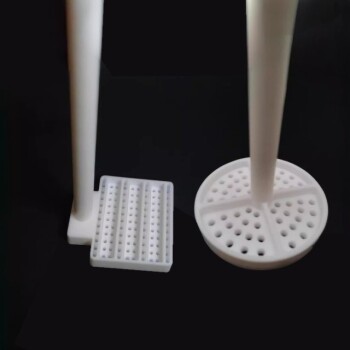
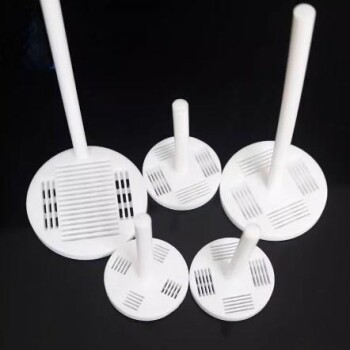
The primary function of the Polytetrafluoroethylene (PTFE) magnetic rotating disk is to act as a mechanical energy harvester and converter. Driven by a magnetic stirrer, the disk generates continuous friction against the reaction vessel to transform mechanical energy into the chemical energy necessary to drive the degradation process.
The PTFE disk acts as the "engine" of the reaction; it creates the dynamic friction required to excite Cadmium Sulfide (CdS), thereby generating the electron-hole pairs that actively break down organic dyes.
The Mechanics of Energy Conversion
Generating Dynamic Friction
The process relies on the PTFE disk being driven by an external magnetic stirrer. As the disk rotates, it creates continuous dynamic friction against the bottom of the reaction vessel.
Material Interaction
This friction is not accidental but designed. The interaction specifically occurs between the PTFE material and the vessel surface, which is typically composed of glass or an Alumina coating.
Transformation of Energy
The friction serves a critical purpose beyond simple agitation. It acts as the mechanism for mechanical energy collection, harvesting the kinetic energy of the rotation.
Powering the Chemical Potential
Through this physical interaction, the collected mechanical energy is converted directly into chemical energy. This conversion is the prerequisite for the catalytic activity that follows.
The Role of Catalyst Excitation
Targeting Cadmium Sulfide (CdS)
The converted chemical energy is directed toward the Cadmium Sulfide (CdS) present in the system. The PTFE disk is the trigger that changes the CdS from a passive state to an active one.
Producing Electron-Hole Pairs
Upon excitation by the converted energy, the CdS generates electron-hole pairs. These pairs are highly reactive charge carriers essential for tribocatalysis.
Initiating the Redox Reaction
These electron-hole pairs are responsible for initiating the tribocatalytic redox reaction. This chemical reaction is the final step that physically degrades the organic dyes.
Understanding the Trade-offs
Dependency on Continuous Motion
The system is entirely reliant on active mechanical input. Unlike photocatalysis, which relies on light, this process halts immediately if the magnetic stirrer stops or if the friction becomes insufficient.
Material Specificity
The efficiency of energy conversion depends on the specific pairing of materials. The reference specifies PTFE against glass or Alumina; deviating from these specific material interfaces may result in a failure to generate the necessary excitation energy.
Making the Right Choice for Your Goal
To effectively utilize PTFE disks for tribocatalysis, consider the following operation principles:
- If your primary focus is initiating the reaction: Ensure the magnetic stirrer maintains a speed sufficient to generate continuous, consistent friction between the disk and the vessel floor.
- If your primary focus is system design: Verify that your reaction vessel is made of glass or coated with Alumina to ensure compatible friction generation with the PTFE disk.
The PTFE disk is not just a mixing tool, but the fundamental power source that drives the chemical breakdown of organic dyes through friction.
Summary Table:
| Feature | Function & Impact |
|---|---|
| Primary Role | Mechanical energy harvester and converter |
| Mechanism | Continuous dynamic friction against vessel (Glass/Alumina) |
| Energy Transformation | Converts rotational kinetic energy into chemical energy |
| Catalyst Interaction | Excites Cadmium Sulfide (CdS) to produce electron-hole pairs |
| Target Application | Degradation of organic dyes via redox reactions |
| Operational Key | Dependent on consistent magnetic stirrer speed |
Elevate Your Material Research with KINTEK Precision
Maximize your catalytic efficiency with KINTEK’s premium laboratory solutions. As experts in high-performance materials and specialized equipment, we provide the tools necessary for advanced tribocatalytic and chemical research. Whether you require high-quality PTFE products and crucibles for friction-driven reactions, or sophisticated electrolytic cells and electrodes for electrochemical studies, KINTEK delivers unmatched reliability.
Our extensive portfolio supports every stage of your workflow, including:
- Specialized Labware: PTFE consumables, high-purity ceramics, and reaction vessels.
- Advanced Reactors: High-temperature high-pressure reactors and autoclaves for complex synthesis.
- Processing Equipment: Precision crushing, milling, and hydraulic presses for material preparation.
Ready to optimize your lab's performance? Contact KINTEK today to discover how our comprehensive range of equipment and consumables can accelerate your breakthroughs.
References
- Senhua Ke, Wanping Chen. Surprising Effects of Al2O3 Coating on Tribocatalytic Degradation of Organic Dyes by CdS Nanoparticles. DOI: 10.3390/coatings14081057
This article is also based on technical information from Kintek Solution Knowledge Base .
Related Products
- Custom PTFE Teflon Parts Manufacturer for Magnetic Stirring Bar
- Rotating Platinum Disk Electrode for Electrochemical Applications
- RRDE rotating disk (ring disk) electrode / compatible with PINE, Japanese ALS, Swiss Metrohm glassy carbon platinum
- Custom PTFE Teflon Parts Manufacturer for PTFE Stirring Bar Recovery Rod
- Custom PTFE Teflon Parts Manufacturer for PTFE Measuring Cylinder 10/50/100ml
People Also Ask
- What is the function of a magnetic stirrer during the alkaline etching of nano-silicon carbide? Essential Mixing Guide
- Why is a powerful magnetic stirrer essential during photocatalytic degradation? Ensure Accurate Catalyst Performance
- What is the function of a magnetic stirrer in simulating industrial sulfolane environments? Master Fluid Dynamics
- What is the function of a magnetic stirrer in MgAl-LDH coprecipitation? Ensure Uniformity and Precision
- What is the function of a magnetic stirrer in co-precipitation? Ensure Homogeneity in Doped ZnO Synthesis