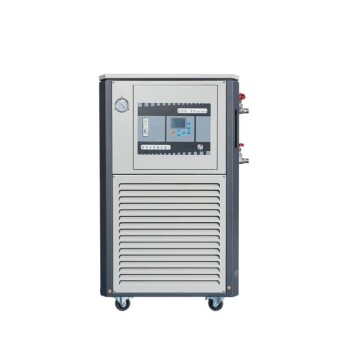
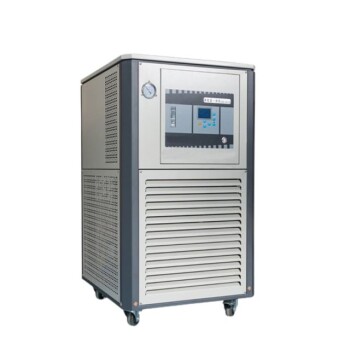
The primary purpose of equipping an EODS reactor with a condenser is to prevent the volatilization of light components. During Extractive and Oxidative Desulfurization (EODS) experiments, specifically at reaction temperatures between 40–50°C, volatile elements such as n-dodecane or added oxidants can easily evaporate. The condenser captures these vapors and returns them to the liquid phase, thereby maintaining the integrity of the reaction mixture.
By facilitating the reflux of solvent vapors, the condenser ensures that the molar ratios within the system remain constant, preventing experimental errors and enhancing operational safety.
Preserving Chemical Composition
Controlling Volatilization
In EODS experiments, the stability of your model oil is critical. Even at moderate temperatures of 40–50°C, light components are susceptible to evaporation.
Facilitating Reflux
The condenser acts as a recovery mechanism. It cools escaping vapors and forces them back into the reactor as liquid, a process known as reflux.
This cycle ensures that components like n-dodecane and specific oxidants are not lost to the atmosphere, but are instead retained within the active reaction zone.
Ensuring Experimental Accuracy
Maintaining Molar Ratios
The scientific validity of an EODS experiment relies on precise stoichiometry. If solvents or reactants evaporate, the molar ratios of the components shift unpredictably.
preventing Data Distortion
By equipping the reactor with a condenser, you lock the chemical parameters in place. This guarantees that any observed changes in desulfurization are due to the reaction kinetics, not the accidental loss of ingredients.
Common Pitfalls to Avoid
The Risk of Experimental Error
Attempting to run these experiments without a condenser introduces a significant variable: solvent loss. This leads to fluctuating concentrations that make experimental data unreliable and difficult to reproduce.
Safety in Industrial Operations
Beyond data accuracy, omitting a condenser poses a physical hazard. In continuous industrial-scale operations, allowing vapors to escape can create unsafe working environments. The condenser is essential for containing potentially harmful fumes.
Ensuring Success in Your EODS Setup
To maximize the effectiveness of your desulfurization experiments, consider the following:
- If your primary focus is Data Accuracy: Ensure the condenser is active to maintain constant molar ratios and prevent concentration shifts.
- If your primary focus is Safety and Scaling: Utilize the condenser to prevent vapor leaks, which is a critical requirement for continuous industrial operations.
The condenser is not just an accessory; it is a fundamental control for maintaining both the chemical consistency and safety of your EODS process.
Summary Table:
| Feature | Function in EODS Experiments | Benefit to Researcher |
|---|---|---|
| Volatilization Control | Captures vapors like n-dodecane at 40–50°C | Prevents loss of light components |
| Reflux Mechanism | Cools and returns escaping vapors to liquid phase | Maintains consistent reaction volume |
| Stoichiometric Integrity | Preserves fixed molar ratios | Guarantees experimental reproducibility |
| Vapor Containment | Prevents the release of fumes into the lab | Enhances operational safety |
Elevate Your Chemical Research with KINTEK Precision
Don't let solvent loss compromise your research data or laboratory safety. KINTEK specializes in high-performance laboratory equipment, including high-temperature high-pressure reactors and autoclaves perfectly suited for complex EODS and chemical synthesis workflows. Whether you require advanced cooling solutions like cold traps and chillers or specialized PTFE and ceramic consumables, our team is dedicated to providing the tools you need for precise, reproducible results.
Ready to optimize your EODS setup? Contact us today to find the perfect reactor and condenser configuration for your lab!
References
- Dongao Zhu, Wei Jiang. Designing Inorganic–Organic Dual-Acid Deep Eutectic Solvents for Synergistically Enhanced Extractive and Oxidative Desulfurization. DOI: 10.3390/molecules28237743
This article is also based on technical information from Kintek Solution Knowledge Base .
Related Products
- Electric Rotary Kiln Small Rotary Furnace for Activated Carbon Regeneration
- Visual High-Pressure Reactor for In-Situ Observation
- High Pressure Laboratory Autoclave Reactor for Hydrothermal Synthesis
- Mini SS High Pressure Autoclave Reactor for Laboratory Use
- Customizable Laboratory High Temperature High Pressure Reactors for Diverse Scientific Applications
People Also Ask
- What is a rotary kiln electric furnace? Achieve Superior Uniform Heating for Your Materials
- What is the temperature of activated carbon regeneration? Unlock the 1000°F Process for Reuse
- What is the regeneration temperature of activated carbon? Optimize Your Process with the Right Method
- What are the characteristics of the slipping, slumping, and rolling modes of bed motion? Optimize Your Rotary Process
- What are the parts of a carbon regeneration kiln? A Guide to Its Core Components and Function