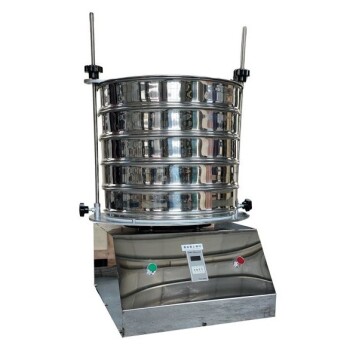
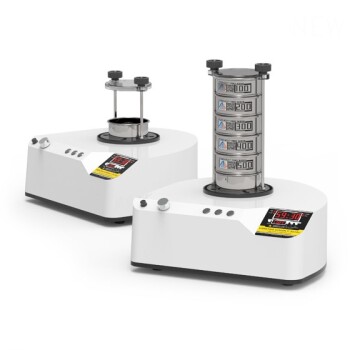
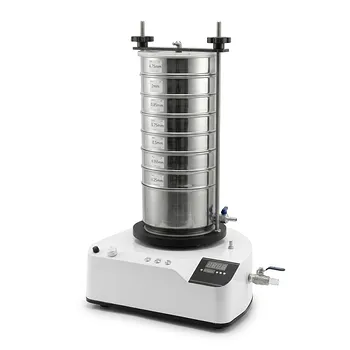
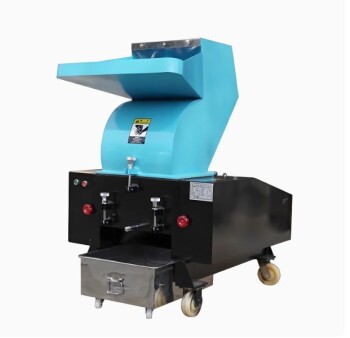
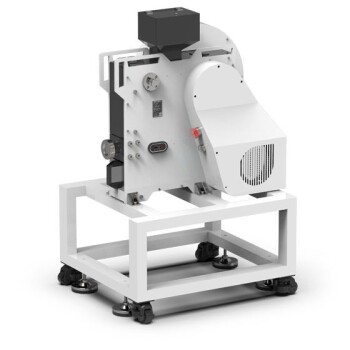
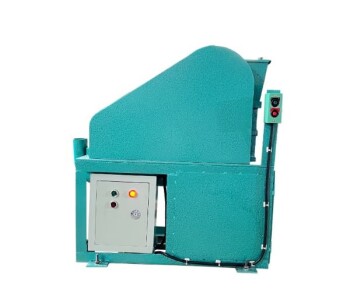
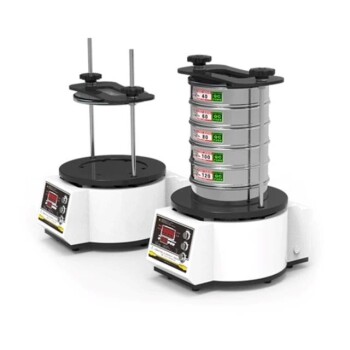
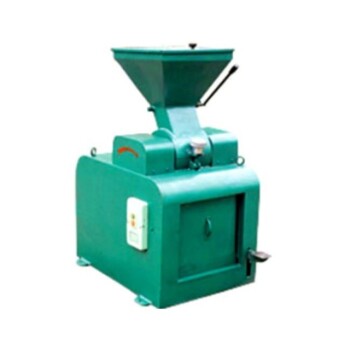
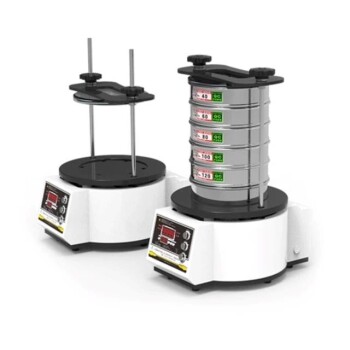
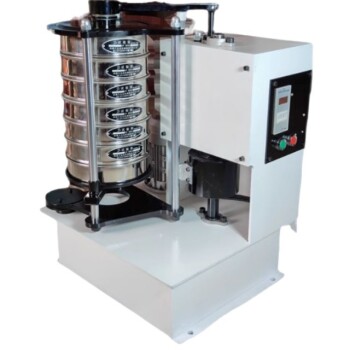
The primary purpose of a laboratory-grade crushing and sieving system is to convert raw peanut shells into a standardized feedstock with a precise particle size, typically between 250 µm and 500 µm. By strictly controlling the physical dimensions of the biomass, researchers ensure that the subsequent pyrolysis process is governed by chemical kinetics rather than physical limitations like inconsistent heat transfer.
Core Takeaway Success in pyrolysis relies on uniformity; if your feedstock varies in size, your data will vary in reliability. Crushing and sieving eliminate physical inconsistencies, ensuring that heat and chemical reagents interact with the biomass evenly, leading to reproducible, high-quality experimental yield data.
Optimizing Thermal Dynamics
Ensuring Uniform Heat Conduction
In pyrolysis, temperature control is paramount. A crushing and sieving system ensures that every particle falls within a narrow size range (e.g., 250 µm to 500 µm), allowing them to heat up at an identical rate. This uniform heat conduction prevents scenarios where smaller dust particles flash-pyrolyze while larger chunks remain under-heated.
Eliminating Internal Diffusion Resistance
Large particles act as insulators, trapping heat outside and volatile gases inside. By reducing the peanut shells to a fine, uniform size, you eliminate internal diffusion resistance. This allows heat to penetrate the core of the particle instantly and ensures reaction gases can escape without obstruction.
Enhancing Chemical Reactivity
Maximizing Surface Area
Beyond thermal benefits, mechanical reduction significantly increases the specific surface area of the biomass. This exposure is critical if your process involves pre-treatment or catalyzed reactions. A larger surface area provides more "contact points" for reactions to occur efficiently.
Facilitating Chemical Penetration
For protocols involving acid or alkali treatments, size reduction is essential. The increased surface area enhances the penetration efficiency of chemical reagents. This allows for the effective removal of structural barriers like hemicellulose and lignin, which larger particles would otherwise shield.
Ensuring Data Integrity
Achieving Reproducible Results
Scientific validity depends on the ability to repeat an experiment and get the same result. If particle sizes vary randomly between runs, product yields will fluctuate unpredictably. A laboratory-grade system standardizes the input, ensuring that the resulting yield data reflects the actual chemistry, not random physical variations.
Understanding the Trade-offs
The Balance of Particle Size
While smaller particles generally react faster, there is a lower limit to utility. Processing material to be too fine can lead to handling difficulties or entrainment in gas flows. The target range (250–500 µm) represents a calculated balance between maximizing reaction surface area and maintaining manageable material handling.
Processing Overhead
Achieving this level of precision requires time and specialized equipment. It adds a labor-intensive step to the workflow compared to using raw feedstock. However, skipping this step often results in "noisy" data that makes it impossible to isolate specific variables during analysis.
Making the Right Choice for Your Goal
To maximize the effectiveness of your peanut shell pyrolysis, consider your specific experimental focus:
- If your primary focus is Thermal Pyrolysis: Prioritize the 250–500 µm range to ensure heat transfer limitations do not skew your kinetic data.
- If your primary focus is Chemical Pre-treatment: Focus on the crushing aspect to maximize surface area, ensuring deep penetration of acid or alkali reagents for lignin removal.
By standardizing your feedstock size, you transform peanut shells from agricultural waste into a precise scientific variable.
Summary Table:
| Parameter | Influence on Pyrolysis | Benefit of Laboratory-Grade System |
|---|---|---|
| Particle Size | Affects heat & mass transfer | Standardizes size (250–500 µm) for kinetic uniformity |
| Surface Area | Impacts chemical reactivity | Maximizes contact points for acid/alkali pre-treatments |
| Heat Conduction | Inconsistent size causes uneven heating | Ensures identical heating rates across all particles |
| Diffusion Resistance | Large particles trap volatile gases | Eliminates internal resistance for rapid gas escape |
| Data Integrity | Random sizes cause yield fluctuations | Produces reliable, reproducible experimental results |
Elevate Your Biomass Research with KINTEK Precision
Don't let physical inconsistencies compromise your pyrolysis data. KINTEK specializes in advanced laboratory solutions designed for rigorous material preparation. From our high-performance crushing and milling systems and precision sieving equipment to our comprehensive range of high-temperature furnaces and pellet presses, we provide the tools necessary to transform raw biomass into standardized scientific variables.
Whether you are optimizing thermal kinetics or conducting chemical pre-treatments, KINTEK offers the expertise and equipment—including high-pressure reactors, autoclaves, and specialized ceramics—to ensure your lab achieves superior accuracy and efficiency.
Ready to standardize your feedstock and secure reproducible results? Contact KINTEK today to discuss your laboratory equipment needs!
References
- L.I. Gurevich Messina, Ana Lea Cukierman. Effect of acid pretreatment and process temperature on characteristics and yields of pyrolysis products of peanut shells. DOI: 10.1016/j.renene.2017.07.065
This article is also based on technical information from Kintek Solution Knowledge Base .
Related Products
- Laboratory Test Sieves and Sieving Machines
- Three-dimensional electromagnetic sieving instrument
- Laboratory Vibratory Sieve Shaker Machine for Dry and Wet Three-Dimensional Sieving
- Powerful Plastic Crusher Machine
- Laboratory Jaw Crusher
People Also Ask
- What are laboratory test sieves used for? A Guide to Particle Size Analysis
- How do you calculate the sieve test? Master Particle Size Distribution for Quality Control
- How does a lab test sieve contribute to biomass charcoal powder preparation? Achieve Uniform Particle Size
- What are the specifications for test sieves? A Guide to ASTM & ISO Standards for Accurate Particle Analysis
- What materials are required for sieving? Achieve Accurate Particle Size Analysis