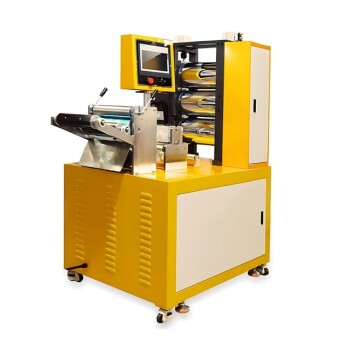
The primary purpose of using a roll press for electrode calendering is to increase the compaction density of the active material while reducing the thickness of the electrode. This mechanical compression minimizes the contact resistance between active particles and the current collector, creating a dense, highly conductive network that directly improves the battery's volumetric energy density and overall electrochemical performance.
Calendering transforms a loose, dried electrode coating into a precision-engineered structure by optimizing the balance between material density and pore volume, which is critical for efficient electron and ion transport.
Improving Electrical Conductivity and Efficiency
Reducing Contact Resistance
After the drying stage, electrode coatings are relatively porous and loose. The roll press applies significant vertical pressure to force active material particles, conductive carbon black, and the current collector into intimate physical contact, which drastically reduces internal resistance.
Establishing Electron Conduction Paths
By compressing the material, the roll press creates more robust electronic contact paths throughout the electrode. This allows electrons to move more freely during charge and discharge cycles, improving the battery's rate capability and reducing heat generation.
Strengthening Bond Integrity
The calendering process strengthens the mechanical and electrical bond between the electrode coating and the metal current collector. This ensures that the active material does not delaminate or lose electrical contact during the repetitive expansion and contraction of battery cycling.
Optimizing Volumetric Energy Density and Porosity
Increasing Compaction Density
To maximize the amount of energy a battery can store in a limited space, the electrode must reach a specific target density (e.g., 3.0 g/cm³). A roll press provides the precise mechanical force required to eliminate excess void space and increase the volumetric specific capacity of the cell.
Managing Electrode Porosity
While density is vital, an electrode that is too solid cannot function. The roll press is used to achieve a specific porosity level that facilitates "capillary absorption," allowing the liquid electrolyte to penetrate the electrode and reach all active material surfaces.
Controlling Thickness Uniformity
Precision rollers ensure the electrode sheet has a uniform thickness across its entire surface. This consistency is essential for stable cell assembly and prevents localized "hot spots" or uneven lithium plating during operation.
Understanding the Trade-offs and Limitations
The Risk of Over-Compression
Applying excessive pressure can lead to over-compaction, where porosity is reduced to the point that electrolyte wetting becomes impossible. This inhibits lithium-ion migration, significantly increasing resistance and potentially leading to premature battery failure.
Mechanical Stress and Damage
High-pressure calendering can induce mechanical stress on the active material particles, potentially causing them to crack or fracture. Furthermore, excessive force can deform or stretch the current collector foil, leading to wrinkles or structural instability in the finished electrode.
Balancing Power vs. Energy
There is a fundamental trade-off between energy density (high compaction) and power density (high porosity). Finding the optimum compaction point is a delicate balancing act that depends on the specific chemistry and intended application of the battery.
Making the Right Choice for Your Goal
How to Optimize Your Calendering Process
The target parameters for your roll press operation should align with your specific performance requirements and material characteristics.
- If your primary focus is Maximum Energy Density: Prioritize high compaction pressures to achieve the highest possible density, ensuring you stay just above the minimum porosity threshold required for electrolyte access.
- If your primary focus is High-Power Delivery: Use moderate pressure to maintain a more open pore structure, which facilitates rapid ion transport at the expense of total storage volume.
- If your primary focus is Long Cycle Life: Focus on the uniformity of the compression and the strength of the bond to the current collector to prevent mechanical degradation over hundreds of cycles.
By precisely controlling the calendering process, you transition from a simple mixture of materials to a high-performance electrode capable of efficient energy storage and delivery.
Summary Table:
| Feature | Impact of Roll Press Calendering |
|---|---|
| Primary Goal | Increases compaction density and reduces electrode thickness. |
| Conductivity | Lowers contact resistance and creates robust electron paths. |
| Structural Integrity | Strengthens the bond between active material and current collector. |
| Energy Density | Maximizes volumetric capacity by minimizing excess void space. |
| Critical Balance | High energy density (compaction) vs. ion transport (porosity). |
Elevate Your Battery Research with KINTEK Precision
Achieving the perfect balance of electrode density and porosity requires high-precision equipment. KINTEK specializes in advanced laboratory solutions designed for high-performance material development. Our portfolio includes specialized roll presses, hydraulic presses, and a full range of battery research tools and consumables to ensure your electrodes meet exacting standards for conductivity and uniform thickness.
Beyond electrode preparation, we offer a comprehensive range of high-temperature furnaces, cooling solutions like ULT freezers, and essential ceramics. Contact KINTEK today to discover how our high-quality equipment can streamline your workflow and enhance the volumetric energy density of your battery designs.
References
- Alexey A. Mikhaylov, Petr V. Prikhodchenko. Electrochemical Behavior of Reduced Graphene Oxide Supported Germanium Oxide, Germanium Nitride, and Germanium Phosphide as Lithium-Ion Battery Anodes Obtained from Highly Soluble Germanium Oxide. DOI: 10.3390/ijms24076860
This article is also based on technical information from Kintek Solution Knowledge Base .
Related Products
- Laboratory Hydraulic Press Lab Pellet Press for Button Battery
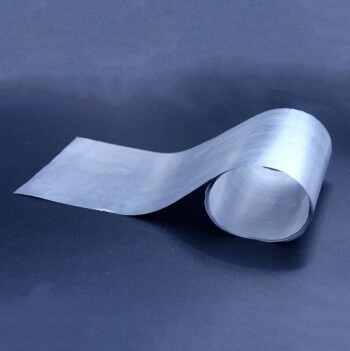
- Aluminum Foil Current Collector for Lithium Battery
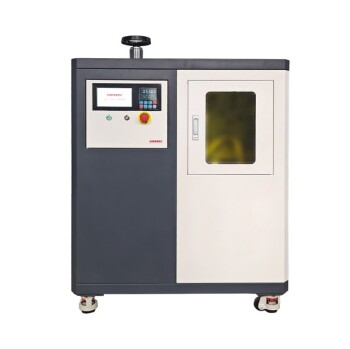
- Warm Isostatic Press for Solid State Battery Research
- Manual Lab Heat Press
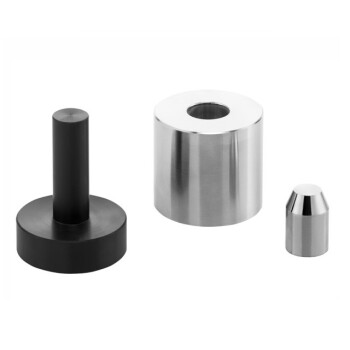
- Button Battery Tablet Press Sealing Mold for Lab Use
People Also Ask
- Why is a high-precision laboratory hydraulic press necessary for radiation-shielding? Ensure Data Accuracy & Density
- Why is a laboratory hydraulic press required during the preparation of Ti3AlC2 precursor pellets?
- How does the laboratory hydraulic press contribute to the preparation of solid targets for laser ablation?
- What is the function of a laboratory hydraulic press in preparing La2FeCrO6? Ensure High-Density Ceramic Pellets
- Why use a lab hydraulic press for 380 MPa Ti-Al alloy compaction? Unlock superior density and structural integrity.