To precisely quantify electrochemical stability and redox behavior. A three-electrode system connected to an electrochemical workstation is used to perform Cyclic Voltammetry (CV) tests on brush-like polyaniline. This specific configuration allows researchers to monitor the material's activity across a critical pH range of 6 to 9, determining its viability in environments where standard materials fail.
The primary goal of this setup is to confirm that brush-like polyaniline retains electrochemical activity in near-neutral environments (pH 7), solving the historical limitation where traditional polyaniline undergoes dedoping and loses function at pH levels above 4.
The Anatomy of the Testing Setup
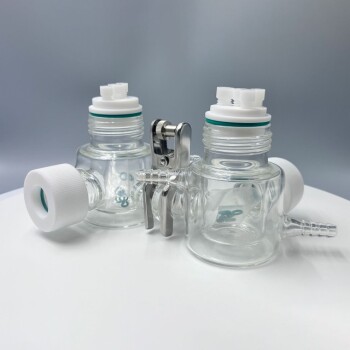
The Three-Electrode Configuration
To ensure accurate measurements, the system separates the current flow from the potential measurement.
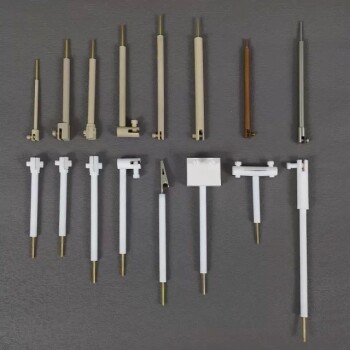
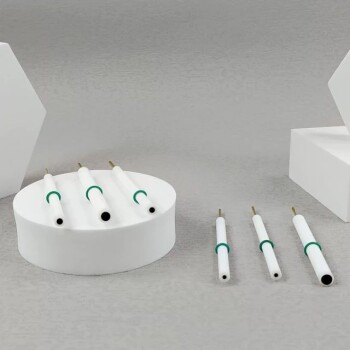
The setup utilizes a glassy carbon working electrode to support the polyaniline sample. A platinum sheet serves as the auxiliary (counter) electrode to complete the current circuit. Finally, a silver/silver chloride (Ag/AgCl) electrode acts as the stable reference point against which potential is measured.
The Role of the Workstation
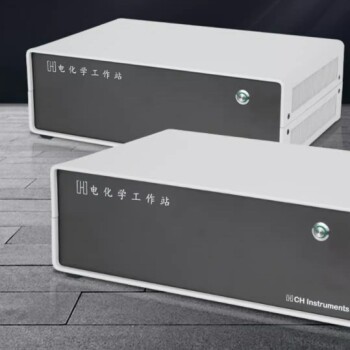
The high-precision electrochemical workstation acts as the control center for the experiment.
It applies the varying voltage required for Cyclic Voltammetry (CV) and records the resulting current response. This data provides the "fingerprint" of the material's redox (reduction-oxidation) activity.
Unlocking Performance in Neutral Environments
Overcoming the pH Barrier
Standard polyaniline has a significant weakness: it requires an acidic environment to function.
At pH levels above 4, traditional polyaniline typically undergoes dedoping, resulting in a loss of conductivity and electrochemical activity. This limits its use in biological or environmental applications that require neutral pH.
Verifying Stability at pH 7
The three-electrode system allows researchers to push the material beyond these traditional limits.
By testing across a pH range of 6 to 9, the workstation gathers empirical evidence of the material's resilience. The results confirm that the brush-like structure maintains stable redox activity at pH 7, effectively bridging the gap between conductive polymers and neutral-environment applications.
Understanding the Measurement Strategy
Why Three Electrodes?
Using a two-electrode system can introduce errors because the potential of the counter electrode may drift as current flows through it.
The three-electrode system isolates the working electrode. This ensures that the voltage data reflects the true behavior of the brush-like polyaniline, rather than artifacts caused by the testing equipment or the counter electrode.
The Importance of CV Tests
Cyclic Voltammetry is chosen because it offers a dynamic view of the material's chemistry.
It does not just measure static conductivity; it visualizes the reversible charging and discharging processes. This proves that the material is not just conductive, but electrochemically active and stable over repeated cycles in the target pH.
Making the Right Choice for Your Goal
When interpreting data from this specific experimental setup, consider your application's requirements:
- If your primary focus is biological compatibility: Verify that the CV curves show distinct oxidation and reduction peaks specifically at pH 7, indicating stability in physiological conditions.
- If your primary focus is material synthesis: Use the data to benchmark the brush-like structure against standard polyaniline, specifically noting the absence of dedoping as the pH rises above 4.
This experimental approach provides the definitive proof required to validate modified polyaniline for use in neutral pH environments.
Summary Table:
| Component | Role in Experiment | Key Specification |
|---|---|---|
| Working Electrode | Supports the sample material | Glassy Carbon |
| Counter Electrode | Completes the current circuit | Platinum Sheet |
| Reference Electrode | Stable potential measurement | Ag/AgCl |
| Key Test Method | Maps redox behavior | Cyclic Voltammetry (CV) |
| Target pH Range | Tests stability beyond dedoping | pH 6.0 - 9.0 |
Elevate Your Electrochemical Research with KINTEK
Precision is the backbone of innovation. KINTEK specializes in high-performance laboratory equipment designed for the most demanding research applications. Whether you are investigating the redox stability of advanced polymers like brush-like polyaniline or developing next-generation energy solutions, our comprehensive range of tools provides the accuracy you need.
Our portfolio features specialized electrolytic cells and electrodes, precision hydraulic presses for sample preparation, and advanced high-temperature furnaces for material synthesis. We also offer essential consumables like PTFE products, ceramics, and crucibles to ensure your experiments remain contamination-free.
Ready to bridge the gap between material design and real-world application? Contact us today to discover how KINTEK’s expert solutions can enhance your laboratory’s efficiency and precision.
References
- Alain Salvador Conejo-Dávila, Erasto Armando Zaragoza‐Contreras. Brush-like Polyaniline with Optical and Electroactive Properties at Neutral pH and High Temperature. DOI: 10.3390/ijms23158085
This article is also based on technical information from Kintek Solution Knowledge Base .
Related Products
- Lab Electrochemical Workstation Potentiostat for Laboratory Use
- Electrode Fixture for Electrochemical Experiments
- Glassy Carbon Electrochemical Electrode
- Electrolytic Electrochemical Cell with Five-Port
- Sample Support Body for Electrochemical Tests
People Also Ask
- How does an electrochemical workstation assist in assessing corrosion resistance? Quantify Laser-Remelted Steel Performance
- How does an electrochemical testing system evaluate mesoporous oxide electrodes? Precision Analysis for Battery Research
- What are the primary functions of an electrochemical workstation (Potentiostat)? Expert Titanium Alloy Corrosion Analysis
- What is the primary function of a high-precision electrochemical workstation? Optimize Your Reactor Performance
- What role do electrochemical workstations play in researching the corrosion resistance of carbon coatings? Expert Guide