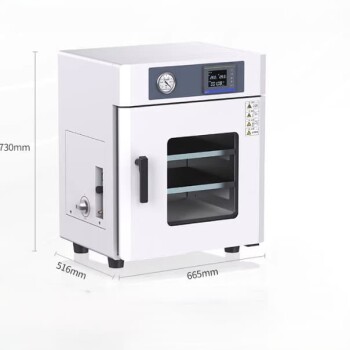
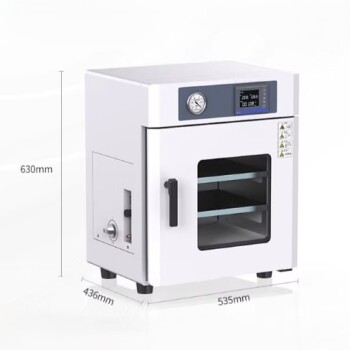
The primary purpose of using a vacuum oven in the production of sulfide all-solid-state battery electrode sheets is to efficiently remove organic solvents, such as butyl butyrate, at reduced temperatures. By creating a negative pressure environment, the process lowers the boiling point of these solvents, ensuring thorough drying without exposing the sensitive electrode components to excessive heat.
Core Insight Vacuum drying enables the volatilization of deep-seated solvent residues at mild temperatures (typically around 100°C). This critical balance prevents the thermal degradation of polymer binders and the decomposition of the solid-state electrolyte, ensuring the electrode layer retains its structural integrity and electrochemical stability.
Mechanisms of Vacuum Drying
Lowering Solvent Boiling Points
The central physical principle at work is the relationship between pressure and boiling points. Under vacuum conditions, organic solvents like butyl butyrate vaporize at significantly lower temperatures than they would at atmospheric pressure.
Accelerating Volatilization
This reduced boiling point accelerates the evaporation rate of solvents trapped deep within the electrode matrix. It ensures that even trace amounts of liquid are removed efficiently, leaving a pristine electrode structure.
Operating at Mild Temperatures
Because the solvents boil more easily, the oven can operate at milder heating conditions, generally around 100°C. This is essential for processing materials that cannot withstand high thermal stress.
Protecting Sensitive Sulfide Components
Preserving Polymer Binders
High temperatures can cause the polymer binders within the electrode slurry to degrade or fail. By keeping the drying temperature moderate (approx. 100°C), the vacuum oven preserves the binding properties necessary to hold the electrode sheet together.
Preventing Electrolyte Decomposition
Sulfide solid-state electrolytes are chemically sensitive and can decompose if exposed to excessive heat. The vacuum drying process mitigates this risk by achieving dryness without requiring the high temperatures that would trigger material breakdown.
Ensuring Electrochemical Stability
Residual solvents can interfere with the battery's chemical reactions, leading to instability. By ensuring the complete removal of these solvents, the vacuum oven guarantees the final electrode layer is chemically pure and ready for assembly.
Common Pitfalls to Avoid
The Risk of Excessive Heat
While vacuum reduces the need for heat, setting the temperature too high (even under vacuum) remains a risk. Exceeding the thermal tolerance of the specific binder or electrolyte used can lead to irreversible structural damage.
Moisture Re-adsorption
Sulfide electrolytes are notoriously sensitive to moisture, reacting to form toxic hydrogen sulfide (H2S) gas. While the vacuum removes moisture, breaking the vacuum improperly or exposing the dried sheets to ambient air immediately after drying can negate the process by allowing moisture re-adsorption.
Incomplete Solvent Removal
If the vacuum pressure is not sufficiently low, or the drying time is too short, solvent residues may remain deep in the porous electrode. This "surface dry" condition creates latent defects that only appear during battery cycling.
Making the Right Choice for Your Goal
To optimize your drying process for sulfide all-solid-state electrodes, consider your primary objective:
- If your primary focus is Material Integrity: prioritize strictly controlled temperatures (around 100°C) to prevent the thermal decomposition of binders and solid electrolytes.
- If your primary focus is Electrochemical Performance: ensure the vacuum level is sufficient to remove 100% of deep-seated solvents like butyl butyrate, as residues will impede ion transport.
- If your primary focus is Safety: integrate strict moisture control protocols when breaking vacuum to prevent the generation of hazardous hydrogen sulfide gas.
The effective use of a vacuum oven is not just about drying; it is about managing the delicate balance between solvent removal and material preservation to build a stable, high-performance battery.
Summary Table:
| Feature | Benefit for Sulfide Electrodes |
|---|---|
| Lower Boiling Point | Enables solvent removal (e.g., butyl butyrate) at mild temperatures (~100°C). |
| Thermal Protection | Prevents degradation of polymer binders and sensitive sulfide electrolytes. |
| Deep Volatilization | Ensures 100% removal of trace solvents trapped in the porous electrode matrix. |
| Atmosphere Control | Mitigates moisture re-adsorption and prevents hazardous H2S gas formation. |
| Material Stability | Maintains structural integrity and electrochemical performance of the battery. |
Elevate Your Battery Research with KINTEK Precision
Don't let thermal degradation or residual solvents compromise your next-generation sulfide all-solid-state batteries. KINTEK specializes in high-performance laboratory equipment designed for sensitive material processing. From advanced vacuum ovens and high-temperature furnaces to precision hydraulic pellet presses and battery research tools, we provide the comprehensive solutions needed for superior electrode fabrication.
Ready to optimize your drying process? Our experts are here to help you select the right tools for your lab's specific requirements.
Contact KINTEK Today for a Specialized Consultation
Related Products
- 56L Vertical Laboratory Vacuum Drying Oven
- 23L Laboratory Vacuum Drying Oven
- Vacuum Heat Treat Sintering Brazing Furnace
- 2200 ℃ Graphite Vacuum Heat Treat Furnace
- Dental Porcelain Zirconia Sintering Ceramic Vacuum Press Furnace
People Also Ask
- Why is a laboratory vacuum drying oven recommended for rice straw residues? Protect Your Biomass Integrity
- What role does a laboratory vacuum drying oven play in the preparation of modified multi-walled carbon nanotubes?
- What is the importance of using a laboratory vacuum drying oven? Preserving Slow-Release Microcapsule Integrity
- Why is a Laboratory Vacuum Drying Oven recommended for PBAT microspheres? Protect Sensitive Polymer Integrity
- What role does a laboratory vacuum drying oven play in processing nanoparticle powder samples? Protect Sample Integrity