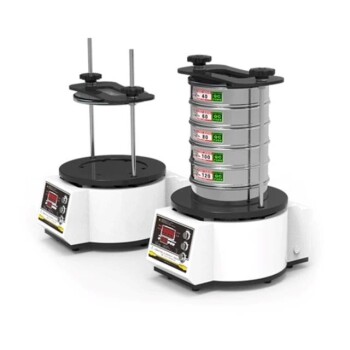
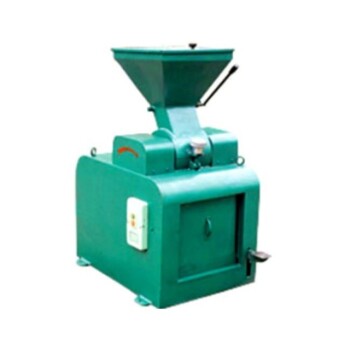
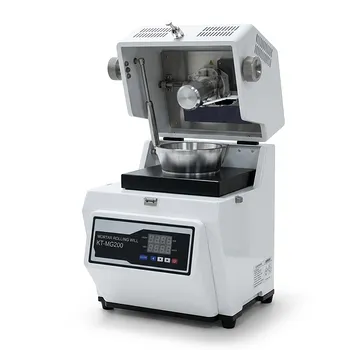
High-performance crushing and precision sieving systems serve as the critical foundation for chitosan production by converting raw snail shells into a uniform, fine powder. This mechanical pretreatment reduces hard shell material to a specific mesh size, such as 150 µm, effectively preparing the physical structure of the shell for chemical modification.
The ultimate value of these systems lies in their ability to maximize reactive surface area. By ensuring every particle is the same size, they guarantee that subsequent chemical reactions occur uniformly, resulting in a consistent and high-quality chitosan product.
The Mechanics of Pretreatment
Pulverizing Hard Raw Material
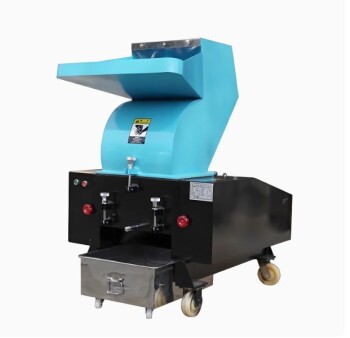
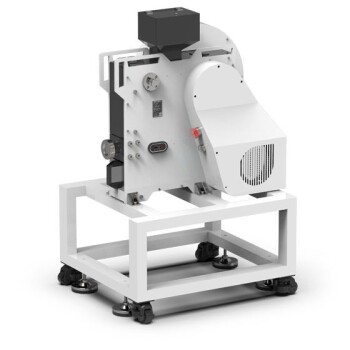
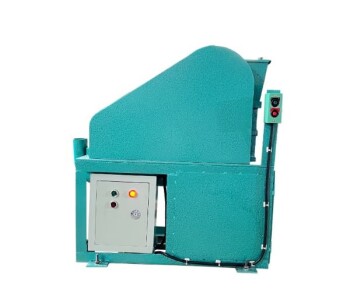
The initial stage involves a high-performance crushing system.
Its role is to take the naturally hard, irregular structure of snail shells and mechanically break it down. This transforms the raw shell into manageable, fine particles suitable for processing.
Precision Sieving
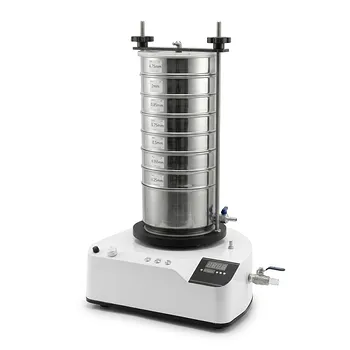
Once crushed, the material must be standardized using a precision sieving system.
This step filters the particles to obtain a specific mesh size, typically 150 µm. This ensures that only powder meeting exact size specifications moves forward in the production line.
Impact on Chemical Efficiency
Maximizing Surface Area
The primary chemical objective of this mechanical process is to drastically increase the surface area of the raw material.
When the shell is reduced to a fine powder, more of the material is exposed to chemical agents. This exposure is vital for the efficiency of subsequent processing steps.
Facilitating Key Reactions
A larger surface area directly facilitates effective demineralization and deproteinization.
These reactions strip away unwanted minerals and proteins from the shell matrix. Without fine pulverization, solvents cannot penetrate the shell structure effectively to remove these impurities.
Enabling Deacetylation
The final critical reaction, deacetylation, relies heavily on the physical state of the precursor material.
The precision of the powder ensures this reaction occurs thoroughly. This conversion is what ultimately defines the synthesis and quality of the final chitosan powder.
The Risks of Inadequate Pretreatment
Inconsistent Reaction Rates
If the sieving process is not precise, the batch will contain particles of varying sizes.
Large particles react slower than small ones. This leads to incomplete chemical reactions, where the core of a larger particle remains untreated while smaller particles may degrade.
Compromised Product Quality
The text emphasizes that these systems ensure consistency.
Without high-performance crushing and sieving, the final chitosan powder will lack uniformity. This results in a lower-quality product with unpredictable chemical properties.
Optimizing Your Production Process
To ensure you are getting the most out of your raw materials, consider your specific production goals:
- If your primary focus is Product Consistency: Prioritize the precision sieving system to strictly enforce the 150 µm limit, ensuring every particle reacts at the exact same rate.
- If your primary focus is Process Efficiency: Invest in a high-performance crushing system that can rapidly pulverize hard shells to maximize the surface area available for immediate chemical reaction.
Uniform preparation is not just a preliminary step; it is the control variable that dictates the success of the entire chemical synthesis.
Summary Table:
| Process Step | Equipment | Objective | Impact on Quality |
|---|---|---|---|
| Pretreatment | High-Performance Crusher | Pulverize hard shells into fine particles | Maximizes reactive surface area |
| Standardization | Precision Sieving System | Filter to specific mesh size (e.g., 150 µm) | Ensures uniform chemical reaction rates |
| Purification | Chemical Reactors | Demineralization & Deproteinization | Removes minerals/proteins efficiently |
| Conversion | High-Temp Reactors | Deacetylation | Determines final chitosan purity and grade |
Elevate Your Material Preparation with KINTEK
Achieving high-purity chitosan starts with mechanical precision. At KINTEK, we specialize in the high-performance laboratory equipment essential for every stage of your research and production. From robust crushing and milling systems and precision sieving equipment for optimal pretreatment to high-temperature reactors, autoclaves, and hydraulic presses for advanced synthesis, we provide the tools to ensure your results are consistent and reproducible.
Whether you are refining biomaterials or optimizing battery research, our comprehensive portfolio—including centrifuges, ULT freezers, and specialized ceramic crucibles—is designed to meet the rigorous demands of your lab.
Ready to optimize your yield and product quality? Contact us today to find the perfect equipment solution!
References
- Abidoye Olafadehan Olaosebikan, Morufat Bello Adebukola. Isotherms, kinetic and thermodynamic studies of methylene blue adsorption on chitosan flakes derived from African giant snail shell. DOI: 10.5897/ajest2021.3065
This article is also based on technical information from Kintek Solution Knowledge Base .
Related Products
- Laboratory Test Sieves and Sieving Machines
- Three-dimensional electromagnetic sieving instrument
- Laboratory Vibratory Sieve Shaker Machine for Dry and Wet Three-Dimensional Sieving
- Powerful Plastic Crusher Machine
- Laboratory Jaw Crusher
People Also Ask
- What are laboratory test sieves used for? A Guide to Particle Size Analysis
- How do you calculate the sieve test? Master Particle Size Distribution for Quality Control
- How does a lab test sieve contribute to biomass charcoal powder preparation? Achieve Uniform Particle Size
- What are the specifications for test sieves? A Guide to ASTM & ISO Standards for Accurate Particle Analysis
- What materials are required for sieving? Achieve Accurate Particle Size Analysis