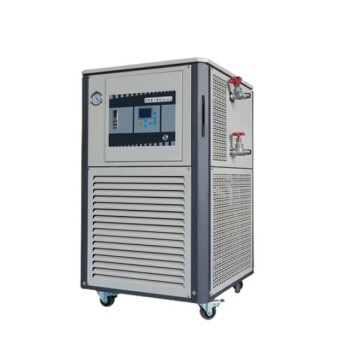
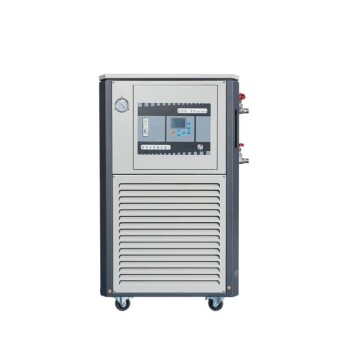
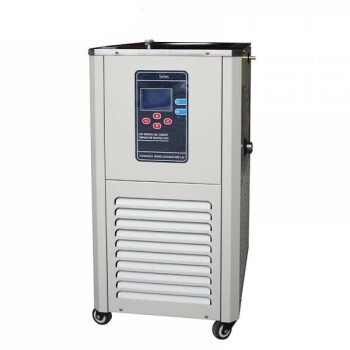
The hydrothermal reactor acts as a specialized high-pressure vessel that generates a controlled, subcritical liquid-phase environment. By maintaining high temperatures and pressures, it significantly boosts precursor solubility and reactivity, enabling the precise nucleation and growth of zero-dimensional (0D) nanoparticles essential for microbial fuel cells (MFCs).
The reactor's ability to create a subcritical environment allows for the synthesis of electrode materials with specific morphologies—such as flower-like structures—which are critical for maximizing microbial attachment and enhancing the overall electrochemical performance of the fuel cell.
The Mechanics of the Reactor Environment
Achieving Subcritical Conditions
The primary function of the hydrothermal reactor (or high-pressure autoclave) is to create a sealed environment where aqueous solutions can be heated above their atmospheric boiling points.
This places the liquid into a subcritical state, creating physical conditions that are impossible to achieve in open-air synthesis.
Enhancing Solubility and Reactivity
Under these high-pressure conditions, the solubility of precursor materials is significantly increased.
Simultaneously, the environment accelerates reaction kinetics, allowing precursors to dissolve and react more efficiently than they would under standard ambient conditions.
Impact on Material Properties for MFCs
Uniform Nucleation and Growth
The reactor provides a stable environment that facilitates the uniform nucleation of nanoparticles.
This consistency is vital for creating 0D nanomaterials with predictable physical properties, ensuring that the resulting electrode material is homogeneous.
Tuning Morphology for Bio-Interaction
The hydrothermal process allows for the engineering of specific material shapes and surface textures, such as CoNiS flower-like structures.
These complex morphologies are not merely aesthetic; they provide increased surface area and specific structural features that significantly enhance microbial attachment to the electrode.
Improving Electrochemical Performance
By controlling the synthesis environment, the reactor ensures the formation of materials that facilitate better electron transfer.
The resulting improved contact between the microbes and the electrode surface directly translates to higher electrochemical output for the microbial fuel cell.
Understanding the Trade-offs
Sensitivity to Parameters
While the hydrothermal reactor offers high precision, the outcome is extremely sensitive to internal conditions.
Slight deviations in temperature or pressure can alter the phase composition or morphology, potentially failing to produce the desired "flower-like" structures required for optimal microbial adhesion.
Process Complexity
Unlike simple precipitation methods, hydrothermal synthesis requires a closed system that limits real-time observation.
You must rely on pre-calculated parameters and "autogenous pressure" (pressure generated by the heating of the liquid itself) rather than dynamic adjustment during the reaction.
Making the Right Choice for Your Goal
To maximize the efficiency of your microbial fuel cell project, consider how the reactor's capabilities align with your specific material requirements.
- If your primary focus is optimizing bacterial adhesion: Prioritize reactor conditions that favor the growth of complex, high-surface-area morphologies like flower-like structures to serve as physical anchors for microbes.
- If your primary focus is reaction kinetics and reproducibility: Leverage the reactor's high-pressure environment to ensure complete precursor dissolution and uniform particle nucleation for consistent electrochemical results.
The hydrothermal reactor is ultimately a tool for morphological engineering, transforming raw precursors into highly active, bio-compatible electrode interfaces.
Summary Table:
| Feature | Role in 0D Nanomaterial Synthesis | Benefit for MFCs |
|---|---|---|
| Subcritical Liquid Phase | Enhances precursor solubility and reaction kinetics | Enables formation of complex 0D morphologies |
| High-Pressure Vessel | Provides uniform nucleation environment | Ensures consistent particle size and homogeneity |
| Morphological Control | Engineers textures like flower-like structures | Maximizes microbial attachment and surface area |
| Sealed Autoclave | Utilizes autogenous pressure for synthesis | Facilitates electron transfer and cell efficiency |
Elevate Your MFC Research with KINTEK Precision
Maximize your microbial fuel cell efficiency by engineering the perfect bio-interface. KINTEK specializes in high-performance high-temperature high-pressure reactors and autoclaves designed to create the precise subcritical environments needed for 0D nanomaterial synthesis.
Whether you are developing flower-like CoNiS structures or optimizing bacterial adhesion, our laboratory equipment ensures superior morphology control and reproducibility. Beyond reactors, explore our range of electrolytic cells, electrodes, and ceramic consumables tailored for advanced electrochemical research.
Ready to optimize your synthesis process? Contact KINTEK today to consult with our experts on the best equipment solutions for your laboratory's needs.
References
- Luis Alberto Estudillo‐Wong, Nicolás Alonso‐Vante. Revisiting Current Trends in Electrode Assembly and Characterization Methodologies for Biofilm Applications. DOI: 10.3390/surfaces6010002
This article is also based on technical information from Kintek Solution Knowledge Base .
Related Products
- High Pressure Laboratory Autoclave Reactor for Hydrothermal Synthesis
- Customizable Laboratory High Temperature High Pressure Reactors for Diverse Scientific Applications
- Custom PTFE Teflon Parts Manufacturer for Hydrothermal Synthesis Reactor Polytetrafluoroethylene Carbon Paper and Carbon Cloth Nano-growth
- Electric Rotary Kiln Small Rotary Furnace Biomass Pyrolysis Plant
- Stainless High Pressure Autoclave Reactor Laboratory Pressure Reactor
People Also Ask
- What role does a high-pressure reactor (autoclave) play in the synthesis of NiCuFe-LDH? Master Hydrothermal Growth
- What Role Does a High-Pressure Reactor or Autoclave Play in HA Catalyst Synthesis? Achieve High Surface Area Materials
- What equipment is required for hydrothermal synthesis of Ga0.25Zn4.67S5.08? Optimize Your Semiconductor Production
- What is the function of a high-pressure reactor in the hydrothermal synthesis of boehmite? Expert Process Insights
- What role does an autoclave play in the synthesis of MnO2 nanofibers? Mastering Hydrothermal Growth