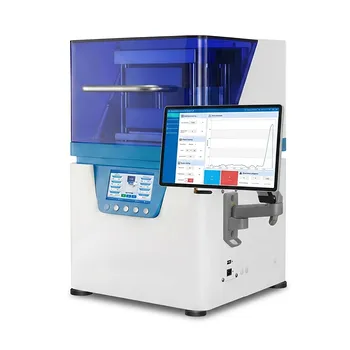
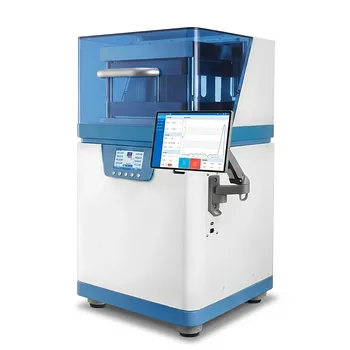
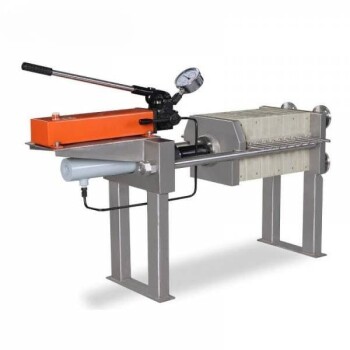
The laboratory hydraulic press is the critical instrument for ensuring the mechanical and electrical integrity of supercapacitor electrodes. By applying precise, high-pressure compaction—typically ranging from 10 to 30 MPa—the press integrates active material slurries into current collectors like nickel foam or mesh. This process minimizes interfacial resistance and secures the active layer against delamination during intensive electrochemical cycling.
A hydraulic press transforms a loose mixture of active materials and binders into a cohesive, high-performance electrode by maximizing surface contact with the current collector. This compaction is essential for achieving the low internal resistance and long-term structural stability required for efficient energy storage.
Enhancing Electrical and Mechanical Integration
Minimizing Contact Resistance
The primary role of the press is to establish ohmic contact between the active material particles and the current collector. By applying high pressure, the press eliminates microscopic gaps at the interface, which significantly reduces interfacial resistance. This enables efficient electron transport, which is vital for achieving high power densities.
Improving Mechanical Adhesion
The hydraulic press forces the electrode slurry—consisting of active carbon, conductive agents, and binders like PTFE—deep into the pores of substrates such as nickel foam. This creates a strong mechanical bond that prevents the active material from shedding. Maintaining this structural integrity is crucial when the electrode is immersed in electrolytes and subjected to the physical stresses of ion intercalation.
Precise Thickness Control
Researchers use the hydraulic press to achieve a specific, uniform electrode thickness, often as thin as 30 μm. This precision ensures that the electrode remains thin enough for rapid ion diffusion while maintaining a consistent mass. Uniformity is essential for producing reproducible results during electrochemical testing.
Optimizing Electrochemical Performance
Facilitating Charge Transfer
By compacting the active material particles tightly together, the hydraulic press creates a continuous conductive network. This enhances the charge transfer efficiency throughout the entire electrode volume. Without this compaction, the internal resistance would hinder the rate performance of the supercapacitor.
Ensuring Cycling Stability
High-pressure compaction ensures that the electrode can withstand thousands of charge-discharge cycles. The tight physical bond created by the press prevents the electrode from expanding or degrading over time. This stability is the foundation for the long-term durability expected of supercapacitor devices.
Understanding the Trade-offs
Risk of Over-Compaction
While high pressure improves conductivity, excessive force can collapse the microporous structure of the active carbon. If the pores are crushed, the ion-accessible surface area decreases, which directly reduces the total capacitance. Finding the "sweet spot" between density and porosity is a critical balancing act.
Pressure Non-Uniformity
If the pressure is not applied evenly across the surface of the current collector, the electrode will have inconsistent density. These variations can lead to "hotspots" of high resistance or areas prone to delamination. Precise laboratory presses with calibrated platens are required to mitigate this risk.
How to Apply This to Your Fabrication Process
When fabricating working electrodes, your pressure settings should be dictated by your specific material and performance targets.
- If your primary focus is High Rate Performance: Apply higher pressures (up to 30 MPa) to minimize internal resistance and maximize electron flow.
- If your primary focus is Maximum Capacitance: Use moderate pressure (approx. 10 MPa) to preserve the internal pore structure and surface area of the active material.
- If your primary focus is Structural Longevity: Increase the "dwell time" (the duration the pressure is held) to ensure the binder fully sets the material into the current collector.
The correct application of pressure is the bridge between a raw material mixture and a functioning, high-performance energy storage component.
Summary Table:
| Feature | Impact on Electrode Performance | Recommended Application |
|---|---|---|
| High-Pressure Compaction | Minimizes interfacial resistance and enhances electron transport. | 10 - 30 MPa for high power density. |
| Mechanical Bonding | Secures active material (e.g., carbon) to current collectors like nickel foam. | Use with PTFE binders for structural integrity. |
| Thickness Control | Ensures uniform mass and rapid ion diffusion (down to 30 μm). | Precision platens for reproducible results. |
| Porosity Management | Balances active surface area with conductive density. | Lower pressure (~10 MPa) to preserve pores. |
Elevate Your Energy Storage Research with KINTEK Precision
Achieving the perfect balance between conductivity and porosity requires absolute pressure control. KINTEK specializes in advanced laboratory solutions, offering a comprehensive range of manual and automatic hydraulic presses (pellet, hot, and isostatic) designed for precision electrode fabrication.
Our portfolio also includes essential consumables like PTFE products, ceramics, and nickel foam substrates, ensuring your lab has the high-quality tools needed for reliable, reproducible battery and supercapacitor research. From minimizing internal resistance to ensuring long-term cycling stability, KINTEK provides the equipment and expertise to drive your innovation forward.
Ready to optimize your electrode fabrication process? Contact KINTEK today for a consultation!
References
- Murat Yılmaz, Muslum Demi̇r. Production of Porous Carbon by the Synergistic Chemical and Physical Activations and its Capacitive Performance. DOI: 10.21597/jist.1180016
This article is also based on technical information from Kintek Solution Knowledge Base .
Related Products
- Laboratory Hydraulic Press Lab Pellet Press Machine for Glove Box
- Laboratory Hydraulic Press Split Electric Lab Pellet Press
- Fully Automatic Heated Hydraulic Lab Press for Materials Sintering and Sample Preparation
- Laboratory Hydraulic Press Lab Pellet Press for Button Battery
- Automatic Laboratory Hydraulic Press for XRF & KBR Pellet Press
People Also Ask
- How do laboratory hydraulic presses contribute to zero-gap electrolyzers? Optimize Performance & Safety
- Why is a laboratory hydraulic press necessary for ZrO2/Cr2O3 interface analysis? Optimize Sample Density and Accuracy
- How do a precision laboratory hydraulic press and specialized molds contribute to the fabrication of spherical ceramic samples? Achieving High-Density Material Precision
- What is the role of a laboratory hydraulic press in the preparation of rare earth denitrification catalysts?
- How does pressure control of a laboratory hydraulic press affect W-Ti alloys? Optimize Grain Structure & Density