Knowledge What is the role of a planetary ball mill in preparing CoCrCuFeNi HEA powder? Master Mechanical Alloying Efficiency
Author avatar

Tech Team · Kintek Solution

Updated 2 days ago

What is the role of a planetary ball mill in preparing CoCrCuFeNi HEA powder? Master Mechanical Alloying Efficiency


The primary role of a planetary ball mill in preparing CoCrCuFeNi high-entropy alloy (HEA) powder is to facilitate mechanical alloying. Through the application of intense high-energy impact and shear forces, the mill transforms distinct elemental powders (Co, Cr, Cu, Fe, and Ni) into a unified, chemically homogeneous precursor essential for high-quality alloy fabrication.

The planetary ball mill functions as a reactor for mechanical alloying, not just a mixer. It refines particle sizes and forces elemental mixing at the micro-scale, creating a highly reactive and uniform precursor powder that ensures the structural integrity of the final sintered alloy.

Mechanisms of Powder Transformation

High-Energy Mechanical Alloying

The planetary ball mill goes beyond simple blending. It generates high-energy impact and shear forces through the rapid rotation of the mill jar and the grinding media.

This kinetic energy physically forces the ductile metal particles of Cobalt, Chromium, Copper, Iron, and Nickel to repeatedly flatten, cold-weld, and fracture. This process drives the elements to mix at an atomic or micro-structural level.

Achieving Micro-Scale Homogeneity

For a high-entropy alloy to function correctly, the five elements must be distributed evenly to form a solid solution.

The ball mill ensures uniform mixing at the micro-scale, eliminating segregation where pockets of a single element (like Copper or Iron) might remain. This homogeneity is the foundation for the material's consistent mechanical properties.

Preparing for the Sintering Phase

Particle Size Refinement

The impact forces within the mill significantly reduce the particle size of the metallic powders.

Refining the particles increases their specific surface area, which enhances the powder's ability to pack densely. Smaller particles generally lead to better densification during the subsequent consolidation stages.

Creating a Reactive Precursor

The milling process introduces strain and internal energy into the powder particles, creating a highly reactive precursor.

This heightened reactivity is critical for the subsequent sintering process. It lowers the activation energy required for diffusion, allowing the powder to consolidate into a dense, solid alloy with the desired structural homogeneity.

Understanding the Trade-offs

While planetary ball milling is essential for HEA preparation, it introduces specific challenges that must be managed.

Risk of Contamination

The high-energy collisions that alloy the powder also cause wear on the grinding balls and jar liners. This can introduce impurities (such as iron or ceramic debris) into the CoCrCuFeNi mixture, potentially altering the alloy's final composition and properties.

Thermal Instability and Agglomeration

The kinetic energy converts to heat, which can lead to unwanted oxidation if the milling atmosphere isn't controlled (e.g., using argon). Additionally, excessive milling time can cause fine particles to re-agglomerate (stick together), negating the benefits of size refinement.

Making the Right Choice for Your Goal

To optimize the preparation of CoCrCuFeNi powder, tailor your milling parameters to your specific objectives.

  • If your primary focus is Structural Homogeneity: Prioritize milling duration and speed to ensure complete mechanical alloying, ensuring no elemental segregation remains before sintering.
  • If your primary focus is Sintering Density: Focus on particle size refinement to maximize specific surface area, which improves the driving force for densification during the heating stage.

Success in creating high-entropy alloys relies not just on the ingredients, but on using the ball mill to force those ingredients into a unified, reactive state.

Summary Table:

Process Function Mechanism Impact on HEA Quality
Mechanical Alloying High-energy impact & shear forces Atomic-level mixing of Co, Cr, Cu, Fe, and Ni
Size Refinement Continuous fracturing of particles Increased surface area for superior sintering density
Homogenization Repeated cold-welding & fracturing Eliminates elemental segregation for uniform properties
Surface Activation Introduction of internal strain Lowers activation energy for faster diffusion/sintering

Elevate Your HEA Research with KINTEK Precision

Achieving the perfect solid solution in CoCrCuFeNi alloys requires precision-engineered equipment that minimizes contamination while maximizing kinetic energy. KINTEK specializes in high-performance planetary ball mills, crushing and milling systems, and high-temperature vacuum furnaces designed specifically for advanced material synthesis.

From refining powders to final consolidation using our hydraulic presses and sintering furnaces, we provide the end-to-end solutions laboratory researchers need for high-entropy alloy success.

Ready to optimize your mechanical alloying process? Contact KINTEK today to discover how our laboratory equipment and specialized consumables can enhance your material properties.

Related Products

People Also Ask

Related Products

High Energy Planetary Ball Mill Milling Machine for Laboratory

High Energy Planetary Ball Mill Milling Machine for Laboratory

The biggest feature is that the high energy planetary ball mill can not only perform fast and effective grinding, but also has good crushing ability

High Energy Planetary Ball Mill Milling Machine for Laboratory

High Energy Planetary Ball Mill Milling Machine for Laboratory

Experience fast and effective sample processing with the F-P2000 high-energy planetary ball mill. This versatile equipment offers precise control and excellent grinding capabilities. Perfect for laboratories, it features multiple grinding bowls for simultaneous testing and high output. Achieve optimal results with its ergonomic design, compact structure, and advanced features. Ideal for a wide range of materials, it ensures consistent particle size reduction and low maintenance.

High-Energy Omnidirectional Planetary Ball Mill Machine for Laboratory

High-Energy Omnidirectional Planetary Ball Mill Machine for Laboratory

The KT-P2000E is a new product derived from the vertical high-energy planetary ball mill with a 360°rotation function. The product not only has the characteristics of the vertical high-energy ball mill, but also has a unique 360°rotation function for the planetary body.

High-Energy Omnidirectional Planetary Ball Mill Milling Machine for Laboratory

High-Energy Omnidirectional Planetary Ball Mill Milling Machine for Laboratory

The KT-P4000E is a new product derived from the vertical high-energy planetary ball mill with a 360° swivel function. Experience faster, uniform, and smaller sample output results with 4 ≤1000ml ball mill jars.

High Energy Planetary Ball Mill for Laboratory Horizontal Tank Type Milling Machine

High Energy Planetary Ball Mill for Laboratory Horizontal Tank Type Milling Machine

KT-P4000H uses the unique Y-axis planetary motion trajectory, and utilizes the collision, friction and gravity between the sample and the grinding ball to have a certain anti-sinking ability, which can obtain better grinding or mixing effects and further improve the sample output.

Laboratory Planetary Ball Mill Cabinet Planetary Ball Milling Machine

Laboratory Planetary Ball Mill Cabinet Planetary Ball Milling Machine

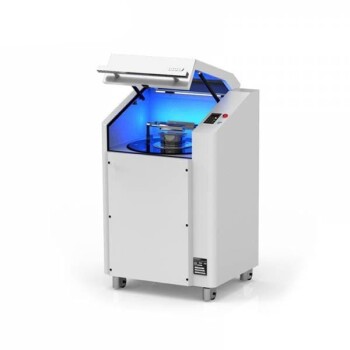
The vertical cabinet structure combined with ergonomic design enables users to obtain the best comfortable experience in standing operation. The maximum processing capacity is 2000ml, and the speed is 1200 revolutions per minute.

Laboratory Horizontal Planetary Ball Mill Milling Machine

Laboratory Horizontal Planetary Ball Mill Milling Machine

Improve sample uniformity with our Horizontal Planetary Ball Mills. KT-P400H reduces sample deposition and KT-P400E has multi-directional capabilities. Safe, convenient and efficient with overload protection.

Laboratory Planetary Ball Mill Rotating Ball Milling Machine

Laboratory Planetary Ball Mill Rotating Ball Milling Machine

KT-P400E is a desktop multi-directional planetary ball mill with unique grinding and mixing capabilities. It offers continuous and intermittent operation, timing, and overload protection, making it ideal for various applications.

High Energy Planetary Ball Mill Machine for Laboratory Horizontal Tank Type

High Energy Planetary Ball Mill Machine for Laboratory Horizontal Tank Type

The KT-P2000H uses a unique Y-axis planetary trajectory, and utilizes the collision, friction and gravity between the sample and the grinding ball.

Mini Planetary Ball Mill Machine for Laboratory Milling

Mini Planetary Ball Mill Machine for Laboratory Milling

Discover the KT-P400 desktop planetary ball mill, ideal for grinding and mixing small samples in the lab. Enjoy stable performance, long service life, and practicality. Functions include timing and overload protection.

High Energy Vibratory Laboratory Ball Mill Grinding Mill Single Tank Type

High Energy Vibratory Laboratory Ball Mill Grinding Mill Single Tank Type

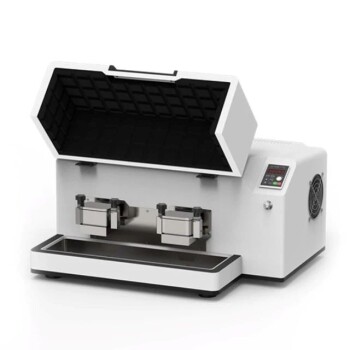
High-energy vibration ball mill is a small desktop laboratory grinding instrument.It can be ball-milled or mixed with different particle sizes and materials by dry and wet methods.

Laboratory Jar Mill with Agate Grinding Jar and Balls

Laboratory Jar Mill with Agate Grinding Jar and Balls

Grind your materials with ease using Agate Grinding Jars with Balls. Sizes from 50ml to 3000ml, perfect for planetary and vibration mills.

Lab Vibration Mill

Lab Vibration Mill

Vibration Mill for Efficient Sample Preparation, Suitable for Crushing and Grinding a Variety of Materials with Analytical Precision. Supports Dry / Wet / Cryogenic Grinding and Vacuum/Inert Gas Protection.

High Energy Vibratory Ball Mill for Lab Use

High Energy Vibratory Ball Mill for Lab Use

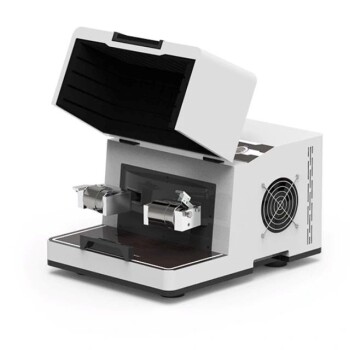
The high-energy vibrating ball mill is a high-energy oscillating and impacting multifunctional laboratory ball mill. The table-top type is easy to operate, small in size, comfortable and safe.

Laboratory Single Horizontal Jar Mill

Laboratory Single Horizontal Jar Mill

KT-JM3000 is a mixing and grinding instrument for placing a ball milling tank with a volume of 3000ml or less. It adopts frequency conversion control to realize timing, constant speed, direction change, overload protection and other functions.

Laboratory Ten-Body Horizontal Jar Mill for Lab Use

Laboratory Ten-Body Horizontal Jar Mill for Lab Use

The Ten-body horizontal jar mill is for 10 ball mill pots (3000ml or less). It has frequency conversion control, rubber roller movement, and PE protective cover.

Precision Machined Zirconia Ceramic Ball for Engineering Advanced Fine Ceramics

Precision Machined Zirconia Ceramic Ball for Engineering Advanced Fine Ceramics

zirconia ceramic ball have the characteristics of high strength, high hardness, PPM wear level, high fracture toughness, good wear resistance, and high specific gravity.

Small Injection Molding Machine for Lab Use

Small Injection Molding Machine for Lab Use

The small injection molding machinehas fast and stable movements; good controllability and repeatability, super energy saving; the product can be automatically dropped and formed; the machine body is low, convenient for feeding, easy to maintain, and no height restrictions on the installation site.

Electric Rotary Kiln Continuous Working Small Rotary Furnace Heating Pyrolysis Plant

Electric Rotary Kiln Continuous Working Small Rotary Furnace Heating Pyrolysis Plant

Efficiently calcine and dry bulk powder and lump fluid materials with an electric heating rotary furnace. Ideal for processing lithium ion battery materials and more.

Benchtop Laboratory Freeze Dryer for Lab Use

Benchtop Laboratory Freeze Dryer for Lab Use

Premium benchtop laboratory freeze dryer for lyophilization, preserving samples with ≤ -60°C cooling. Ideal for pharmaceuticals & research.


Leave Your Message