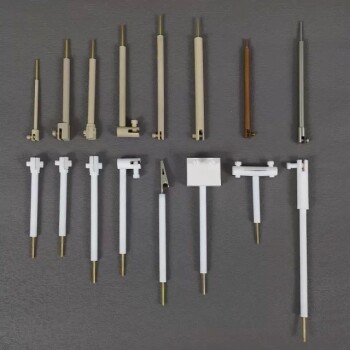
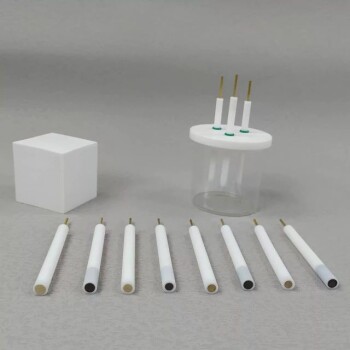
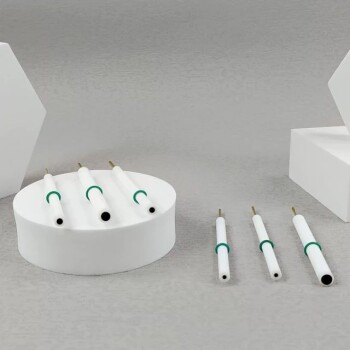
The platinum electrode serves as the auxiliary or counter electrode in a three-electrode electrochemical cell, acting as the critical conduit for electrical current. Its primary role is to complete the circuit with the working electrode (the coating being tested) without chemically participating in the reaction, ensuring that the environment remains uncontaminated and the data remains pure.
Core Takeaway: Accuracy in corrosion research depends on isolating the behavior of the material being tested. Platinum is the industry standard for counter electrodes because its superior chemical inertness ensures that all measured electrochemical signals originate exclusively from the coating surface, preventing false readings caused by electrode corrosion.
The Mechanics of the Three-Electrode System
Completing the Current Circuit
In an in-situ cell, the electrochemical reaction requires a complete electrical loop. The platinum electrode functions as the bridge that allows current to flow through the electrolyte to the working electrode.
While the reference electrode (such as a Saturated Calomel Electrode or Ag/AgCl) maintains a stable potential baseline, it cannot carry significant current. The platinum counter electrode handles this load, enabling the potentiostat to drive the necessary reactions on the coating surface.
High Electrical Conductivity
Platinum is chosen for its excellent electrical conductivity. This property allows for efficient charge transfer, ensuring that the system can maintain the required current flow even during demanding tests.
Low resistance in the counter electrode is vital for minimizing voltage drops across the cell, which helps maintain the accuracy of the potential applied to the coating.
Why Platinum is Critical for Data Integrity
Surviving Harsh Environments
Corrosion research often involves simulating aggressive environments, such as strong acidic solutions (HCl or H2SO4) or strong alkaline media.
A standard metal electrode would dissolve or corrode under these conditions. Platinum’s chemical inertness allows it to withstand these harsh electrolytes without degrading. This stability is essential for long-duration tests where consistency is paramount.
Isolating the Signal
The most critical function of the platinum electrode is to remain "invisible" to the data. If a counter electrode reacts with the solution, it generates its own electrochemical noise.
By using platinum, researchers ensure that the electrochemical signals—specifically impedance data and corrosion kinetic parameters—originate entirely from the surface of the working electrode (such as borided or chromized AISI 4140 steel). This guarantees that the analysis reflects the true performance of the coating, not artifacts from the test equipment.
Common Pitfalls to Avoid
The Risk of Contamination
While platinum is inert, it must be kept clean. If the platinum surface is contaminated by prior experiments, it can introduce foreign species into the electrolyte.
These contaminants can alter the chemistry of the solution, leading to non-reproducible results. Regular cleaning of the platinum mesh or sheet is required to maintain its "non-participating" status.
Geometry and Surface Area
It is technically important that the counter electrode has a sufficient surface area relative to the working electrode.
If the platinum electrode is too small, the reaction at the counter electrode may become the rate-limiting step of the entire system. This would throttle the current and prevent the coating from being stressed to the intended levels, resulting in skewed polarization curves.
Making the Right Choice for Your Research
To ensure your corrosion testing yields publication-quality data, consider the specific requirements of your electrochemical cell:
- If your primary focus is testing in aggressive acids (HCl/H2SO4): Rely on platinum to prevent electrode dissolution that would otherwise alter the solution chemistry and invalidate the test.
- If your primary focus is precise Impedance Spectroscopy (EIS): Use platinum to eliminate background noise, ensuring that the impedance response is purely a function of the coating's barrier properties.
By utilizing platinum as a stable, conductive, and inert counter electrode, you transform your electrochemical cell from a simple circuit into a precision measurement tool.
Summary Table:
| Feature | Role/Benefit in Corrosion Research |
|---|---|
| Function | Completes the electrical circuit as the auxiliary/counter electrode |
| Chemical Inertness | Prevents electrode dissolution and electrolyte contamination |
| Conductivity | High electrical conductivity ensures efficient charge transfer |
| Signal Integrity | Isolates the electrochemical response to the working electrode |
| Compatibility | Stable in aggressive acidic (HCl, H2SO4) and alkaline media |
Elevate Your Electrochemical Research Precision with KINTEK
Don't let electrode contamination compromise your corrosion data. KINTEK specializes in high-performance laboratory equipment and consumables designed for the most demanding research environments. From our premium electrolytic cells and platinum electrodes to advanced high-temperature furnaces and high-pressure reactors, we provide the tools you need for reproducible, publication-quality results.
Whether you are studying advanced coatings, battery technology, or material durability, KINTEK offers a comprehensive range of crushing systems, hydraulic presses, and specialized ceramics to support your entire workflow.
Ready to optimize your lab setup? Contact us today to discover how our high-purity consumables and precision instruments can enhance your research efficiency.
References
- Dimitrios I. Zagkliveris, G. K. Triantafyllidis. Corrosion Behavior of Boronized and Borochromized AISI 4140 Steel After Acid Exposure Evaluated by Electrochemical Impedance Spectroscopy. DOI: 10.1007/s11665-023-07940-3
This article is also based on technical information from Kintek Solution Knowledge Base .
Related Products
- Rotating Platinum Disk Electrode for Electrochemical Applications
- Platinum Sheet Electrode for Battery Lab Applications
- Platinum Sheet Electrode for Laboratory and Industrial Applications
- Platinum Auxiliary Electrode for Laboratory Use
- Electrode Fixture for Electrochemical Experiments
People Also Ask
- What is the working principle of a platinum disk electrode? A Guide to Precise Electrochemical Analysis
- What are the temperature limitations for a platinum disk electrode? The Critical Factor is the Insulating Body
- What can cause poisoning of a platinum disk electrode and how can it be prevented? Ensure Reliable Electrochemical Data
- How should a platinum disk electrode be polished? Master the Technique for Reliable Electrochemical Data
- How should a platinum disk electrode be used during an experiment? A Guide to Accurate Electrochemical Measurements