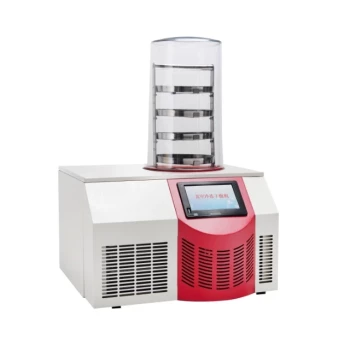
The primary role of a vacuum drying oven in the preparation of Alloy 690TT is to ensure a pristine, chemically stable surface prior to testing. By operating at a controlled temperature, typically 60°C, the oven removes volatile cleaning agents like acetone and residual moisture.
Simultaneously, the vacuum environment eliminates atmospheric oxygen. This prevents the alloy from undergoing pre-oxidation—an uncontrolled reaction that would otherwise alter the specimen's initial state and compromise the accuracy of subsequent high-temperature data.
The vacuum drying oven acts as a preservation chamber. It guarantees that the specimen's starting weight and surface chemistry are consistent, ensuring that any oxidation measured later is solely the result of the experimental conditions, not the preparation process.
The Critical Functions of Vacuum Drying
Removal of Volatile Contaminants
During the cleaning phase, Alloy 690TT specimens are often treated with solvents like acetone to remove oils and debris.
If these solvents remain on the surface, they can introduce carbon or other impurities into the high-temperature oxidation environment.
The vacuum drying oven lowers the boiling point of these liquids. This allows for the deep evaporation of acetone and moisture even at mild temperatures, ensuring the surface is chemically clean without requiring excessive heat that might alter the material's properties.
Prevention of "Pre-Oxidation"
In a standard drying oven, applying heat in the presence of air (oxygen) accelerates oxidation.
For an oxidation experiment, this is a critical failure point. If the specimen oxidizes during drying, your "baseline" is already corrupted.
By removing the air, the vacuum oven allows the specimen to be heated and dried without reacting with oxygen. This preserves the metallic surface in its native state until it is exposed to the specific high-pressure water environment of the formal experiment.
Ensuring Data Reproducibility
Scientific rigor requires that every specimen starts from an identical baseline.
Moisture or solvent residue can affect the initial weighing of the specimen. Since oxidation kinetics are often tracked by minute weight changes, even microscopic liquid residues can skew the data.
Vacuum drying stabilizes the specimen mass. This ensures that weight measurements taken before the experiment are accurate, leading to reproducible kinetic data in supercritical or high-temperature water environments.
Understanding the Trade-offs
While vacuum drying is superior to standard air drying for this application, it requires strict operational control.
Temperature vs. Pressure Balance You must rely on the vacuum, not just heat, to do the work. If the vacuum pump underperforms, the oven becomes a standard heat chamber. At 60°C, this is generally safe for Alloy 690TT, but if higher temperatures were used to compensate for poor pressure, you would risk thermal oxidation.
The Re-exposure Risk The benefit of the vacuum oven ends the moment the door is opened. Once the dry specimen is removed, it is highly reactive and hygroscopic (water-attracting).
There is a trade-off between the depth of drying and the handling time. Extended drying is useless if the transfer to the autoclave takes too long, allowing the specimen to re-absorb atmospheric moisture.
Making the Right Choice for Your Goal
To maximize the reliability of your Alloy 690TT experiments, apply the vacuum drying process based on your specific analytical needs:
- If your primary focus is Mass Gain Analysis: Ensure the drying cycle is long enough to remove all deep-seated solvents to establish a flawless initial weight baseline.
- If your primary focus is Surface Oxide Characterization: Prioritize maintaining a high-quality vacuum to prevent the formation of any initial oxide layers that could confuse surface analysis.
The vacuum drying oven is not just a drying tool; it is a mechanism for defining the "zero point" of your experiment.
Summary Table:
| Function | Benefit to Alloy 690TT Preparation | Impact on Experimental Data |
|---|---|---|
| Volatile Removal | Eliminates acetone and moisture at 60°C | Prevents carbon/impurity interference |
| Oxygen Exclusion | Prevents atmospheric pre-oxidation | Ensures an accurate "zero-point" baseline |
| Mass Stabilization | Removes microscopic liquid residues | Guarantees reproducible kinetic/weight data |
| Low-Temp Drying | Protects material properties from heat | Maintains native surface chemistry |
Elevate Your Material Research with KINTEK Precision
Don’t let pre-oxidation or surface contaminants compromise your high-temperature data. KINTEK provides industry-leading vacuum drying ovens and high-temperature reactors designed to establish the perfect baseline for Alloy 690TT and other advanced materials.
Whether you need precision muffle furnaces, autoclaves, or specialized crushing and milling systems, our equipment ensures scientific rigor and reproducible results for every experiment.
Ready to optimize your lab’s preparation phase? Contact KINTEK Today to Consult with Our Experts
References
- Soon-Hyeok Jeon, Do Haeng Hur. Effects of Hydrogen Contents on Oxidation Behavior of Alloy 690TT and Associated Boron Accumulation within Oxides in High-Temperature Water. DOI: 10.1155/2018/7845176
This article is also based on technical information from Kintek Solution Knowledge Base .
Related Products
- 56L Vertical Laboratory Vacuum Drying Oven
- 23L Laboratory Vacuum Drying Oven
- Laboratory Scientific Electric Heating Blast Drying Oven
- Benchtop Laboratory Vacuum Freeze Dryer
- Dental Porcelain Zirconia Sintering Ceramic Vacuum Press Furnace
People Also Ask
- Why is a laboratory vacuum drying oven recommended for rice straw residues? Protect Your Biomass Integrity
- What role does a laboratory vacuum drying oven play in the preparation of modified multi-walled carbon nanotubes?
- What is the importance of using a laboratory vacuum drying oven? Preserving Slow-Release Microcapsule Integrity
- Why is a Laboratory Vacuum Drying Oven recommended for PBAT microspheres? Protect Sensitive Polymer Integrity
- What role does a laboratory vacuum drying oven play in processing nanoparticle powder samples? Protect Sample Integrity