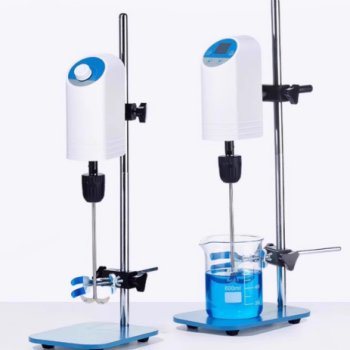
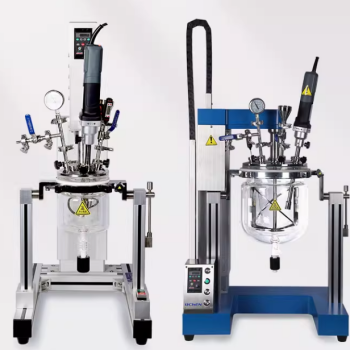
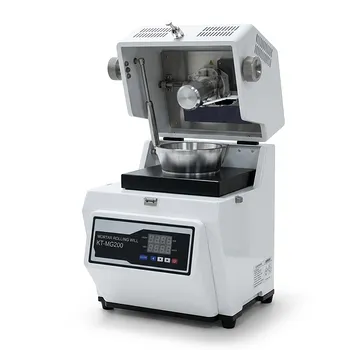
Mechanical mixing equipment serves as the fundamental driver of uniformity in the creation of tungsten-coated diamond precursors. Its specific role is to integrate diamond particles, micron-sized tungsten powder, and liquid additives like alcohol into a homogenous blend through prolonged physical stirring. This mechanical action is the primary control method for ensuring the raw materials are adequately pre-positioned for the chemical reactions that follow.
The primary function of mechanical mixing is not just combining ingredients, but ensuring the continuity of the final coating. By achieving a uniform distribution of reactants, the equipment guarantees that tungsten maintains sufficient contact with diamond surfaces during heat treatment, preventing gaps in the diffusion layer.
The Mechanics of Homogenization
Combining the Constituents
The precursor mixture consists of three distinct phases: solid diamond particles, micron-sized tungsten powder, and a liquid medium (typically alcohol).
Without mechanical intervention, these materials would naturally separate based on density differences. The mixing equipment forces these disparate elements into a cohesive slurry.
The Role of Prolonged Agitation
The process requires prolonged physical stirring rather than a quick blend.
This sustained agitation prevents the heavy tungsten powder from settling away from the diamond particles. It ensures that the suspension remains stable long enough for the mixture to be processed further.
Impact on Final Coating Quality
Maximizing Surface Contact
The ultimate goal of the precursor stage is to facilitate a reaction during subsequent heat treatments.
Mechanical mixing ensures that the tungsten source is physically touching the diamond surfaces. Without this intimate contact, the diffusion necessary to bond the tungsten to the diamond cannot occur efficiently.
Facilitating a Continuous Layer
A uniform mixture leads directly to a uniform diffusion coating.
If the mixing is inadequate, the final product may suffer from "bald spots" or uneven coating thicknesses. Proper mechanical mixing ensures the coating is continuous across the entire surface area of the diamond particles.
Understanding the Risks of Inadequate Mixing
The Cost of Heterogeneity
If the mixing equipment fails to create a truly homogeneous mixture, the tungsten powder will clump or settle.
This results in localized areas of high tungsten concentration and other areas with none. The heat treatment phase cannot correct this; it will merely lock the uneven distribution into place, resulting in a defective product.
Process Consistency
Inconsistent mixing introduces variables that are difficult to trace later in the manufacturing line.
If the precursor slurry varies from batch to batch due to poor mechanical stirring, the final thermal properties and adhesion of the coated diamonds will fluctuate unpredictably.
Making the Right Choice for Your Goal
Mechanical mixing is the bridge between raw materials and a functional composite material.
- If your primary focus is Coating Continuity: Ensure the mixing duration is sufficient to break up tungsten agglomerates and fully coat the diamond surfaces in the slurry.
- If your primary focus is Process Reliability: Standardize the stirring speed and time to guarantee that the tungsten-to-diamond contact ratio remains constant across every batch.
The quality of the final diffusion coating is defined effectively the moment the mixing stops.
Summary Table:
| Mixing Factor | Role in Precursor Preparation | Impact on Final Product |
|---|---|---|
| Homogenization | Integrates diamond, tungsten powder, and liquid additives | Prevents material separation and density-based settling |
| Prolonged Agitation | Maintains a stable, cohesive slurry during processing | Ensures even distribution of reactants across all particles |
| Surface Contact | Forces tungsten source against diamond surfaces | Facilitates efficient diffusion and chemical bonding |
| Process Control | Standardizes stirring speed and duration | Guarantees coating continuity and batch-to-batch reliability |
Elevate Your Material Synthesis with KINTEK Precision Solutions
Achieving a flawless, continuous coating starts with superior homogenization. KINTEK specializes in advanced laboratory equipment designed to meet the rigorous demands of diamond coating and powder metallurgy. Whether you require high-performance crushing and milling systems for precursor preparation, high-temperature furnaces (vacuum, atmosphere, or tube) for the diffusion stage, or hydraulic presses for final material shaping, our comprehensive portfolio ensures your research delivers consistent, high-quality results.
Ready to optimize your lab’s efficiency and coating quality?
Contact KINTEK today to discuss your specific application needs!
Related Products
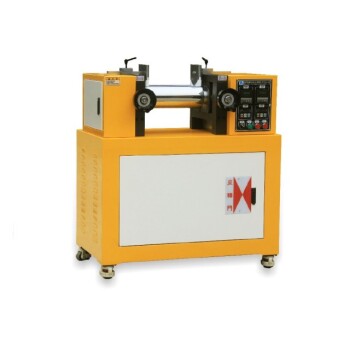
- Open Type Two Roll Mixing Mill Machine for Rubber Crusher
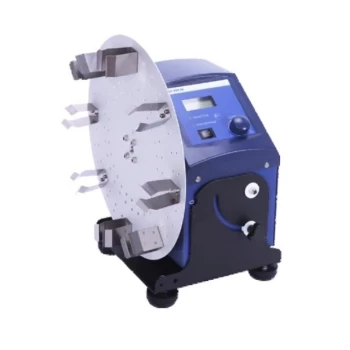
- Laboratory Disc Rotary Mixer for Efficient Sample Mixing and Homogenization
- Laboratory Vortex Mixer Orbital Shaker Multifunctional Rotation Oscillation Mixer
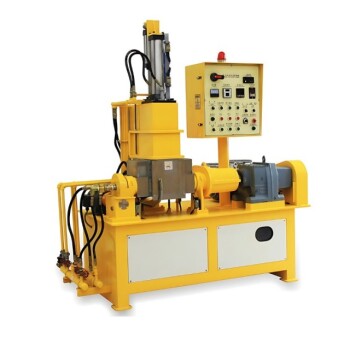
- Lab Internal Rubber Mixer Rubber Kneader Machine for Mixing and Kneading
- Laboratory Oscillating Orbital Shaker
People Also Ask
- What is a two roll mill for rubber compounding? A Foundational Tool for Polymer Processing
- What is the use of two roll mill? Essential for Polymer Mixing, R&D, and Quality Control
- What is the two roll mill mixing process? Master Polymer Compounding with High Shear
- What is the disadvantage of a two-roll mill? Limited Thickness Reduction Due to Roll Flattening
- What are the advantages of a two roll mill? Achieve Superior Polymer Mixing & Quality Control