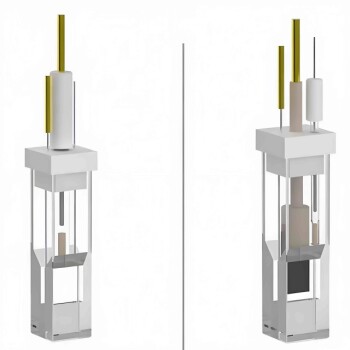
The near-zero gap structure acts as a critical efficiency booster in electrochemical reactors by minimizing the physical distance between the anode and cathode. By sandwiching an ion exchange membrane directly between these electrodes, this design drastically reduces internal polarization resistance, allowing for higher performance in a smaller package.
By eliminating the excess electrolyte gap between electrodes, the near-zero gap structure minimizes internal electrical resistance. This allows electrochemical reactors to achieve high current density and power output while maintaining a compact, efficient footprint.
The Mechanics of Resistance Reduction
Minimizing Internal Polarization
In traditional reactor designs, the physical space filled with electrolyte between electrodes creates resistance. This resistance, often called internal polarization resistance, impedes the flow of ions and wastes energy.
The near-zero gap structure effectively eliminates this distance. By bringing the electrodes as close as possible, the system significantly lowers the voltage required to drive the reaction.
The Role of the Ion Exchange Membrane
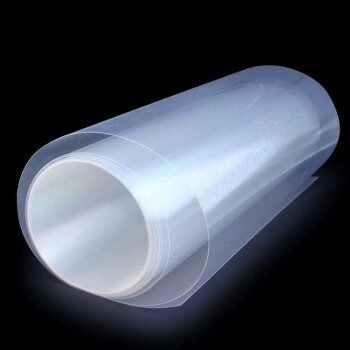
The core enabler of this structure is the ion exchange membrane. It serves as the physical separator that prevents electrical shorting between the anode and cathode while allowing ions to pass through freely.
This component replaces the liquid gap, ensuring the structural integrity of the "zero gap" configuration.
Operational Benefits
Boosting Reaction Efficiency
Because resistance is minimized, less electrical energy is lost as heat during the process. This leads to a direct improvement in electrochemical reaction efficiency.
Achieving High Current Density
Lower resistance allows the system to handle a greater flow of charge per unit area. Consequently, the reactor can maintain high current density, which is essential for intensive industrial applications.
Maximizing Power Output
The combination of high efficiency and high current density results in high power output. The reactor delivers more energy for the desired electrochemical transformation without requiring a proportional increase in input voltage.
Physical Design Advantages
Enabling a Compact Footprint
By removing the need for bulky electrolyte chambers between electrodes, the reactor design becomes much tighter. This allows for a compact footprint, making these reactors suitable for applications where space is at a premium.
Understanding the Trade-offs
Dependency on Membrane Integrity
Because the membrane is the only barrier in a near-zero gap structure, the system relies heavily on the quality and durability of this component. Any degradation or failure in the membrane directly impacts the isolation of the electrodes and the efficiency of the reactor.
Thermal Concentration
While the design is efficient, operating at high current densities concentrates activity in a very small volume. This requires careful consideration of heat dissipation to prevent the membrane or electrodes from overheating within the compact structure.
Making the Right Choice for Your Goal
When evaluating reactor designs, consider how the near-zero gap structure aligns with your specific constraints:
- If your primary focus is maximizing output: The reduced resistance allows for high current density and power output, making this structure ideal for high-performance requirements.
- If your primary focus is spatial efficiency: The elimination of electrolyte gaps significantly reduces the reactor's physical volume, offering a compact footprint for space-constrained installations.
The near-zero gap structure is the definitive solution for engineers seeking to balance high power performance with physical compactness.
Summary Table:
| Feature | Near-Zero Gap Structure Benefit |
|---|---|
| Internal Resistance | Significantly reduced by eliminating electrolyte gaps |
| Power Density | Higher current density and power output per unit area |
| Energy Efficiency | Minimizes voltage loss and heat generation |
| Physical Design | Enables a compact, space-saving reactor footprint |
| Key Component | Rely on high-quality Ion Exchange Membranes |
Maximize Your Reactor Performance with KINTEK Expertise
Are you looking to optimize your electrochemical research or industrial applications? KINTEK specializes in precision laboratory equipment and high-performance consumables. Our extensive portfolio includes advanced electrolytic cells and electrodes, ion exchange materials, and specialized high-temperature reactors designed to deliver the efficiency your projects demand.
From high-pressure autoclaves to cutting-edge battery research tools, KINTEK provides the reliability and technical support needed to achieve high current density and superior power output.
Ready to upgrade your lab’s capabilities? Contact our specialists today to find the perfect solution for your MEA and reactor needs!
References
- Yu Zhang, Yuen Wu. New perspective crosslinking electrochemistry and other research fields: beyond electrochemical reactors. DOI: 10.1039/d3sc06983d
This article is also based on technical information from Kintek Solution Knowledge Base .
Related Products
- CF KF Flange Vacuum Electrode Feedthrough Lead Sealing Assembly for Vacuum Systems
- Proton Exchange Membrane for Batteries Lab Applications
- Customizable PEM Electrolysis Cells for Diverse Research Applications
- Metal Disc Electrode Electrochemical Electrode
- Reference Electrode Calomel Silver Chloride Mercury Sulfate for Laboratory Use
People Also Ask
- Is a brazed joint strong? Yes, It Can Be Stronger Than the Base Metal
- What are the factors that affect the strength of a brazed joint? Master the 4 Keys to a Perfect Bond
- What is the importance of leakage in a vacuum system? Prevent Contamination and Process Failure
- What is the relationship between temperature and pressure in a vacuum? Mastering Thermal Control for Optimal Vacuum Performance
- What are the considerations for vacuum system design? Achieve Optimal Performance for Your Lab