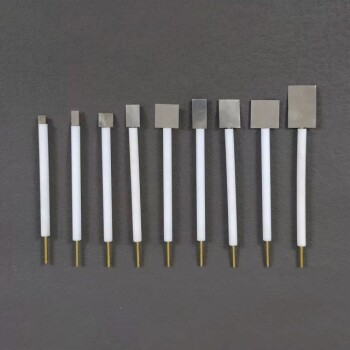
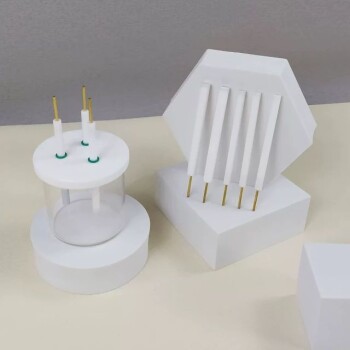
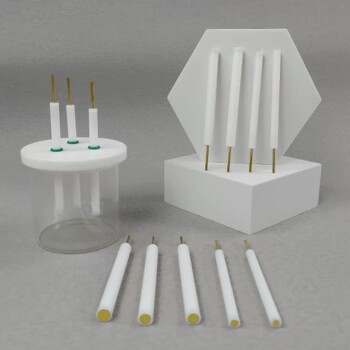
In the specific context of testing NiCrCoTiV high-entropy alloys, the platinum electrode functions as the auxiliary (or counter) electrode within a standard three-electrode cell configuration. Its primary role is to complete the electrical circuit with the working electrode—the alloy sample itself—facilitating the stable flow of current required for measurement.
Core Takeaway Platinum is selected specifically for its chemical inertness and high electrical conductivity. It ensures the accuracy of Potentiodynamic Polarization and Electrochemical Impedance Spectroscopy (EIS) data by transmitting current efficiently without chemically participating in the reaction or interfering with the alloy's results.
The Role of Platinum in the Three-Electrode System
Completing the Circuit
In electrochemical testing, the NiCrCoTiV alloy serves as the working electrode. However, measurements cannot be taken in isolation.
The platinum electrode acts as the auxiliary (counter) electrode. It connects the electrolytic solution to the external circuit, allowing charge to flow between itself and the alloy sample.
Facilitating Critical Tests
The stability provided by the platinum electrode is essential for two specific analytical techniques: Potentiodynamic Polarization and Electrochemical Impedance Spectroscopy (EIS).
During these tests, the platinum electrode ensures that the current transmission remains stable and continuous, which is vital for capturing high-resolution data regarding the alloy's behavior.
Why Platinum is Critical for Accuracy
Exceptional Chemical Inertness
The primary reason platinum is used over other metals is its resistance to chemical reactions.
When testing high-entropy alloys like NiCrCoTiV, it is crucial that the counter electrode does not corrode or dissolve into the electrolyte. Platinum remains stable, ensuring that the chemical changes measured are exclusively from the alloy sample, not the counter electrode.
High Electrical Conductivity
Accurate electrochemical testing requires minimal resistance in the external circuit components.
Platinum possesses high electrical conductivity, which allows it to transmit current efficiently. This minimizes voltage drops across the counter electrode, ensuring that the potential applied to the working electrode is controlled precisely.
Operational Considerations
Preventing Measurement Interference
While platinum is highly effective, the integrity of the test depends on the electrode remaining purely a conductor.
If a counter electrode were to react with the electrolyte, it would introduce "noise" or false signals into the data. Platinum's non-reactive nature effectively eliminates this variable, ensuring the results reflect only the electrochemical properties of the NiCrCoTiV alloy.
Maintenance of the Electrode
Despite its inertness, the platinum surface must remain clean to function correctly.
Any physical contamination on the platinum surface can impede current transmission. Therefore, ensuring the electrode is free of deposits is necessary to maintain the stable current transmission required for EIS and polarization tests.
Making the Right Choice for Your Goal
To ensure valid characterization of NiCrCoTiV high-entropy alloys, consider the following regarding your electrode setup:
- If your primary focus is Data Purity: Rely on platinum's inertness to prevent cross-contamination or side reactions that could obscure the alloy's true corrosion behavior.
- If your primary focus is Test Stability: Utilize platinum to guarantee the consistent current transmission needed for long-duration tests like Electrochemical Impedance Spectroscopy (EIS).
By utilizing a platinum auxiliary electrode, you isolate the performance of the alloy, ensuring your data represents the material, not the measurement artifacts.
Summary Table:
| Feature | Role of Platinum Electrode in NiCrCoTiV Testing |
|---|---|
| Electrode Type | Auxiliary (Counter) Electrode |
| Primary Function | Completes the electrical circuit & facilitates current flow |
| Key Properties | High chemical inertness and superior electrical conductivity |
| Test Compatibility | Potentiodynamic Polarization & Electrochemical Impedance Spectroscopy (EIS) |
| Main Benefit | Prevents data noise and ensures results reflect only the alloy's properties |
Elevate Your Electrochemical Research with KINTEK
Precision in material characterization starts with high-quality components. KINTEK specializes in providing the specialized laboratory equipment and consumables needed for advanced metallurgy and battery research.
Whether you are analyzing high-entropy alloys or developing next-generation energy storage, we offer a comprehensive range of electrolytic cells and electrodes, high-temperature furnaces, and precision crushing systems to ensure your data is accurate and reproducible.
Ready to optimize your lab setup? Contact our technical experts today to discover how our premium platinum electrodes and electrochemical tools can bring unparalleled stability to your research.
Related Products
- Platinum Sheet Electrode for Laboratory and Industrial Applications
- Platinum Sheet Electrode for Battery Lab Applications
- Rotating Platinum Disk Electrode for Electrochemical Applications
- Platinum Auxiliary Electrode for Laboratory Use
- RRDE rotating disk (ring disk) electrode / compatible with PINE, Japanese ALS, Swiss Metrohm glassy carbon platinum
People Also Ask
- What is a common use for a platinum sheet electrode? As a Reliable Counter Electrode in Electrochemical Cells
- What is the most critical guideline for immersing a platinum sheet electrode in an electrolyte? Ensure Accurate Electrochemical Measurements
- What is the purity of the platinum sheet in a platinum sheet electrode? The Key to Reliable Electrochemical Data
- What is the expected lifespan of a platinum sheet electrode? Maximize Your Electrode's Service Life
- What are the available specifications for platinum sheet electrodes? Find the Perfect Fit for Your Electrochemical Needs