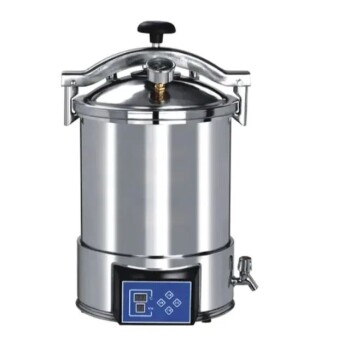
Knowledge What is the role of a hydrothermal autoclave in HAp nanosheet synthesis? Engineered High-Pressure Crystallization
Author avatar

Tech Team · Kintek Solution

Updated 4 hours ago

What is the role of a hydrothermal autoclave in HAp nanosheet synthesis? Engineered High-Pressure Crystallization


The hydrothermal autoclave functions as a pressurized crystallization chamber, essential for overcoming the physical limitations of standard chemical reactions. Specifically, it creates a sealed, high-pressure environment that allows aqueous solutions to reach temperatures (typically 120 °C) well above their atmospheric boiling points without evaporating. In the synthesis of hydroxyapatite (HAp) nanosheets, this environment forces raw material powders to dissolve and subsequently recrystallize under metastable conditions, resulting in ultra-thin, highly crystalline nanostructures.

Core Takeaway The autoclave does not merely heat the reactants; it engineers a unique physical state where high pressure and temperature drive a dissolution-recrystallization mechanism. This process is the specific trigger that transforms disordered raw powders into ordered, ultra-thin hydroxyapatite nanosheets with superior barrier properties.

Creating the Critical Reaction Environment

Exceeding Atmospheric Limits

In a standard open vessel, water boils at 100 °C, limiting the energy available for synthesis.

A hydrothermal autoclave seals the reaction, allowing the system to reach typically 120 °C while maintaining the solvent in a liquid state.

The Role of Metastable Conditions

The combination of high pressure and heat creates a "metastable" environment.

In this state, raw hydroxyapatite powders that are stable at room temperature are forced to undergo dissolution.

Once dissolved, the material immediately begins a recrystallization process, reassembling into a more thermodynamically favorable structure given the high-pressure context.

Controlling Morphology and Crystallinity

Forming Ultra-Thin Nanosheets

The primary role of the autoclave in this specific application is morphology control.

The unique pressure conditions facilitate the growth of ultra-thin nanosheets rather than random particles or bulk crystals.

This specific layered structure is critical, as it serves as the foundation for high-performance protective coatings.

Ensuring High Crystallinity

The sealed environment promotes uniform heat distribution and maintains consistent pressure.

This uniformity ensures that the resulting nanosheets possess high crystallinity and a regular, predictable morphology.

Highly crystalline structures offer better physical barrier properties compared to amorphous or poorly formed crystals.

Understanding the Trade-offs

Parameter Sensitivity

While the autoclave enables precise control, the outcome is highly sensitive to the specific temperature and pressure settings.

Deviating from the optimal conditions (e.g., the 120 °C benchmark) can drastically alter the morphology, potentially resulting in unwanted shapes like wires or irregular clumps rather than sheets.

Synthesis Speed vs. Quality

The high-pressure environment significantly accelerates reaction rates compared to conventional methods.

However, if the reaction proceeds too quickly without adequate time for "aging" or Ostwald ripening, the crystal structure may retain internal stresses or surface defects.

Making the Right Choice for Your Goal

The hydrothermal autoclave is a tool for precision engineering of nanomaterials. To maximize its utility for hydroxyapatite, consider your specific end-goal:

  • If your primary focus is Barrier Performance: Prioritize the high-crystallinity aspect of the synthesis, ensuring the reaction time is sufficient to reduce surface defects.
  • If your primary focus is Coating Uniformity: Focus on the morphology control, maintaining precise temperature stability (around 120 °C) to ensure the nanosheets are regular and ultra-thin.

By leveraging the dissolution-recrystallization mechanism unique to hydrothermal synthesis, you convert simple raw powders into advanced functional nanomaterials.

Summary Table:

Feature Hydrothermal Autoclave Role Impact on HAp Nanosheets
Pressure Maintains liquid state above boiling point Enables dissolution of stable raw powders
Temperature Reaches 120°C+ without evaporation Drives the recrystallization process
Morphology Controlled metastable environment Forms ultra-thin, uniform nanosheets
Crystallinity Uniform heat/pressure distribution Produces high-density physical barrier properties
Efficiency Accelerates reaction kinetics Reduces synthesis time compared to open systems

Elevate Your Nanomaterial Synthesis with KINTEK

Precise morphology control in hydroxyapatite synthesis requires high-performance equipment that maintains stability under extreme conditions. KINTEK specializes in premium high-temperature high-pressure reactors and autoclaves designed to deliver the exact pressure and thermal uniformity your research demands.

Whether you are developing HAp nanosheets for protective coatings or medical applications, our comprehensive range of laboratory solutions—including crushing systems, muffle furnaces, and advanced ceramics—supports your entire workflow from raw material preparation to final crystallization.

Ready to achieve superior crystallinity and ultra-thin structures? Contact our technical experts today to find the perfect hydrothermal solution for your lab!

References

  1. Chun Feng, Zongxue Yu. A High−Performance Anti−Corrosive Epoxy Coating Based on Ultra−Thin Hydroxyapatite Nanosheets with pH−Responsive Functions. DOI: 10.3390/molecules28176223

This article is also based on technical information from Kintek Solution Knowledge Base .

Related Products

People Also Ask

Related Products

Mini SS High Pressure Autoclave Reactor for Laboratory Use

Mini SS High Pressure Autoclave Reactor for Laboratory Use

Mini SS High Pressure Reactor - Ideal for medicine, chemical, and scientific research industries. Programmed heating temp and stirring speed, up to 22Mpa pressure.

Customizable Laboratory High Temperature High Pressure Reactors for Diverse Scientific Applications

Customizable Laboratory High Temperature High Pressure Reactors for Diverse Scientific Applications

High-pressure lab reactor for precise hydrothermal synthesis. Durable SU304L/316L, PTFE liner, PID control. Customizable volume & materials. Contact us!

Stainless High Pressure Autoclave Reactor Laboratory Pressure Reactor

Stainless High Pressure Autoclave Reactor Laboratory Pressure Reactor

Discover the versatility of Stainless High Pressure Reactor - a safe and reliable solution for direct and indirect heating. Built with stainless steel, it can withstand high temperatures and pressures. Learn more now.

High Pressure Laboratory Autoclave Reactor for Hydrothermal Synthesis

High Pressure Laboratory Autoclave Reactor for Hydrothermal Synthesis

Discover the applications of Hydrothermal Synthesis Reactor - a small, corrosion-resistant reactor for chemical labs. Achieve rapid digestion of insoluble substances in a safe and reliable way. Learn more now.

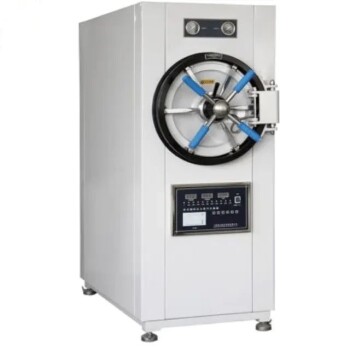
Laboratory High Pressure Horizontal Autoclave Steam Sterilizer for Lab Use

Laboratory High Pressure Horizontal Autoclave Steam Sterilizer for Lab Use

The horizontal autoclave steam sterilizer adopts the gravity displacement method to remove the cold air in the inner chamber, so that the inner steam and cold air content is less, and the sterilization is more reliable.

Manual High Temperature Heated Hydraulic Press Machine with Heated Plates for Lab

Manual High Temperature Heated Hydraulic Press Machine with Heated Plates for Lab

The High Temperature Hot Press is a machine specifically designed for pressing, sintering and processing materials in a high temperature environment. It is capable of operating in the range of hundreds of degrees Celsius to thousands of degrees Celsius for a variety of high temperature process requirements.

Automatic High Temperature Heated Hydraulic Press Machine with Heated Plates for Lab

Automatic High Temperature Heated Hydraulic Press Machine with Heated Plates for Lab

The High Temperature Hot Press is a machine specifically designed for pressing, sintering and processing materials in a high temperature environment. It is capable of operating in the range of hundreds of degrees Celsius to thousands of degrees Celsius for a variety of high temperature process requirements.

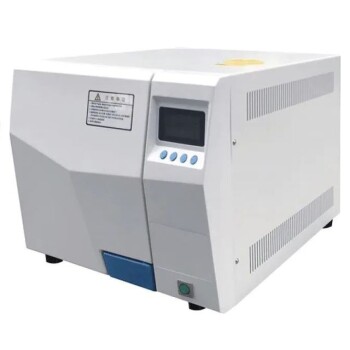
Desktop Fast High Pressure Laboratory Autoclave Sterilizer 16L 24L for Lab Use

Desktop Fast High Pressure Laboratory Autoclave Sterilizer 16L 24L for Lab Use

The desktop fast steam sterilizer is a compact and reliable device used for rapid sterilization of medical, pharmaceutical, and research items.

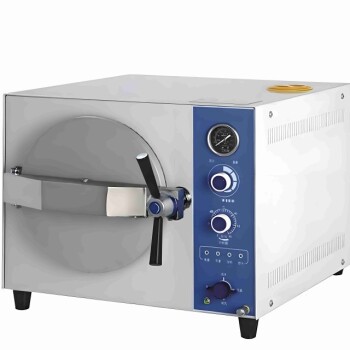
Desktop Fast Laboratory Autoclave Sterilizer 35L 50L 90L for Lab Use

Desktop Fast Laboratory Autoclave Sterilizer 35L 50L 90L for Lab Use

The desktop fast steam sterilizer is a compact and reliable device used for rapid sterilization of medical, pharmaceutical, and research items. It efficiently sterilizes surgical instruments, glassware, medicines, and resistant materials, making it suitable for various applications.

Laboratory Sterilizer Lab Autoclave Pulsating Vacuum Desktop Steam Sterilizer

Laboratory Sterilizer Lab Autoclave Pulsating Vacuum Desktop Steam Sterilizer

The pulsating vacuum desktop steam sterilizer is a compact and reliable device used for rapid sterilization of medical, pharmaceutical, and research items.

Visual High-Pressure Reactor for In-Situ Observation

Visual High-Pressure Reactor for In-Situ Observation

The visual high-pressure reactor uses transparent sapphire or quartz glass, maintaining high strength and optical clarity under extreme conditions for real-time reaction observation.

Assemble Square Lab Press Mold for Laboratory Applications

Assemble Square Lab Press Mold for Laboratory Applications

Achieve perfect sample preparation with Assemble Square Lab Press Mold. Quick disassembly eliminates sample deformation. Perfect for battery, cement, ceramics, and more. Customizable sizes available.

Manual Heated Hydraulic Press Machine with Heated Plates for Laboratory Hot Press

Manual Heated Hydraulic Press Machine with Heated Plates for Laboratory Hot Press

The Manual Heat Press is a versatile piece of equipment suitable for a variety of applications, operated by a manual hydraulic system that applies controlled pressure and heat to the material placed on the piston.

Square Bidirectional Pressure Mold for Lab Use

Square Bidirectional Pressure Mold for Lab Use

Discover precision in molding with our Square Bidirectional Pressure Mold. Ideal for creating diverse shapes and sizes, from squares to hexagons, under high pressure and uniform heating. Perfect for advanced material processing.

Square Lab Press Mold for Laboratory Applications

Square Lab Press Mold for Laboratory Applications

Create uniform samples easily with Square Lab Press Mold - available in various sizes. Ideal for battery, cement, ceramics, and more. Custom sizes available.

Round Bidirectional Press Mold for Lab

Round Bidirectional Press Mold for Lab

The round bidirectional press mold is a specialized tool used in high-pressure molding processes, particularly for creating intricate shapes from metal powders.

915MHz MPCVD Diamond Machine Microwave Plasma Chemical Vapor Deposition System Reactor

915MHz MPCVD Diamond Machine Microwave Plasma Chemical Vapor Deposition System Reactor

915MHz MPCVD Diamond Machine and its multi-crystal effective growth, the maximum area can reach 8 inches, the maximum effective growth area of single crystal can reach 5 inches. This equipment is mainly used for the production of large-size polycrystalline diamond films, the growth of long single crystal diamonds, the low-temperature growth of high-quality graphene, and other materials that require energy provided by microwave plasma for growth.

Microwave Plasma Chemical Vapor Deposition MPCVD Machine System Reactor for Lab and Diamond Growth

Microwave Plasma Chemical Vapor Deposition MPCVD Machine System Reactor for Lab and Diamond Growth

Get high-quality diamond films with our Bell-jar Resonator MPCVD machine designed for lab and diamond growth. Discover how Microwave Plasma Chemical Vapor Deposition works for growing diamonds using carbon gas and plasma.

Double Layer Five-Port Water Bath Electrolytic Electrochemical Cell

Double Layer Five-Port Water Bath Electrolytic Electrochemical Cell

Experience optimal performance with our Water Bath Electrolytic Cell. Our double-layer, five-port design boasts corrosion resistance and longevity. Customizable to fit your specific needs. View specs now.

Split Chamber CVD Tube Furnace with Vacuum Station Chemical Vapor Deposition System Equipment Machine

Split Chamber CVD Tube Furnace with Vacuum Station Chemical Vapor Deposition System Equipment Machine

Efficient split chamber CVD furnace with vacuum station for intuitive sample checking and quick cooling. Up to 1200℃ max temperature with accurate MFC mass flowmeter control.


Leave Your Message