High-energy ball milling functions as the primary mechanism for mechanical alloying, driving the synthesis of Molybdenum (Mo) and Silicon (Si) into a usable sintering additive. This process is not merely about blending; it utilizes intense mechanical energy over an extended duration to fundamentally alter the structure of the source powders.
Core Takeaway The specific role of high-energy ball milling here is to synthesize the high-temperature stable beta-MoSi2 phase through mechanical alloying. By processing the mixture for 144 hours, it reduces particles to the nanometer scale (approx. 12.6 nm) and ensures the atomic-level mixing required for effective ceramic sintering.
The Mechanics of Synthesis
Facilitating Mechanical Alloying
The central role of this process is to enable mechanical alloying. Rather than melting the materials together, high-energy ball milling uses kinetic energy to force the elemental Molybdenum and Silicon powders to combine at a structural level.
Achieving Atomic-Level Mixing
Standard mixing is insufficient for this application. The ball milling process ensures atomic-level mixing, creating a highly homogeneous distribution of elements that is critical for the consistency of the final ceramic product.
Nanometer-Scale Reduction
To function effectively as a sintering additive for nano-ceramics, the particle size must be extremely fine. The milling process reduces the powder particles to approximately 12.6 nm, vastly increasing their surface area and reactivity.
Phase Transformation Goals
Synthesis of Beta-MoSi2
The ultimate chemical objective of this physical process is phase transformation. The energy imparted by the mill synthesizes the beta-MoSi2 phase powder.
Ensuring High-Temperature Stability
The creation of the beta-phase is non-negotiable for this application. This specific phase provides the high-temperature stability necessary to survive and function during the intense heat of the ceramic sintering process.
Understanding the Process Requirements
The Necessity of Extended Duration
This synthesis is a time-intensive operation. To achieve the required phase purity and particle size, the milling process must continue for 144 hours.
Energy vs. Outcome
Shortcutting the duration risks incomplete alloying or insufficient particle reduction. The significant energy and time investment is the trade-off required to guarantee the formation of the stable beta-phase.
Implication for Sintering
Optimizing Sintering Behavior
If your primary focus is material reactivity: Ensure the process reaches the 12.6 nm particle size, as this nanoscale dimension is essential for the additive to function effectively within the nano-Aluminum Nitride matrix.
Ensuring Component Integrity
If your primary focus is thermal stability: Verify that the 144-hour cycle is completed to fully synthesize the beta-MoSi2 phase, preventing failure during high-temperature sintering.
Success in creating this additive relies entirely on the precise application of mechanical energy to force an atomic-level transformation.
Summary Table:
| Feature | Specification/Role |
|---|---|
| Primary Mechanism | Mechanical Alloying (Solid-state synthesis) |
| Target Phase | Beta-MoSi2 (High-temperature stable) |
| Milling Duration | 144 Hours |
| Final Particle Size | ~12.6 nm (Nanoscale) |
| Core Benefit | Atomic-level mixing and increased reactivity |
Elevate Your Nano-Ceramic Research with KINTEK
Precision in material synthesis starts with the right equipment. KINTEK specializes in high-performance laboratory solutions designed for the most demanding applications, including high-energy crushing and milling systems, planetary ball mills, and precision sieving equipment. Whether you are synthesizing beta-MoSi2 additives or developing advanced nano-Aluminum Nitride ceramics, our expertise in high-temperature furnaces and material processing tools ensures consistent, repeatable results.
Ready to optimize your mechanical alloying process? Contact KINTEK today for expert guidance and tailored equipment solutions!
Related Products
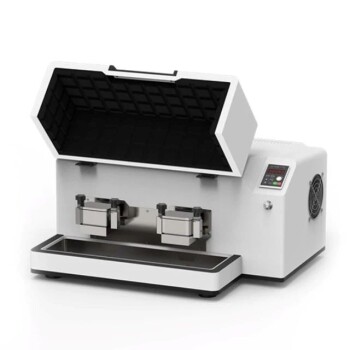
- High Energy Planetary Ball Mill Milling Machine for Laboratory
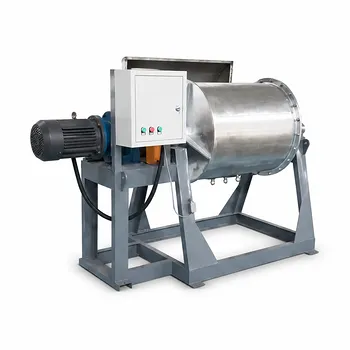
- High Energy Planetary Ball Mill for Laboratory Horizontal Tank Type Milling Machine
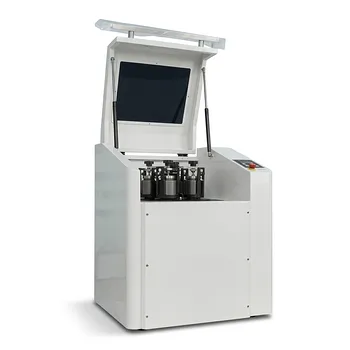
- High-Energy Omnidirectional Planetary Ball Mill Milling Machine for Laboratory
- High Energy Planetary Ball Mill Milling Machine for Laboratory
- High Energy Planetary Ball Mill Machine for Laboratory Horizontal Tank Type
People Also Ask
- How does a planetary ball mill provide mechanical activation for scandium recovery? Maximize Your Leaching Efficiency
- What role do planetary ball mills and zirconia media play in LLZT preparation? Optimize Your Solid Electrolyte Research
- What is the function of a planetary ball mill in the preparation of high-entropy rare earth silicate multi-phase ceramics?
- What is the purpose of using a planetary ball mill for cathode material regeneration? Achieve Atomic-Level Mixing
- What is the primary function of a planetary ball mill? Mastering SiC/Al Composite Mixing for Homogeneity