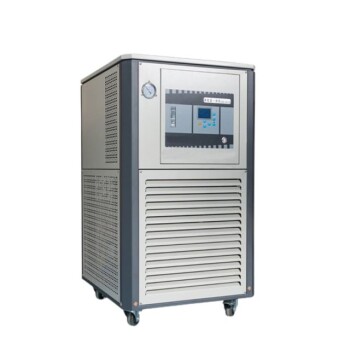
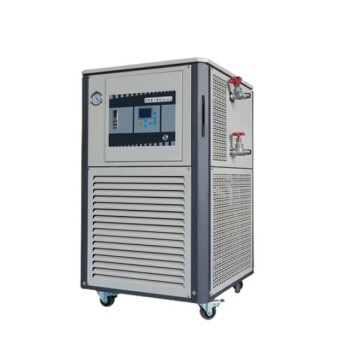
The typical operating range for a basic laboratory water bath falls between 5°C above ambient (room) temperature and 99.9°C. Because these units generally rely on heating elements without active cooling compressors, they cannot lower the water temperature below the environment they are placed in.
Basic water baths are heating-only devices restricted by the physics of their environment and medium. They function strictly above room temperature and are capped just below the boiling point of water.
The Mechanics of Temperature Limits
The Lower Limit: Ambient + 5°C
Basic water baths lack refrigeration units or chillers; they utilize a resistive heater and a thermostat to regulate temperature.
To maintain stability, the system relies on natural heat loss to the surrounding air to counterbalance the heater. Therefore, the bath requires a temperature buffer—typically 5°C above ambient—to effectively cycle the heater on and off for precise control.
The Upper Limit: 99.9°C
The maximum setting is dictated by the physical properties of water rather than the capacity of the heating element.
At standard atmospheric pressure, water boils at 100°C. Consequently, 99.9°C represents the practical ceiling for maintaining liquid water in a stable, non-boiling state within the vessel.
Operational Considerations and Trade-offs
Impact of Environmental Fluctuations
Because the minimum temperature is relative to "ambient," your laboratory's environment directly impacts the bath's capability.
If your lab's air conditioning fails and the room reaches 28°C, the minimum reliable setpoint for your water bath shifts up to approximately 33°C. You cannot rely on a basic bath for low-temperature applications in a warm room.
High-Temperature Evaporation
While the unit can technically reach 99.9°C, operating near this limit presents maintenance challenges.
Rapid evaporation at these temperatures requires constant monitoring of water levels. If the water level drops too low, temperature stability is lost, and the heating element risks overheating or burning out.
Making the Right Choice for Your Goal
If you are selecting equipment based on temperature requirements, consider the following:
- If your primary focus is incubation (e.g., 37°C): A basic water bath is the ideal, cost-effective solution, provided your lab stays below 32°C.
- If your primary focus is cooling or near-ambient temperatures: You require a refrigerated circulating bath, as a basic bath cannot actively cool down to or below room temperature.
- If your primary focus is boiling (100°C): You need a specialized boiling bath, as standard basic baths are designed to stop just short of a rolling boil.
Select the equipment that manages the physical constraints of water to meet your specific thermal needs.
Summary Table:
| Feature | Temperature Limit | Key Reason |
|---|---|---|
| Lower Limit | Ambient + 5°C | Lack of active cooling; requires heat loss buffer |
| Upper Limit | 99.9°C | Physical boiling point of water at standard pressure |
| Best Use Case | 37°C to 90°C | Ideal for incubation and general heating |
| Constraint | Room Temperature | Minimum setpoint fluctuates with lab environment |
Elevate Your Laboratory Precision with KINTEK
Maximize your research accuracy with high-performance thermal solutions from KINTEK. Whether you need precise incubation with our basic water baths or require more specialized equipment for extreme conditions, we provide the tools that drive innovation.
Beyond heating solutions, KINTEK specializes in a comprehensive range of laboratory equipment including:
- Thermal Processing: High-temperature furnaces (Muffle, Tube, Vacuum, CVD/PECVD).
- Sample Prep: Crushing, milling systems, and hydraulic presses (Pellet, Isostatic).
- Advanced Reactivity: High-temperature high-pressure reactors and autoclaves.
- Specialized Labs: Electrolytic cells, battery research tools, and cooling solutions (ULT Freezers).
Ready to optimize your lab's performance? Contact us today to consult with our experts and find the perfect equipment for your specific application.
Related Products
- Multifunctional Electrolytic Electrochemical Cell Water Bath Single Layer Double Layer
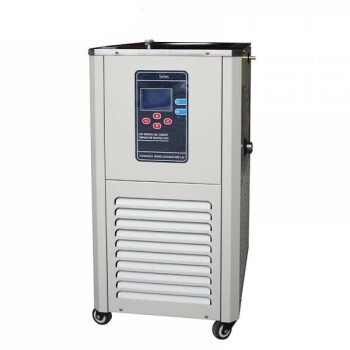
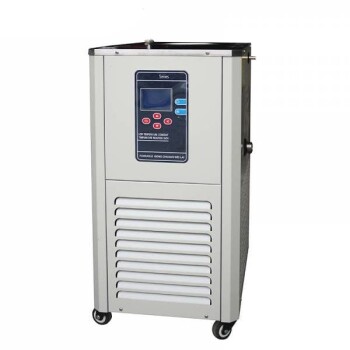
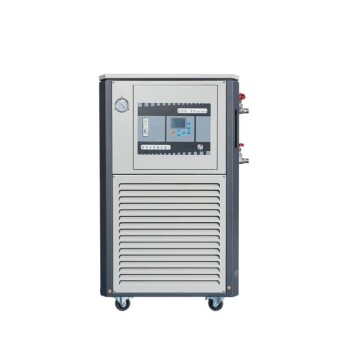
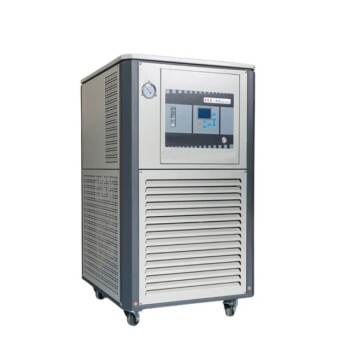
- 50L Chiller Water Bath Cooling Circulator Low Temperature Constant Temperature Reaction Bath
- Optical Water Bath Electrolytic Electrochemical Cell
- 10L Chilling Circulator Cooling Water Bath Low Temperature Constant Temperature Reaction Bath
- Double Layer Five-Port Water Bath Electrolytic Electrochemical Cell
People Also Ask
- What does the routine maintenance of a double-layer water-bath electrolytic cell involve? A Guide to Ensuring Precision and Longevity
- When is professional repair required for a double-layer water-bath electrolytic cell? Protect Your Lab's Precision and Safety
- What are the key features of a double-layer water-bath electrolytic cell? Achieve Precise Temperature Control for Your Experiments
- What are the procedures for after using a double-layer water-bath electrolytic cell? Ensure Equipment Longevity and Data Accuracy
- What is the typical experimental system used with a double-layer water-bath electrolytic cell? Achieve Precise Electrochemical Control