Knowledge laboratory mill What is the working principle of pulverizer machine? Master Impact, Compression & Grinding Forces
Author avatar

Tech Team · Kintek Solution

Updated 2 months ago

What is the working principle of pulverizer machine? Master Impact, Compression & Grinding Forces


At its core, a pulverizer works by applying intense mechanical force to break down large, coarse materials into fine, uniform powders. This is achieved by a motor driving a specialized mechanism that uses a combination of impact, compression, and grinding forces. The specific method—whether it's high-speed hammering or crushing with a bowl and puck—is determined by the machine's design and the material being processed.

A pulverizer's function isn't just about brute force; it's about controlled energy transfer. The machine's design dictates how it introduces impact, attrition, and compression forces to fracture material particles until they reach a desired, consistent size.
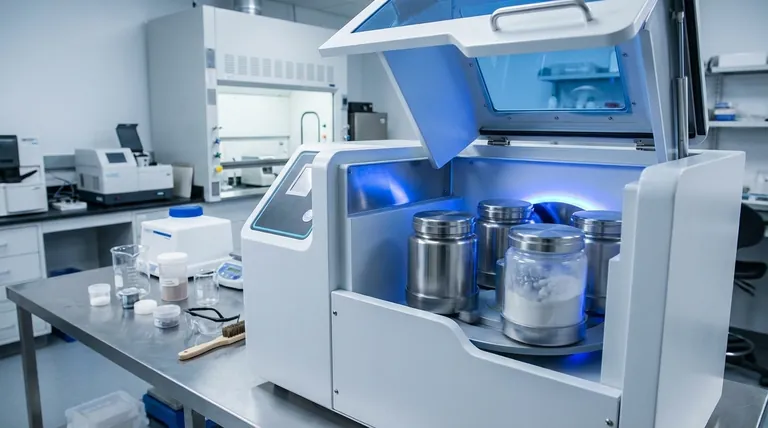
What is the working principle of pulverizer machine? Master Impact, Compression & Grinding Forces

The Fundamental Forces of Pulverization

To truly understand how a pulverizer works, you must first understand the three primary forces it uses to achieve size reduction. Nearly every pulverizer design emphasizes one or more of these principles.

Impact Force (Hitting)

Impact is the primary force in many pulverizers, such as hammer mills. It involves a high-speed collision between the material and a moving part of the machine (like a hammer) or the chamber wall.

This sharp, sudden force is extremely effective at shattering hard, brittle materials into smaller pieces.

Compression Force (Squeezing)

Compression involves crushing material between two solid surfaces. Think of it as a squeezing action.

This force is applied as components like rings or pucks press against the material and the grinding bowl. It is ideal for breaking down materials that can withstand initial impact but will fracture under sustained pressure.

Attrition Force (Grinding)

Attrition is the force of grinding, generated when particles rub against each other or against the machine's grinding surfaces.

This shearing action is what produces very fine, uniform powders. In machines like ring or puck mills, this happens as the grinding components spin at high speed due to centrifugal force, creating intense friction.

Anatomy of a Typical Pulverizer

While designs vary, most pulverizers share a common set of core components that work together to apply the forces described above.

The Drive System

The entire process begins with a powerful electric motor. This motor provides the rotational energy needed to operate the machine at high speeds.

In some larger systems, the motor connects to a reducer, which manages the speed and torque delivered to the main shaft.

The Crushing Mechanism

This is the heart of the machine where the size reduction occurs. The design of this mechanism determines the primary forces used.

Common examples include:

  • Hammers: A series of hammers attached to a high-speed rotor (or main shaft) that repeatedly strike the material.
  • Bowl, Puck, and Ring: Components inside a sealed chamber that are driven by vibration and centrifugal force to hit, squeeze, and grind the sample.

Material Handling Components

In larger, industrial settings, the pulverizer is part of a system. This can include an elevator to feed coarse material into the machine and a storage bin to collect the finished powder.

Understanding the Trade-offs

Choosing or operating a pulverizer requires understanding its inherent limitations and how its design affects the final product.

Material Properties are Critical

The effectiveness of a pulverizer is highly dependent on the material being processed. Hardness, moisture content, and abrasiveness will dictate which type of force—and therefore which machine—is most efficient.

Heat Generation

The high speeds and friction involved in pulverization generate significant heat. This can be a major problem for heat-sensitive materials, potentially altering their chemical composition or physical properties.

Particle Size Control

Different machines offer different levels of control over the final particle size. Impact-based machines are excellent for rapid size reduction, while attrition-based machines provide more precision for creating very fine, homogenous powders for lab analysis.

Making the Right Choice for Your Goal

To select the right approach, you must match the pulverizer's primary working principle to your desired outcome.

  • If your primary focus is rapid processing of hard, brittle materials: Look for pulverizers that rely heavily on impact force, such as a hammer mill.
  • If your primary focus is achieving a very fine, uniform powder for R&D: Consider a machine using attrition and compression, like a ring or puck mill, which offers precise grinding.
  • If your primary focus is processing large volumes in an industrial line: Your choice will be part of a larger system, where factors like feed rate and integration with conveyors are key.

Understanding these core principles empowers you to see beyond the machine and focus on the forces required to achieve your material processing goals.

Summary Table:

Key Force How It Works Ideal For
Impact High-speed collision (e.g., hammer mills) Shattering hard, brittle materials
Compression Crushing between two surfaces Fracturing materials under pressure
Attrition Grinding via particle friction Producing fine, uniform powders

Ready to achieve precise particle size reduction for your lab? KINTEK specializes in high-performance pulverizers and lab equipment, offering solutions tailored to your material processing needs—whether for rapid crushing or fine grinding. Contact our experts today to find the ideal pulverizer for your application!

Visual Guide
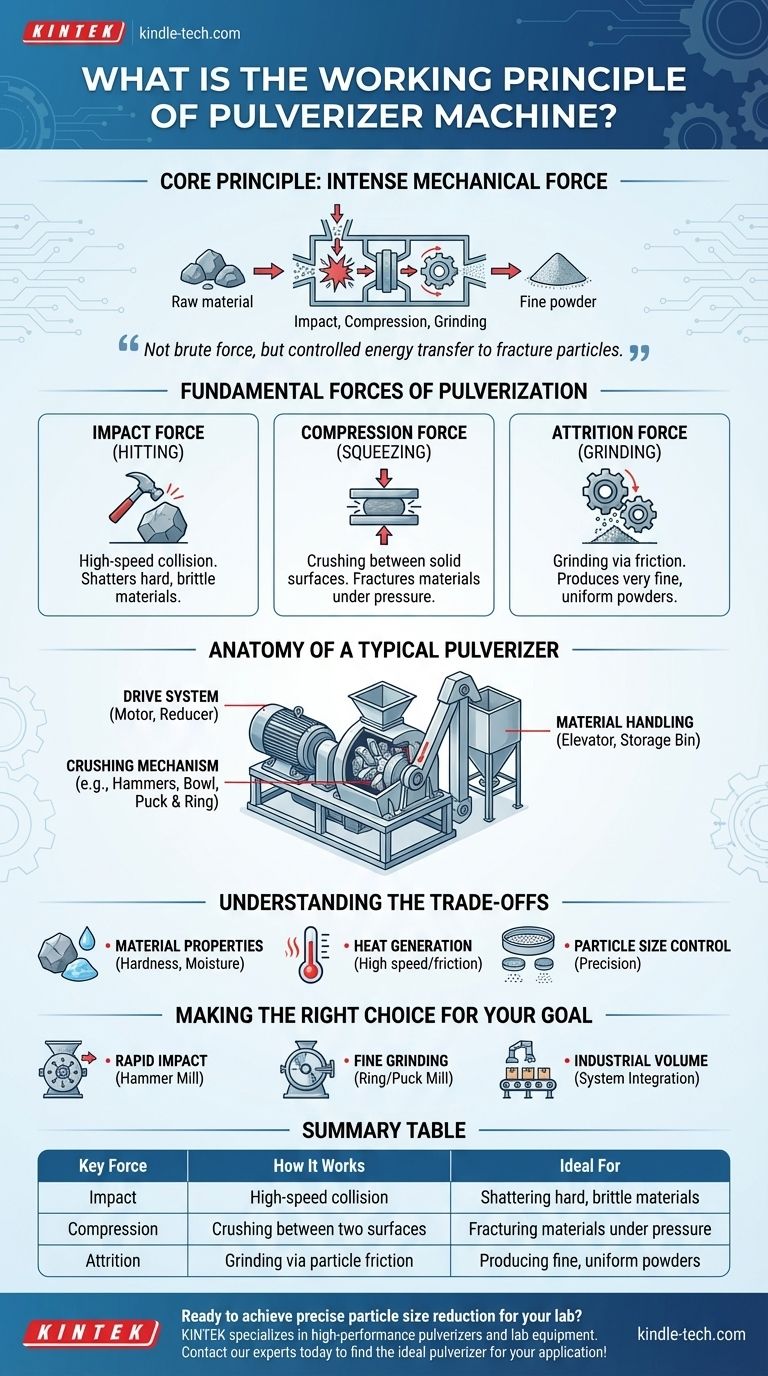
What is the working principle of pulverizer machine? Master Impact, Compression & Grinding Forces Visual Guide

Related Products

People Also Ask

Related Products

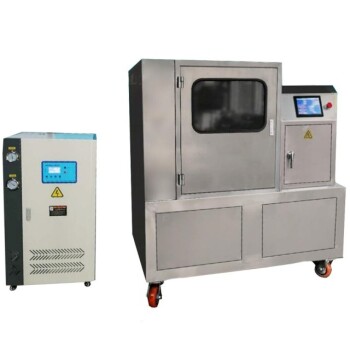
Low-Temperature Water-Cooled Touchscreen Vibratory Ultrafine Pulverizer

Low-Temperature Water-Cooled Touchscreen Vibratory Ultrafine Pulverizer

Low-temperature water-cooled vibratory pulverizer for ultrafine grinding. Preserves material integrity. Ideal for labs and production. Learn more.

Vibrating Disc Mill Small Laboratory Grinding Machine

Vibrating Disc Mill Small Laboratory Grinding Machine

Discover the versatile Vibrating Disc Mill for efficient laboratory grinding. Ideal for geology, metallurgy, biology, and more. Explore now!

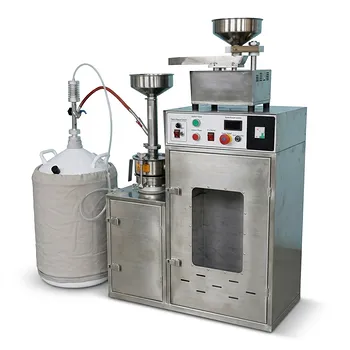
Liquid Nitrogen Cryogenic Grinder Mill Cryomill with Screw Feeder

Liquid Nitrogen Cryogenic Grinder Mill Cryomill with Screw Feeder

Discover the Liquid Nitrogen Cryogenic Pulverizer with Screw Feeder, perfect for fine material processing. Ideal for plastics, rubber, and more. Boost your lab efficiency now!

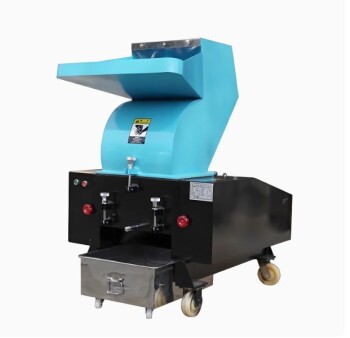
Powerful Plastic Crusher Machine

Powerful Plastic Crusher Machine

KINTEK's powerful plastic crusher machines process 60-1350 KG/H of diverse plastics, ideal for labs and recycling. Durable, efficient, and customizable.

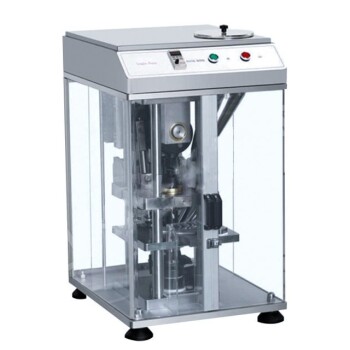
Single Punch Electric Tablet Press Machine Laboratory Powder Tablet Punching TDP Tablet Press

Single Punch Electric Tablet Press Machine Laboratory Powder Tablet Punching TDP Tablet Press

The single-punch electric tablet press is a laboratory-scale tablet press suitable for corporate laboratories in pharmaceutical, chemical, food, metallurgical and other industries.

Open Type Two Roll Mixing Mill Machine for Rubber Crusher

Open Type Two Roll Mixing Mill Machine for Rubber Crusher

Rubber crusher open mixing mill/Open two roller rubber mixing mill machine is suitable for mixing and dispersing rubber, plastic raw materials, pigments, masterbatches and other high molecular polymers.

Twin Screw Extruder Plastic Granulation Machine

Twin Screw Extruder Plastic Granulation Machine

Twin screw extruder plastic granulation machine is designed for the mixing and processing experiments of engineering plastics, modified plastics, waste plastics and masterbatches.

Automatic Laboratory Hydraulic Pellet Press Machine for Lab Use

Automatic Laboratory Hydraulic Pellet Press Machine for Lab Use

Experience efficient sample preparation with our Automatic Lab Press Machine. Ideal for material research, pharmacy, ceramics, and more. Features a compact size and hydraulic press functionality with heating plates. Available in various sizes.

Lab Internal Rubber Mixer Rubber Kneader Machine for Mixing and Kneading

Lab Internal Rubber Mixer Rubber Kneader Machine for Mixing and Kneading

Lab internal rubber mixer is suitable for mixing, kneading and dispersing various chemical raw materials such as plastics, rubber, synthetic rubber, hot melt adhesive and various low-viscosity materials.

High Energy Planetary Ball Mill Milling Machine for Laboratory

High Energy Planetary Ball Mill Milling Machine for Laboratory

The biggest feature is that the high energy planetary ball mill can not only perform fast and effective grinding, but also has good crushing ability

High Energy Planetary Ball Mill Milling Machine for Laboratory

High Energy Planetary Ball Mill Milling Machine for Laboratory

Experience fast and effective sample processing with the F-P2000 high-energy planetary ball mill. This versatile equipment offers precise control and excellent grinding capabilities. Perfect for laboratories, it features multiple grinding bowls for simultaneous testing and high output. Achieve optimal results with its ergonomic design, compact structure, and advanced features. Ideal for a wide range of materials, it ensures consistent particle size reduction and low maintenance.

High-Energy Omnidirectional Planetary Ball Mill Milling Machine for Laboratory

High-Energy Omnidirectional Planetary Ball Mill Milling Machine for Laboratory

The KT-P4000E is a new product derived from the vertical high-energy planetary ball mill with a 360° swivel function. Experience faster, uniform, and smaller sample output results with 4 ≤1000ml ball mill jars.

Mini Planetary Ball Mill Machine for Laboratory Milling

Mini Planetary Ball Mill Machine for Laboratory Milling

Discover the KT-P400 desktop planetary ball mill, ideal for grinding and mixing small samples in the lab. Enjoy stable performance, long service life, and practicality. Functions include timing and overload protection.

Laboratory Jaw Crusher

Laboratory Jaw Crusher

Discover the small jaw crusher for efficient, flexible, and affordable crushing in labs and small mines. Ideal for coal, ores, and rocks. Learn more now!

Laboratory Planetary Ball Mill Rotating Ball Milling Machine

Laboratory Planetary Ball Mill Rotating Ball Milling Machine

KT-P400E is a desktop multi-directional planetary ball mill with unique grinding and mixing capabilities. It offers continuous and intermittent operation, timing, and overload protection, making it ideal for various applications.

Filter Testing Machine FPV for Dispersion Properties of Polymers and Pigments

Filter Testing Machine FPV for Dispersion Properties of Polymers and Pigments

The filter testing machine (FPV) is suitable for testing the dispersion properties of polymers such as pigments, additives and masterbatches by extrusion and filtration.

Lab Scale Rotary Single Punch Tablet Press Machine TDP Tablet Punching Machine

Lab Scale Rotary Single Punch Tablet Press Machine TDP Tablet Punching Machine

This machine is a single-pressure automatic rotating, continuous tableting machine that compresses granular raw materials into various tablets. It is mainly used for tablet production in the pharmaceutical industry, and is also suitable for chemical, food, electronics and other industrial sectors.

Single Punch Manual Tablet Press Machine TDP Tablet Punching Machine

Single Punch Manual Tablet Press Machine TDP Tablet Punching Machine

Single punch manual tablet punching machine can press various granular, crystal or powdery raw materials with good fluidity into disc-shaped, cylindrical, spherical, convex, concave and other various geometric shapes (such as square, triangle, ellipse, capsule shape, etc.), and can also press products with text and patterns.

Laboratory Test Sieves and Vibratory Sieve Shaker Machine

Laboratory Test Sieves and Vibratory Sieve Shaker Machine

Efficiently process powders, granules, and small blocks with a high-frequency vibration sieve. Control vibration frequency, screen continuously or intermittently, and achieve accurate particle size determination, separation, and classification.

Single Punch Tablet Press Machine and Mass Production Rotary Tablet Punching Machine for TDP

Single Punch Tablet Press Machine and Mass Production Rotary Tablet Punching Machine for TDP

Rotary tablet punching machine is an automatic rotating and continuous tableting machine. It is mainly used for tablet manufacturing in the pharmaceutical industry, and is also suitable for industrial sectors such as food, chemicals, batteries, electronics, ceramics, etc. to compress granular raw materials into tablets.


Leave Your Message