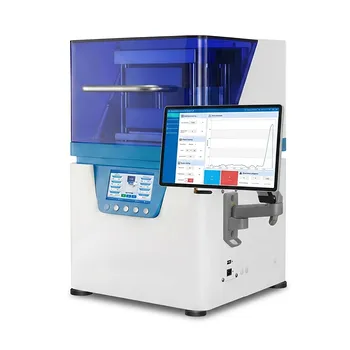
The laboratory hydraulic press is the critical gatekeeper of battery integrity. In coin cell assembly, its primary role is to provide constant, high-intensity pressure (typically around 500 psi) to create a perfect mechanical seal between the battery case and the sealing ring. This process ensures the cell is hermetically sealed against the environment while maintaining the tight physical contact between internal components necessary for electrochemical performance.
The laboratory hydraulic press serves as a precision crimping tool that transforms loose internal components into a stable electrochemical environment. By providing uniform force, it ensures an airtight seal and low interfacial resistance, which are foundational for obtaining reliable and reproducible experimental data.
Ensuring Hermetic Sealing and Environmental Isolation
Plastic Deformation of the Gasket
The hydraulic press applies powerful, uniform pressure to the stainless steel battery casing, forcing the sealing gasket to undergo plastic deformation. This deformation creates a tight, leak-proof barrier that isolates the internal chemistry from the external atmosphere.
Prevention of Electrolyte Leakage and Contamination
A secure mechanical seal is essential to prevent the evaporation of volatile electrolytes and the ingress of oxygen or moisture. Even trace amounts of air can react with lithium or other active materials, leading to degraded performance or experimental failure.
Maximizing Electrical and Electrochemical Performance
Minimizing Interfacial Contact Resistance
The press ensures that the cathode, anode, separator, and current collectors are compressed tightly against one another. This high-pressure contact minimizes ohmic internal resistance, allowing for efficient electron flow throughout the cell.
Facilitating Electrolyte Wetting
The controlled application of force helps regulate the porosity of the electrode structure. This ensures that the electrolyte fully wets the electrode pores, which is a prerequisite for stable cycling and accurate Electrochemical Impedance Spectroscopy (EIS) results.
Achieving Data Consistency and Reproducibility
Precision Pressure Control
Unlike manual methods, a hydraulic system provides monitorable and constant pressure. This precision allows researchers to apply the exact same force across every sample, ensuring that variations in data result from material changes rather than assembly inconsistencies.
Establishing a Structural Foundation
Uniform pressure ensures that internal components like spring plates and spacers maintain consistent tension. This structural stability is necessary to obtain accurate specific capacity data and to ensure the battery remains stable over hundreds of cycles.
Understanding the Trade-offs and Risks
The Danger of Excessive Pressure
Applying pressure beyond the recommended limits can cause the internal separator to tear or the battery casing to deform excessively. This often results in internal short circuits or the complete mechanical failure of the coin cell.
The Risks of Insufficient Pressure
If the hydraulic force is too low, the gasket will not seat correctly, leading to slow electrolyte leakage. Furthermore, loose internal contact increases resistance, which creates "noisy" data and artificially low discharge capacities.
How to Apply This to Your Research
Implementing Best Practices for Assembly
Successful coin cell assembly requires balancing mechanical force with component sensitivity to ensure both safety and data accuracy.
- If your primary focus is Data Reproducibility: Use a hydraulic press with a built-in pressure gauge to ensure every cell is crimped at the exact same PSI.
- If your primary focus is High-Power Performance: Prioritize electrode compaction and high-pressure sealing to minimize contact resistance and maximize energy density.
- If your primary focus is Long-Term Cycling: Ensure the hydraulic force is sufficient to produce a perfect hermetic seal, preventing the slow ingress of moisture over weeks of testing.
By mastering the application of hydraulic pressure, you ensure that your experimental results are a true reflection of your materials rather than a byproduct of assembly variables.
Summary Table:
| Key Role | Technical Mechanism | Benefit to Research |
|---|---|---|
| Hermetic Sealing | Plastic deformation of the gasket | Prevents electrolyte leakage and air ingress |
| Contact Optimization | Minimizes interfacial resistance | Ensures accurate electrochemical measurements |
| Structural Stability | Uniform pressure on internal components | Provides high data reproducibility and consistency |
| Precision Control | Monitorable and constant PSI | Prevents internal short circuits and casing damage |
Elevate Your Battery Research with KINTEK Precision
Don't let assembly variables compromise your experimental results. KINTEK specializes in high-performance laboratory equipment designed for accuracy and durability. Our professional-grade hydraulic presses (including pellet and isostatic models) ensure the perfect seal every time, while our comprehensive range of battery research tools, high-temperature furnaces, and specialized consumables provides a complete solution for your lab.
Why partner with KINTEK?
- Precision Control: Achieve monitorable, constant pressure for reproducible data.
- End-to-End Solutions: From material synthesis in our CVD/PECVD furnaces to final cell assembly.
- Expert Support: Reliable equipment backed by industry-leading expertise to help you maximize energy density and cycling life.
Contact KINTEK today to find the perfect equipment for your lab!
References
- Fei Guo, Baosheng Liu. In Situ Low-Temperature Carbonization Capping of LiFePO4 with Coke for Enhanced Lithium Battery Performance. DOI: 10.3390/molecules28166083
This article is also based on technical information from Kintek Solution Knowledge Base .
Related Products
- Laboratory Hydraulic Press Lab Pellet Press Machine for Glove Box
- Laboratory Hydraulic Press Split Electric Lab Pellet Press
- Fully Automatic Heated Hydraulic Lab Press for Materials Sintering and Sample Preparation
- Laboratory Hydraulic Press Lab Pellet Press for Button Battery
- Automatic Laboratory Hydraulic Press for XRF & KBR Pellet Press
People Also Ask
- What is the function of a laboratory hydraulic press in W-Cu composites? Control Porosity and Material Ratio
- What is the role of a laboratory hydraulic press in the initial stages of Li6PS5Cl preparation? Key to Green Pellets
- What role does a laboratory hydraulic press play in triboelectric testing? Achieve Precision Alloy Sample Prep
- How can a laboratory hydraulic press be applied to chitosan for wastewater treatment? Optimize Pores & Strength
- How do a precision laboratory hydraulic press and specialized molds contribute to the fabrication of spherical ceramic samples? Achieving High-Density Material Precision