Knowledge thermal elements What material is used for making heating element? Choose the Right Alloy for Your Application
Author avatar

Tech Team · Kintek Solution

Updated 3 months ago

What material is used for making heating element? Choose the Right Alloy for Your Application


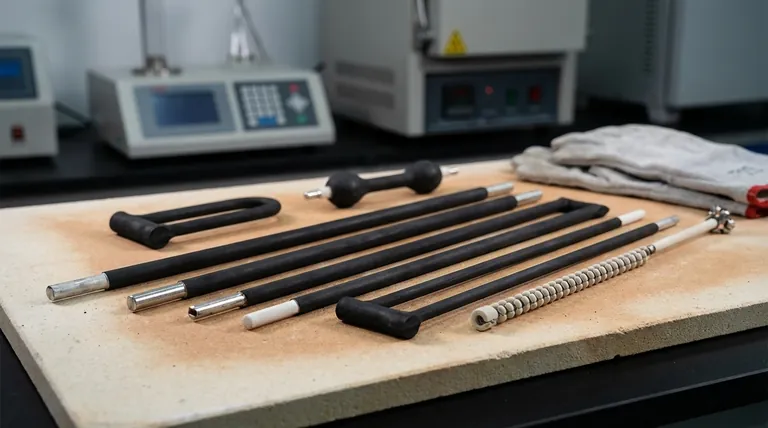
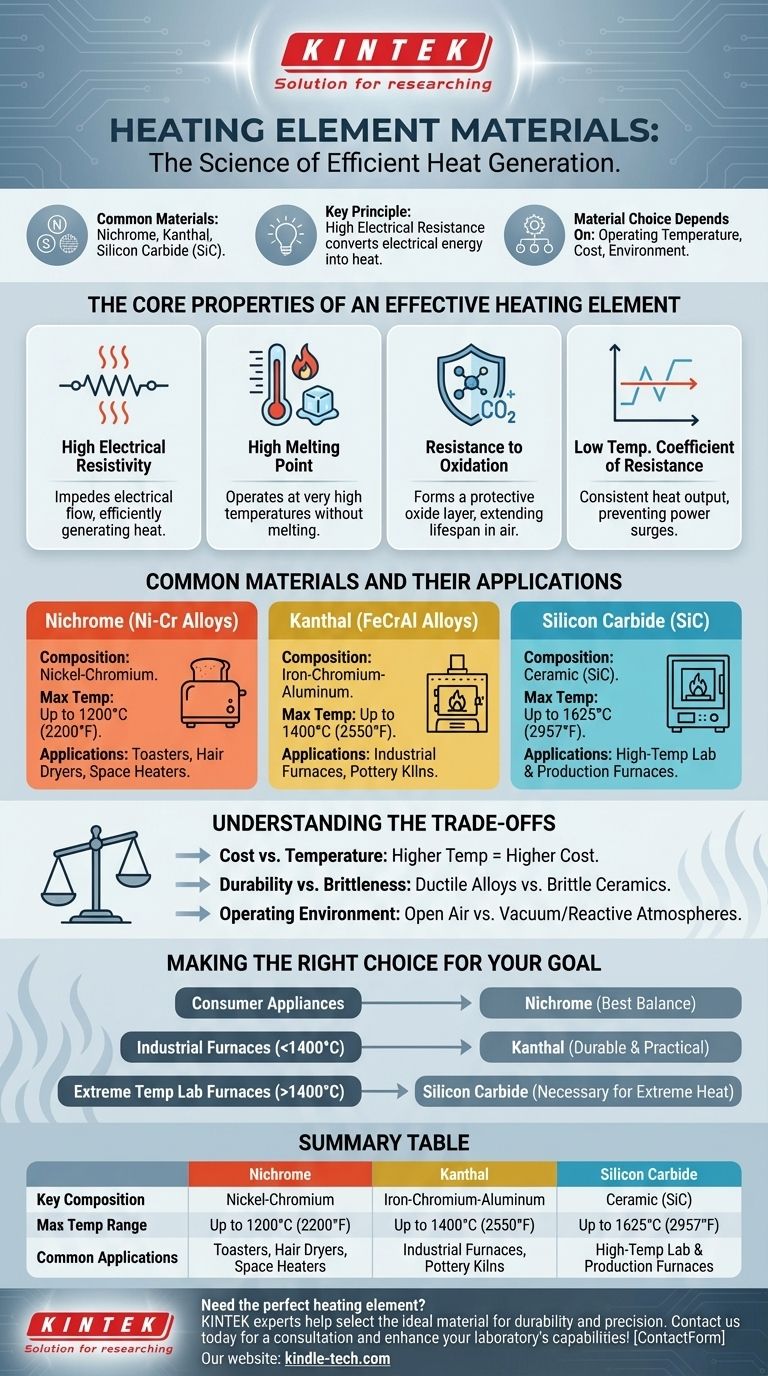
The most common materials used for heating elements are specialized metal alloys like Nichrome (nickel-chromium) and Kanthal (iron-chromium-aluminum), as well as ceramics like Silicon Carbide (SiC) for higher-temperature industrial applications. The choice of material depends entirely on the required operating temperature, cost, and environment.

The ideal material for a heating element is not a good conductor, but rather a poor one with high electrical resistance. This resistance converts electrical energy into heat, and the material must be robust enough to withstand that heat without melting or degrading.
What material is used for making heating element? Choose the Right Alloy for Your Application

The Core Properties of an Effective Heating Element

To understand why specific materials are chosen, we must first look at the essential properties they need to possess. The goal is to generate heat reliably and for a long time.

High Electrical Resistivity

A heating element works by impeding the flow of electricity. According to Joule's law of heating, the heat produced is proportional to the material's electrical resistance.

A high resistivity means more heat is generated from the electrical current passing through it, making the process efficient.

High Melting Point

This is a fundamental requirement. The material must operate at very high temperatures without melting or becoming soft.

A high melting point ensures the element maintains its structural integrity and function even when glowing red-hot.

Resistance to Oxidation

When heated in the presence of air, most metals will rapidly oxidize (corrode) and fail.

Effective heating element alloys like Nichrome and Kanthal form a thin, durable, and adherent outer layer of oxide. This layer protects the underlying material from further oxygen attack, dramatically extending the element's lifespan.

Low Temperature Coefficient of Resistance

This property ensures the element's resistance remains relatively stable as its temperature changes.

A low coefficient means the heat output is predictable and consistent, preventing sudden power surges as the element heats from cold to its operating temperature.

Common Materials and Their Applications

While many materials fit these criteria, a few have become industry standards for specific temperature ranges and uses.

Nichrome (Nickel-Chromium Alloys)

Nichrome is the workhorse for most consumer appliances, such as toasters, hair dryers, and space heaters.

It offers an excellent balance of high resistance, good oxidation resistance, and cost-effectiveness for temperatures typically up to 1200°C (2200°F).

Kanthal (FeCrAl Alloys)

Kanthal alloys are a common alternative to Nichrome, particularly in high-temperature industrial applications like pottery kilns and furnaces.

They can often operate at higher temperatures than Nichrome and form a very stable aluminum oxide protective layer.

Silicon Carbide (SiC)

Silicon Carbide is a ceramic material used when temperatures exceed the limits of metallic alloys, often in industrial furnaces and kilns.

These elements are more brittle than metal but can function reliably at temperatures up to 1625°C (2957°F).

Understanding the Trade-offs

Choosing a heating element material is rarely about finding the "best" one, but rather the most appropriate one for the task.

Cost vs. Temperature

As the required operating temperature increases, so does the cost of the material. Nichrome is relatively inexpensive, while materials for the most extreme temperatures, like Molybdenum Disilicide, are significantly more costly.

Durability vs. Brittleness

Metallic alloys like Nichrome are ductile and can be easily formed into coils, making them resistant to physical shock. Ceramic elements like Silicon Carbide offer superior heat performance but are brittle and must be handled with care.

Operating Environment

The environment is critical. While Nichrome and Kanthal excel in open air due to their protective oxide layers, they may not be suitable for vacuum or certain chemically reactive atmospheres where other materials would be required.

Making the Right Choice for Your Goal

Your application will dictate the correct material.

  • If your primary focus is consumer appliances or general heating: Nichrome is the industry standard, offering the best balance of performance and cost.
  • If your primary focus is industrial furnaces up to 1400°C (2550°F): Kanthal (FeCrAl) alloys are often the most practical and durable choice.
  • If your primary focus is very high-temperature lab or production furnaces: Ceramic elements like Silicon Carbide are necessary to withstand extreme heat.

Ultimately, selecting the right heating element material is a deliberate decision based on the required temperature, operating environment, and budget.

Summary Table:

Material Key Composition Max Temp Range Common Applications
Nichrome Nickel-Chromium Up to 1200°C (2200°F) Toasters, Hair Dryers, Space Heaters
Kanthal Iron-Chromium-Aluminum Up to 1400°C (2550°F) Industrial Furnaces, Pottery Kilns
Silicon Carbide Ceramic (SiC) Up to 1625°C (2957°F) High-Temp Lab & Production Furnaces

Need the perfect heating element for your lab furnace or industrial process?
KINTEK specializes in high-performance lab equipment and consumables. Our experts will help you select the ideal heating element material—whether Nichrome, Kanthal, or Silicon Carbide—to ensure durability, efficiency, and precise temperature control for your specific application.
Contact our team today for a consultation and enhance your laboratory's capabilities!

Visual Guide
What material is used for making heating element? Choose the Right Alloy for Your Application Visual Guide

Related Products

People Also Ask

Related Products

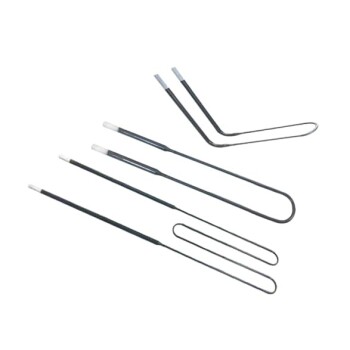
Molybdenum Disilicide (MoSi2) Thermal Elements Electric Furnace Heating Element

Molybdenum Disilicide (MoSi2) Thermal Elements Electric Furnace Heating Element

Discover the power of Molybdenum Disilicide (MoSi2) Heating Element for high-temperature resistance. Unique oxidation resistance with stable resistance value. Learn more about its benefits now!

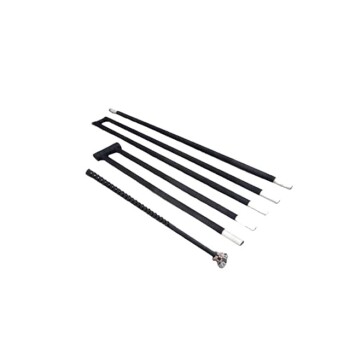
Silicon Carbide SiC Thermal Heating Elements for Electric Furnace

Silicon Carbide SiC Thermal Heating Elements for Electric Furnace

Experience the advantages of Silicon Carbide (SiC) Heating Element: Long service life, high corrosion and oxidation resistance, fast heating speed, and easy maintenance. Learn more now!

Silicon Carbide (SIC) Ceramic Sheet Flat Corrugated Heat Sink for Engineering Advanced Fine Ceramics

Silicon Carbide (SIC) Ceramic Sheet Flat Corrugated Heat Sink for Engineering Advanced Fine Ceramics

Silicon carbide (sic) ceramic heat sink not only does not generate electromagnetic waves, but also can isolate electromagnetic waves and absorb part of electromagnetic waves.

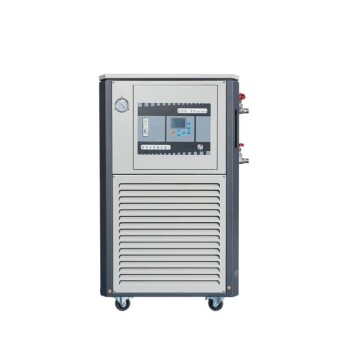
10L Heating Chilling Circulator Cooling Water Bath Circulator for High and Low Temperature Constant Temperature Reaction

10L Heating Chilling Circulator Cooling Water Bath Circulator for High and Low Temperature Constant Temperature Reaction

Experience efficient lab performance with KinTek KCBH 10L Heating Chilling Circulator. Its all-in-one design offers reliable heating, chilling, and circulating functions for industrial and lab use.

50L Heating Chilling Circulator Cooling Water Bath Circulator for High and Low Temperature Constant Temperature Reaction

50L Heating Chilling Circulator Cooling Water Bath Circulator for High and Low Temperature Constant Temperature Reaction

Experience versatile heating, chilling, and circulating capabilities with our KinTek KCBH 50L Heating Chilling Circulator. Ideal for labs and industrial settings, with efficient and reliable performance.

Double Plate Heating Press Mold for Lab

Double Plate Heating Press Mold for Lab

Discover precision in heating with our Double Plate Heating Mold, featuring high-quality steel and uniform temperature control for efficient lab processes. Ideal for various thermal applications.

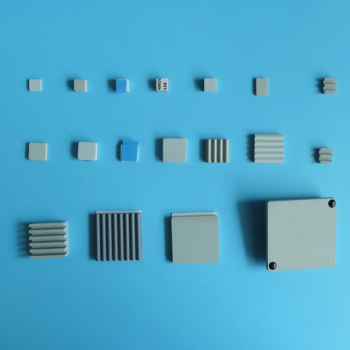
Engineering Advanced Fine Ceramics Aluminum Oxide Al2O3 Heat Sink for Insulation

Engineering Advanced Fine Ceramics Aluminum Oxide Al2O3 Heat Sink for Insulation

The hole structure of the ceramic heat sink increases the heat dissipation area in contact with the air, which greatly enhances the heat dissipation effect, and the heat dissipation effect is better than that of super copper and aluminum.

High Temperature Constant Temperature Heating Circulator Water Bath Chiller Circulator for Reaction Bath

High Temperature Constant Temperature Heating Circulator Water Bath Chiller Circulator for Reaction Bath

Efficient and reliable, KinTek KHB Heating Circulator is perfect for your lab needs. With a max. heating temperature of up to 300℃, it features accurate temperature control and fast heating.

30L Heating Chilling Circulator Cooling Water Bath Circulator for High and Low Temperature Constant Temperature Reaction

30L Heating Chilling Circulator Cooling Water Bath Circulator for High and Low Temperature Constant Temperature Reaction

Get versatile lab performance with KinTek KCBH 30L Heating Chilling Circulator. With max. heating temp of 200℃ and max. chilling temp of -80℃, it's perfect for industrial needs.

5L Heating Chilling Circulator Cooling Water Bath Circulator for High and Low Temperature Constant Temperature Reaction

5L Heating Chilling Circulator Cooling Water Bath Circulator for High and Low Temperature Constant Temperature Reaction

KinTek KCBH 5L Heating Chilling Circulator - Ideal for labs and industrial conditions with multi-functional design and reliable performance.

100L Heating Chilling Circulator Cooling Water Bath Circulator for High and Low Temperature Constant Temperature Reaction

100L Heating Chilling Circulator Cooling Water Bath Circulator for High and Low Temperature Constant Temperature Reaction

Get all-in-one heating, chilling, and circulating capabilities with our KinTek KCBH 80L Heating Chilling Circulator. High efficiency, reliable performance for labs and industrial applications.

20L Heating Chilling Circulator Cooling Water Bath Circulator for High and Low Temperature Constant Temperature Reaction

20L Heating Chilling Circulator Cooling Water Bath Circulator for High and Low Temperature Constant Temperature Reaction

Maximize lab productivity with KinTek KCBH 20L Heating Chilling Circulator. Its all-in-one design offers reliable heating, chilling, and circulating functions for industrial and lab use.

Laboratory Small Constant Temperature Heated Magnetic Stirrer Heater and Stirrer

Laboratory Small Constant Temperature Heated Magnetic Stirrer Heater and Stirrer

The Laboratory Small Constant Temperature Heating Magnetic Stirrer is a versatile tool designed for precise temperature control and efficient mixing in various laboratory applications.

Electron Beam Evaporation Coating Conductive Boron Nitride Crucible BN Crucible

Electron Beam Evaporation Coating Conductive Boron Nitride Crucible BN Crucible

High-purity and smooth conductive boron nitride crucible for electron beam evaporation coating, with high temperature and thermal cycling performance.

Automatic High Temperature Heated Hydraulic Press Machine with Heated Plates for Lab

Automatic High Temperature Heated Hydraulic Press Machine with Heated Plates for Lab

The High Temperature Hot Press is a machine specifically designed for pressing, sintering and processing materials in a high temperature environment. It is capable of operating in the range of hundreds of degrees Celsius to thousands of degrees Celsius for a variety of high temperature process requirements.

Manual High Temperature Heated Hydraulic Press Machine with Heated Plates for Lab

Manual High Temperature Heated Hydraulic Press Machine with Heated Plates for Lab

The High Temperature Hot Press is a machine specifically designed for pressing, sintering and processing materials in a high temperature environment. It is capable of operating in the range of hundreds of degrees Celsius to thousands of degrees Celsius for a variety of high temperature process requirements.

Evaporation Boat for Organic Matter

Evaporation Boat for Organic Matter

The evaporation boat for organic matter is an important tool for precise and uniform heating during the deposition of organic materials.

Multi Heating Zones CVD Tube Furnace Machine Chemical Vapor Deposition Chamber System Equipment

Multi Heating Zones CVD Tube Furnace Machine Chemical Vapor Deposition Chamber System Equipment

KT-CTF14 Multi Heating Zones CVD Furnace - Precise Temperature Control and Gas Flow for Advanced Applications. Max temp up to 1200℃, 4 channels MFC mass flow meter, and 7" TFT touch screen controller.

Molybdenum Vacuum Heat Treat Furnace

Molybdenum Vacuum Heat Treat Furnace

Discover the benefits of a high-configuration molybdenum vacuum furnace with heat shield insulation. Ideal for high-purity, vacuum environments like sapphire crystal growth and heat treatment.

Laboratory Scientific Electric Heating Blast Drying Oven

Laboratory Scientific Electric Heating Blast Drying Oven

The desktop fast autoclave sterilizer is a compact and reliable device used for rapid sterilization of medical, pharmaceutical, and research items.


Leave Your Message