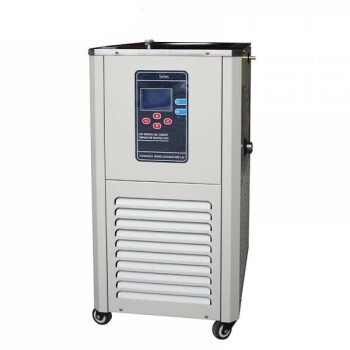
Laboratory batch reactors provide a closed, controlled environment that guarantees constant working volumes and sustained catalyst contact throughout the hydrolysis process. By isolating the reaction in a fixed system—typically holding volumes like 100ml or 300ml—these units ensure that acid or alkaline agents maintain sufficient interaction with the substrate over extended durations.
The primary value of a laboratory batch reactor is its ability to isolate variables by maintaining a static environment. This ensures that any variance in sugar production is directly attributable to the specific catalyst loading amount, rather than environmental fluctuations or loss of contact.
Ensuring Experimental Integrity
Closed System Stability
Laboratory batch reactors function as closed systems. This design prevents the loss of reactants or solvents through evaporation or leakage during the experiment.
By isolating the process, the reactor guarantees that the chemical ratio introduced at the start remains the baseline for the entire duration.
Constant Working Volume
A critical guarantee of this equipment is the maintenance of a constant working volume. Whether set to 100ml or 300ml, the reactor ensures the reaction space does not fluctuate.
This stability is vital for calculating concentrations accurately. It eliminates volume variance as a potential error source when measuring yield.
Optimizing Catalyst Interaction
Sustained Catalyst Contact
In hydrolysis experiments involving waste paper pulp, physical contact between the solid and liquid phases is paramount.
Batch reactors guarantee sufficient contact between the pulp and catalysts such as sulfuric acid or sodium hydroxide. This prevents the catalyst from bypassing the substrate, ensuring the chemical reaction proceeds efficiently.
Extended Reaction Durations
Hydrolysis often requires time to break down complex structures. These reactors are engineered to support extended reaction times.
This allows researchers to run experiments as long as necessary to achieve maximum conversion without interrupting the process or altering the conditions.
Understanding the Trade-offs
Limited Throughput
While excellent for precision, batch reactors are defined by their finite nature. They are designed for studying impacts, not for continuous high-volume production.
Once the reaction duration is complete, the process must stop for unloading and cleaning. This makes them ideal for research but less efficient for bulk manufacturing compared to continuous flow reactors.
Fixed Parameters
The benefit of a "constant working volume" acts as a constraint if your goal changes.
Because the volume is fixed (e.g., capped at 300ml), you cannot easily scale up the production of sugar within a single experimental run. You are limited to the specific capacity of the vessel.
Designing Your Hydrolysis Experiment
To maximize the utility of a batch reactor for acid or alkaline hydrolysis, align your goals with the equipment's strengths:
- If your primary focus is kinetic analysis: Rely on the reactor's ability to maintain sufficient contact over extended times to observe exactly how long the reaction takes to plateau.
- If your primary focus is variable isolation: Leverage the constant working volume to compare different catalyst loading amounts, ensuring that yield differences are caused strictly by the chemical load.
Reliable data in hydrolysis studies begins with the certainty of a controlled, closed environment.
Summary Table:
| Process Guarantee | Description | Experimental Benefit |
|---|---|---|
| Closed System | Prevents evaporation and reactant loss | Maintains chemical ratios and baseline integrity |
| Constant Volume | Fixed 100ml-300ml reaction space | Eliminates volume variance as an error source |
| Sustained Contact | Ensures solid-liquid phase interaction | Maximizes conversion of substrate by catalyst |
| Extended Duration | Supports long-term reaction stability | Allows for complete kinetic analysis of hydrolysis |
Elevate Your Research Precision with KINTEK
Maximize the accuracy of your kinetic studies and material synthesis with KINTEK’s advanced laboratory solutions. Whether you are conducting acid-alkaline hydrolysis or complex chemical reactions, our high-temperature high-pressure reactors and autoclaves provide the controlled environment necessary for repeatable results.
From high-temperature furnaces and crushing systems to specialized PTFE and ceramic consumables, KINTEK is the trusted partner for global research facilities. Don't let environmental variables compromise your data—leverage our engineering expertise to optimize your lab's workflow.
Ready to scale your discoveries? Contact KINTEK today to find the perfect reactor system for your application!
References
- M.A. Salam, M. A. Islam. Conversion of Cellulosic waste into fermentable sugar: Process optimization. DOI: 10.3329/jce.v28i1.18107
This article is also based on technical information from Kintek Solution Knowledge Base .
Related Products
- High Pressure Laboratory Autoclave Reactor for Hydrothermal Synthesis
- Mini SS High Pressure Autoclave Reactor for Laboratory Use
- Stainless High Pressure Autoclave Reactor Laboratory Pressure Reactor
- Customizable Laboratory High Temperature High Pressure Reactors for Diverse Scientific Applications
- Customizable High Pressure Reactors for Advanced Scientific and Industrial Applications
People Also Ask
- What role does a high-pressure reactor (autoclave) play in the synthesis of NiCuFe-LDH? Master Hydrothermal Growth
- What Role Does a High-Pressure Reactor or Autoclave Play in HA Catalyst Synthesis? Achieve High Surface Area Materials
- What equipment is required for hydrothermal synthesis of Ga0.25Zn4.67S5.08? Optimize Your Semiconductor Production
- What is the function of a high-pressure reactor in the hydrothermal synthesis of boehmite? Expert Process Insights
- What role does an autoclave play in the synthesis of MnO2 nanofibers? Mastering Hydrothermal Growth